Wemo Shutdown: Key Takeaways
- Belkin shut down the cloud servers behind its Wemo line on January 31, 2026, and app control, remote access and the Alexa and Google Assistant integrations stopped.
- Wemo devices already set up with Apple HomeKit kept basic functionality, because HomeKit does not depend on Wemo’s servers.
- Revolv’s smart home hubs stopped working in 2016 in the same way, when Nest turned off the servers behind them.
- Before buying anything load-bearing, such as locks or cameras, look for Matter, Thread, Zigbee or Z-Wave in the listing.
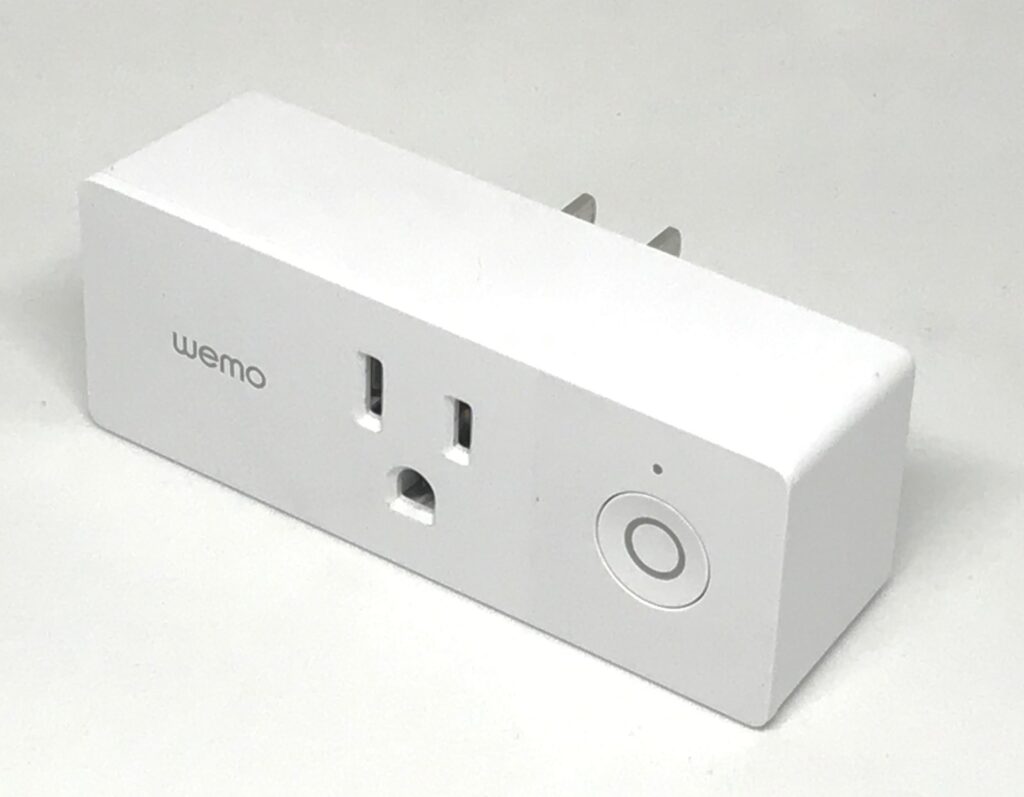
On January 31, 2026, Belkin shut down the cloud servers behind its Wemo smart home line. App control, remote access away from home, and the Alexa and Google Assistant integrations that made Wemo plugs and switches useful as part of a voice-controlled setup all stopped working that day, on devices some owners had bought as recently as two years earlier. The hardware itself didn’t fail. The company simply turned off the servers it ran, and every feature that depended on those servers went with them.
Table of Contents
The Devices Weren’t Broken. The Business Model Was Temporary
This is the actual risk buying guides rarely name directly: a smart home device’s long-term usefulness depends on a company continuing to operate servers indefinitely, for a product category where the company’s incentive to keep doing that shrinks the moment it stops being profitable, stops being a strategic priority, or gets discontinued in favor of a newer product line.
None of that requires the company to go out of business. Wemo’s parent company, Belkin, is a large, ongoing, financially stable business; it simply decided maintaining Wemo’s cloud infrastructure wasn’t worth continuing, and owners of the affected devices had no real recourse once that decision was made.
There was a meaningful split in outcomes among affected owners, and it maps directly onto the distinction this whole category of purchase decision comes down to. Owners whose Wemo devices were already set up with Apple HomeKit, a platform designed around local control rather than routing every command through the manufacturer’s own cloud, kept basic functionality working after the shutdown, because HomeKit never depended on Wemo’s own servers to issue commands in the first place.
Owners relying purely on the Wemo app and its cloud-based Alexa/Google integration lost that functionality outright, with no local fallback built into the product to fall back on.
What “Local Control” Means, in Plain Terms
A cloud-dependent smart device works like this: you tap a button in an app, that command travels to the manufacturer’s servers somewhere on the internet, the server decides what to do and sends a command back down to the device in your house. If that round trip to the manufacturer’s server fails, for any reason, including the manufacturer simply turning the server off, the device stops responding to anything, regardless of whether your home network and the device itself are both working perfectly.
A locally-controlled device skips that round trip. A hub in your home, commonly something running Home Assistant or a similar local controller, sends the command directly to the device over your own network using a local protocol, with no outside server involved in the transaction at all.
The practical consequence is durability: a locally-controlled setup keeps working if your internet goes down, if the manufacturer’s server has an outage, and critically, if the manufacturer ever decides to shut that server down entirely, the exact scenario that just played out with Wemo.
This Has Happened Before, and It Will Happen Again
Wemo isn’t the first time a smart home shutdown has made this exact point the hard way. Google’s Nest division shut down the Revolv smart home hub in 2016, after acquiring the company that made it, and took the unusual step of publishing a blog post explicitly acknowledging the devices would stop working entirely, not just lose an app or a cloud feature, because the hub’s entire function depended on Revolv’s own servers with no local fallback designed in at all.
Owners who’d paid for what they reasonably assumed was a one-time hardware purchase ended up with inert hubs and no recourse, years before their hardware had any reason to actually fail.
Ten years and one generation of industry standards later, Wemo’s shutdown is the same underlying failure in a more common, lower-stakes product category. The pattern connecting both events is the actual lesson: whenever a smart home device’s core functionality routes through a company-owned cloud server with no documented local-control fallback, that device’s lifespan is bounded by the company’s willingness to keep paying for servers, not by the hardware’s physical durability, and that willingness has already changed twice in a decade on products people bought assuming it wouldn’t.
The Protocols Worth Checking For
You don’t need to become a home-networking specialist to shop around this. A handful of names on a product’s spec sheet or box tell you whether local control is genuinely supported:
- Matter is the current cross-manufacturer standard specifically built to let devices from different brands work together and, in its most capable mode, operate without a cloud round-trip at all. A “Matter-certified” label is a reasonably reliable signal, though the depth of local support still varies somewhat by the specific hub you pair it with.
- Thread is the low-power mesh networking protocol underlying Matter’s most capable local-control mode. A device supporting Thread, paired with a Thread-compatible hub, is about as close as current consumer smart home hardware gets to a guarantee against this exact failure mode.
- Zigbee and Z-Wave, the two longer-established local-mesh standards that predate Matter, are both designed to run locally through a hub by default, and remain a safe choice specifically because neither was ever architected around a mandatory cloud dependency the way many Wi-Fi-only smart plugs and bulbs are.
- A device that only advertises “works with the [Brand] app” and a Wi-Fi connection, with no mention of Matter, Thread, Zigbee, or Z-Wave anywhere in the listing, is very likely cloud-dependent by default, which isn’t automatically disqualifying for something low-stakes like a single smart plug, but is worth knowing going in rather than discovering during the next shutdown announcement.
Where This Matters Most, and Where It Genuinely Doesn’t
Not every device needs this scrutiny equally. A $15 smart plug that occasionally gets reset isn’t a significant loss if its cloud service someday disappears; replacing it costs less than the research required to avoid the risk in the first place. The calculation changes for anything load-bearing: door locks, security cameras, water leak shutoff valves, or a hub coordinating a dozen other devices, categories where a sudden loss of app control, or of a cloud-dependent safety feature specifically, is a genuinely bad time to discover your purchase never supported a local fallback.
Checking Before You Click Buy, Not After
The listing itself is not always honest about this, intentionally or otherwise, so a quick outside check is worth the extra few minutes. Search the exact model name alongside terms like “forum” or “local control” before buying; owner communities on Reddit and dedicated smart-home forums reliably surface whether a device’s Matter or local-control claims hold up in practice, since marketing copy and real-world behavior do not always match.
It is also worth checking the manufacturer’s own support documentation for the specific certification language: “Matter-certified” and “works with Matter via a bridge” describe meaningfully different levels of actual local capability, and only one of them delivers the offline resilience this whole buying criterion is about.
The Buying Rule That Follows From This
Before buying anything beyond the cheapest, most replaceable smart home categories, look for Matter, Thread, Zigbee, or Z-Wave specifically named in the listing, not just a claim of “smart” or “app-controlled.” It won’t protect you from every possible future shutdown, but it’s the difference between a device that degrades gracefully to local, offline functionality when a company’s cloud servers eventually go dark, the way they did for Wemo owners this January, and one that simply stops working the same day the announcement goes out.
Bottom Line
The Wemo hardware did not fail; the servers were switched off. Local-control protocols are what let a device outlive its maker’s cloud.
For the full list of affected devices and what keeps working, see Belkin’s own support notice. Wider coverage is in The Verge and Ars Technica. The earlier Revolv case is summarised on Wikipedia.
More on devices that keep working without the cloud or a subscription: our no-subscription smart home guides, the doorbell camera cost guide and building a smart home without Alexa.
Photo credit: “Wemo Mini Smart Plug (3750)” by Gregory Varnum, licensed CC BY-SA 4.0 (https://creativecommons.org/licenses/by-sa/4.0/). Source: https://commons.wikimedia.org/w/index.php?curid=66800711