USB Flash Drive: Key Takeaways
- Modern USB flash drive retail options start around 32GB or 64GB because fixed manufacturing costs make smaller capacities uneconomical.
- Microsoft’s Windows installer requires at least 8GB free space, rendering USB flash drive capacities below that threshold impractical for common use.
- The price per gigabyte for USB flash drive storage collapsed roughly 8,500x by 2013, shifting manufacturer focus toward higher base capacities.
- The same NAND economics raise minimum capacities for SSDs, microSD cards, and USB flash drive categories alike.
In 2004, a 2.1GB Verbatim flash drive cost $250. Less than a decade later, Kingston was selling a 512GB DataTraveler for $1,750 and had already unveiled a 1TB version. Somewhere in that gap, the small flash drive quietly disappeared from store shelves, and most people never noticed the moment it happened.
Table of Contents
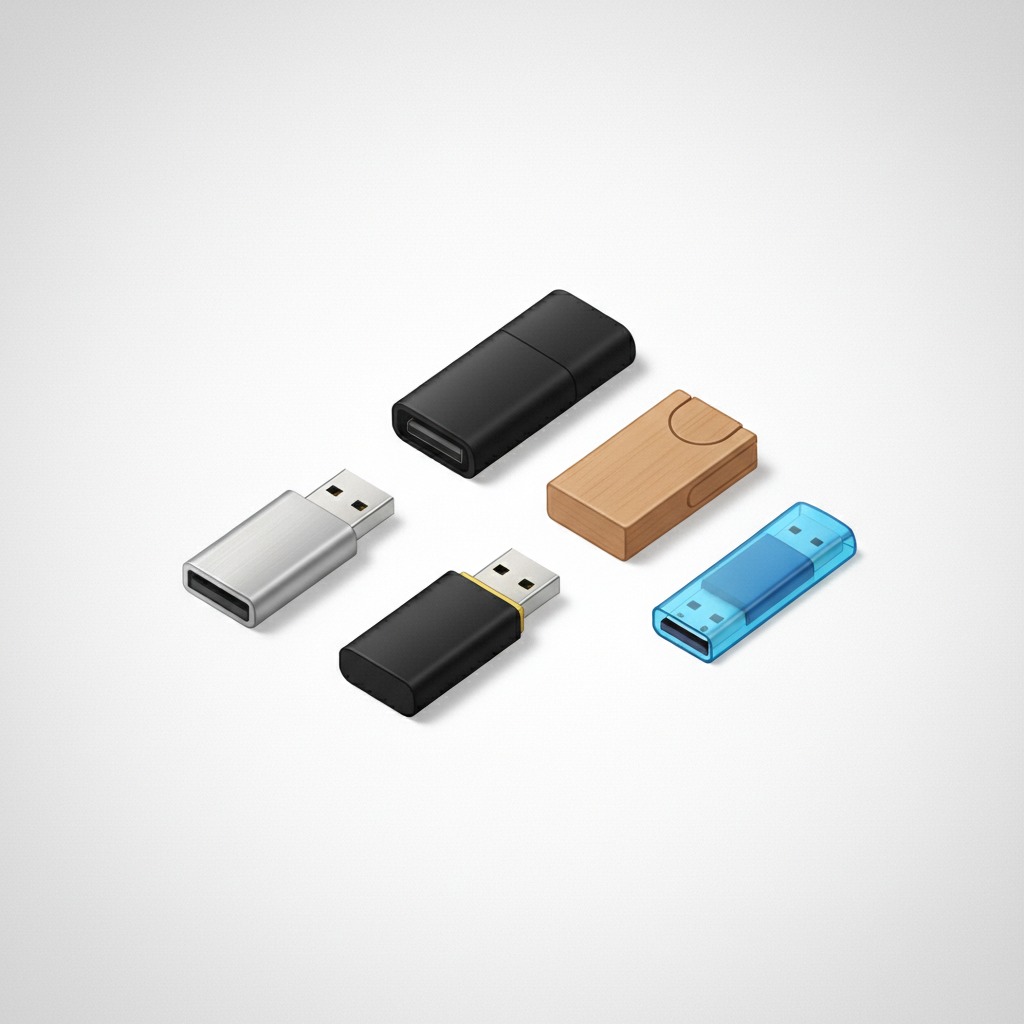
If you’ve gone looking for a basic 1GB or 2GB stick recently, purely out of habit because that’s what “a flash drive” used to mean, you’ve probably found the smallest realistic option starts closer to 32GB or 64GB. That’s not a coincidence, and it’s not manufacturers arbitrarily deciding small drives aren’t worth making. There’s real economics behind it, and understanding it makes buying the right one today a lot less confusing.
How NAND Chips Got This Dense
The core technology inside every flash drive is NAND memory, and its capacity growth has come from three overlapping engineering paths: shrinking individual memory cells, packing more bits into each cell, and stacking layers of cells vertically in 3D NAND. Back in 2005, Toshiba and SanDisk announced an 8Gb chip capable of storing 1GB on a single die that was “less than 5 percent larger” than its predecessor while holding twice the data.
That kind of density jump, on a chip barely bigger than the one before it, is the entire story compressed into one data point.
Most consumer flash drives today use TLC (triple-level cell) NAND, which crams three bits into every memory cell instead of one. Other NAND types generally offer better speed and durability, but TLC is the cheapest to produce at scale, which is exactly why it dominates cost-sensitive products like USB drives.
Why Cutting Capacity Doesn’t Cut the Cost
Here’s the part that explains why small drives vanished rather than just staying cheap: a 1GB drive and a 64GB drive built on modern NAND need almost identical everything else. Both require a controller chip, a USB connector, a small circuit board, a casing, and packaging. Both need to be assembled, shipped, and given retail shelf space. None of those costs shrink meaningfully just because the memory chip inside holds less data.
Once high-density NAND became cheap enough at scale, the memory chip itself stopped being the expensive part of a flash drive. The fixed costs around it didn’t move. A manufacturer can’t simply make a $2 version of an $8 drive by giving it 1/32nd the capacity: the savings from a smaller memory chip are a rounding error next to everything else built into the product.
The 8GB Line Windows Drew
There’s also a specific, practical line that pushed manufacturers away from tiny drives: Microsoft’s own Windows installation media tool requires a blank flash drive with at least 8GB of free space. That single requirement makes anything under 8GB unusable for one of the single most common reasons an ordinary person buys a flash drive in the first place. A product that can’t do that job has a shrinking reason to exist on a shelf next to ones that can.
The Price Collapse, By the Numbers
The economics only make sense with the actual price history attached. USB flash storage went from more than $8,000 per gigabyte in its early years down to roughly 94 cents per gigabyte by 2013. That’s not a gradual decline; it’s a price collapse of roughly 8,500x, nearly four orders of magnitude, in about a decade.
Once a technology falls that far that fast, the cost logic of “make it smaller to make it cheaper” stops making sense; the smart move for manufacturers becomes standardizing around higher base capacities instead.
A Supply Wrinkle Worth Knowing About in 2026
There’s a counterintuitive twist worth flagging if you’re shopping this year specifically: global MLC NAND capacity is projected to drop 41.7% year over year in 2026, as major suppliers scale back or halt production of that particular NAND type to redirect resources toward newer processes. The odd result is that an older NAND type can get *more* expensive as its supply shrinks, even while the broader trend of storage getting cheaper over time continues elsewhere.
If a specific drive’s price looks unusually high for its spec, this kind of supply-side shift is a real, current reason why, not necessarily a sign you’re being overcharged.
The Same Economics Are Reshaping SSDs and microSD Cards
None of this is unique to USB drives. The same NAND cost structure, fixed packaging and assembly costs staying flat while the memory chip itself gets cheaper and denser, governs internal SSDs and microSD cards too. It’s the reason a base-tier laptop SSD today typically starts well above the tiny capacities that were standard a decade ago, and why camera and phone microSD cards have followed a nearly identical climb from megabytes to hundreds of gigabytes over the same stretch of years.
If you’ve noticed that “the cheap option” in almost any storage category keeps creeping upward in capacity rather than staying put in price, this is the same underlying mechanism at work, not a separate trend in each product category.
That connection matters for how you shop, not just how you understand the market: don’t assume a “budget” storage product in any category is still sized the way budget options used to be. The floor has moved up across the board.
Picking the Right Capacity Today
For anything close to normal use, capacity math has flipped from “buy the smallest one that’s cheap enough” to “buy enough that you’re not artificially limited, since the price difference barely matters anymore.” A few concrete starting points:
- 64GB covers a Windows installer, a decent folder of documents and photos, and most everyday transfer tasks with real room to spare.
- 128GB-256GB is a sensible pick if you’re moving large media files, working with video, or want one drive that comfortably handles multiple jobs without swapping.
- 512GB and up starts making sense mainly if you’re using it as genuine portable working storage, not an occasional-use backup stick, since you’re paying a real premium for that ceiling.
Putting that against a few concrete situations makes the choice less abstract. Someone who just needs a reliable drive to keep a Windows installer and a handful of setup files ready for whenever a PC needs reinstalling is squarely in 64GB territory: comfortably above Microsoft’s 8GB minimum with room for other setup files too, without paying for capacity that specific job will never use.
A student or freelancer moving folders of documents, presentations, and the occasional short video between a home computer and a work or school machine tends to land in the 128GB-256GB range, since documents alone barely register but media files add up fast.
Someone doing actual creative work, transferring RAW photos or longer video footage as part of a regular workflow, is the realistic case for 512GB or more, where the drive is functioning as working storage rather than an occasional courier.
None of these categories map neatly onto “how much do I own right now.” They map onto how the drive gets used repeatedly over its life, which is the detail that made the old buy-exactly-what-you-need instinct misleading in the first place.
Genuinely small drives haven’t vanished completely; they’ve mostly moved out of consumer retail and into industrial and embedded applications, where a fixed hardware configuration or guaranteed long-term compatibility matters more than raw capacity. Specialty suppliers like Delkin still sell drives starting around 1GB, and Apacer offers options as low as 256MB, for uses like embedded firmware storage or legacy equipment that was never built around modern capacities.
If you’re shopping for ordinary personal or work use, that market isn’t the one you want; it’s worth knowing it exists mainly so a surprisingly tiny, surprisingly expensive “specialty” drive doesn’t confuse you if you stumble across one.
The old instinct to buy exactly as much capacity as a specific task needs made sense when price scaled steeply with size. It doesn’t scale that way anymore, and buying a size or two above what you think you need now typically costs only a few dollars more, not the multiples it once did.
*Source: Engadget — “Why flash drive capacity keeps increasing (and why small drives are rarely sold today)”*
Bottom Line
Choose a 64GB USB flash drive for Windows installs and daily transfers, or 128GB-256GB if you regularly move large media files. Check current prices before buying, as 2026 MLC NAND supply constraints may inflate specific drive costs.