Apple has never made its own smart home security camera or doorbell. That’s about to change. A detailed roadmap points to Apple entering both categories for the first time, alongside a new smart home hub with a display and refreshed versions of its existing HomePod lineup. For anyone who’s been holding off on smart home purchases specifically waiting for Apple to take the category seriously, that wait has a real answer now, and it’s worth understanding what’s arriving, and when, before deciding whether to wait for it.
What’s Coming, and On What Timeline
The roadmap splits into three real timeframes, not one vague “Apple is working on smart home stuff” story. Most imminent, expected this fall: an updated HomePod mini moving from its current S5 chip to an S9 or better, adding a newer wireless chip (likely the N1, which has already debuted in iPhone), possible new colors, and Siri AI support, priced at $129. Alongside it, a refreshed Apple TV 4K bumping from the A15 Bionic to the A17 Pro chip, a tweaked remote, and local Apple Intelligence processing, starting at $199.
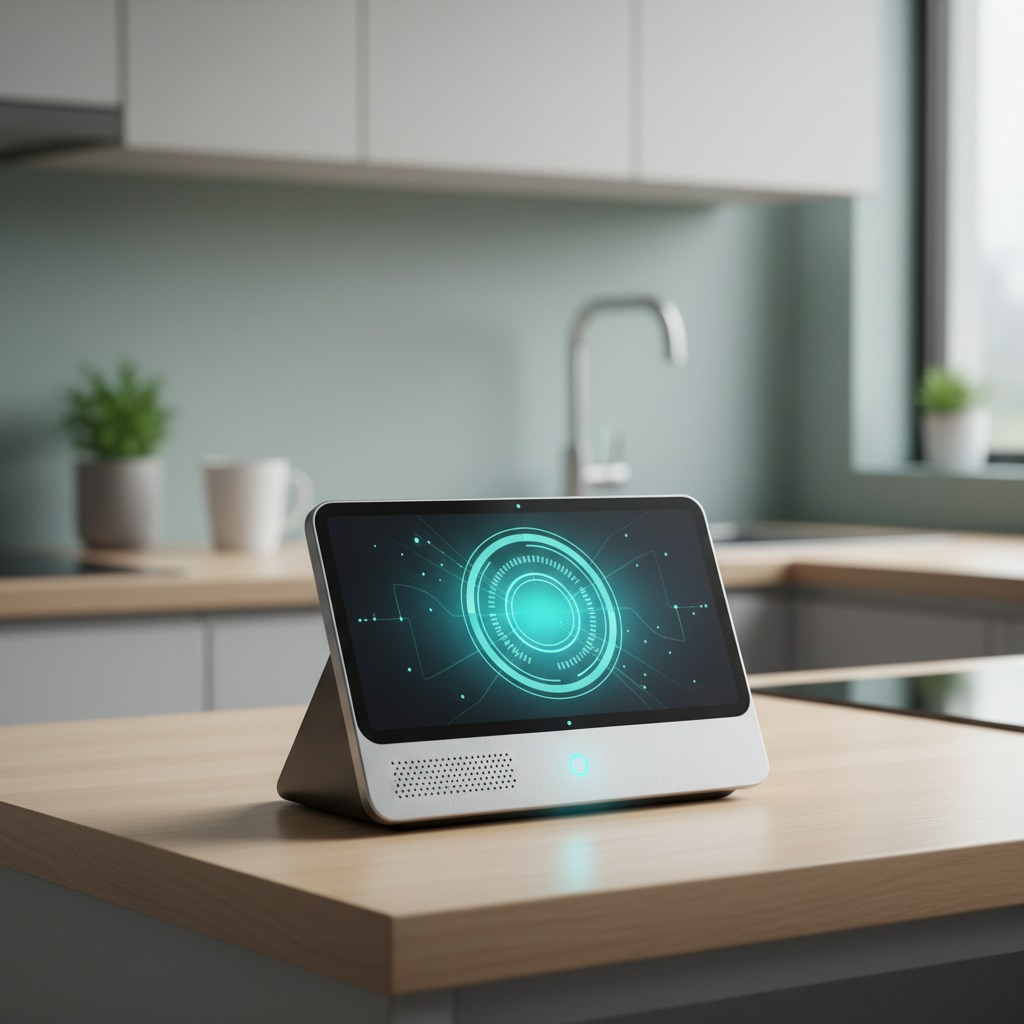
The more genuinely new product arrives between October 2026 and early 2027: a smart home hub Apple is internally calling homeOS, in two variants, a wall-mounted screen version and a speaker-base version, both built around a 7-inch square display and an A18 chip. It’s positioned to handle FaceTime calls, Siri AI interaction, and direct smart home device management, essentially Apple’s answer to the Amazon Echo Show and Google Nest Hub category it’s stayed out of until now.
The furthest-out products are the real category firsts: Apple’s first dedicated security camera, its first smart doorbell, and a more advanced smart display built around a 9-inch screen with a robotic arm, described as a genuine “tabletop robot” rather than a stationary display.
This Connects Directly to the Ecosystem-Lock-In Story
Here’s the part worth reading alongside the current state of Matter, the cross-platform smart home standard now capable of getting a single device working across Apple Home, Google Home, and Amazon Alexa without being rebuilt for each one. Apple building serious first-party hardware doesn’t cancel that shift out, but it does add a real, competing incentive on Apple’s side: the more of your smart home Apple’s own hardware handles directly, the less that cross-platform flexibility matters to you personally, even though the underlying standard keeps getting more capable for everyone else.
That’s not a criticism of either development; it’s just two real trends pulling in different directions at once. Matter is making it easier than ever to mix hardware across ecosystems. Apple’s roadmap is a bet that enough people will choose not to, if Apple’s own first-party hardware is good enough and integrated tightly enough with the rest of an Apple-heavy household.
The “Tabletop Robot” Is a Different Kind of Product Entirely
It’s worth separating the robotic-arm display from everything else on this roadmap, because it’s not a faster version of an existing product category the way the HomePod and Apple TV refreshes are. A 9-inch display mounted on a robotic arm that can move and reposition itself is a meaningfully different device class than a stationary smart display, closer to a home companion device than a countertop hub. Categorizing it alongside a standard smart display undersells what it’s actually attempting, and overselling it as confirmed-and-imminent would be premature too, since it’s explicitly the furthest-out item on the roadmap with no firm timeline.
For shopping purposes, that distinction matters: if a moving, camera-equipped robotic display is specifically what you’re waiting for, you’re waiting for something genuinely unproven as a product category, not just a new entrant in an established one. If what you actually want is a normal stationary hub with a screen, the nearer-term homeOS-based hub is the relevant product to track instead, and conflating the two risks waiting far longer than necessary for the wrong device.
The Price Comparison Nobody’s Highlighting
There’s a concrete cost gap worth knowing if you’re comparing Apple’s upcoming hub against what’s already on shelves. The refreshed HomePod mini at $129 sits meaningfully above the Google Nest Hub (2nd Gen), which includes its own display and typically sells around $99 before discounts. That’s not a small difference at this price tier, and it’s worth factoring in before assuming “wait for Apple’s version” is automatically the better move if budget is a real constraint rather than a secondary consideration.
The gap isn’t necessarily unfair; Apple’s pitch has historically leaned on tighter integration, on-device privacy handling, and build quality rather than being the cheapest option in any category it enters. But a price difference that real deserves to be part of the decision explicitly, not discovered after the fact once you’ve already committed to waiting.
The Hardware Isn’t the Whole Story
Every device on this roadmap leans on Siri handling real, substantive control: managing smart home hardware, interpreting AI-driven requests, running the household-manager functions the new hub is being built around. That’s a meaningfully bigger job than Siri has reliably handled in the past, and it’s worth treating the software side as a genuine open question rather than assuming it’ll simply work because the hardware ships on schedule. Reports around this same roadmap have specifically flagged product delays tied to getting the Siri side ready, not the hardware itself, which is a useful signal about where the real risk in this roadmap sits.
That’s not a reason to write off the whole plan, but it is a reason to treat “the hub is announced” and “the hub does everything Apple is describing, reliably, on day one” as two different milestones. A smart home hub that looks great on a spec sheet but stumbles on the AI-driven control that’s supposed to be its main selling point wouldn’t be the first ambitious software promise to slip past its hardware’s own launch date.
Should You Wait for This
The honest answer depends entirely on which product category you’re shopping in right now. If you’re specifically in the market for a smart display or hub and you’re already deep in Apple’s ecosystem, the homeOS-based hub arriving within the next several months is worth waiting for over buying a stopgap device you’ll likely replace. If you need a security camera or doorbell today, Apple’s version is far enough out, and unpriced, that waiting isn’t a realistic option; established competitors in those specific categories aren’t going anywhere, and Matter compatibility means a camera or doorbell bought now doesn’t lock you out of whatever Apple eventually ships.
For anyone not already committed to Apple’s ecosystem specifically, this roadmap is more useful as confirmation that serious competition is coming to categories that have been light on genuine competition, than as a reason to delay a purchase you actually need now. A Matter-certified device bought today keeps that option open either way, which is exactly the flexibility the ecosystem shift covered elsewhere on this site is supposed to protect.
*Source: 9to5Mac — “Apple has a huge product roadmap for the smart home: Here’s what’s coming”*