Android Voice Assistant: Key Takeaways
- The EU ruling requires Google to give third-party Android voice Assistant equal access to DSP wake-word hardware by Android 18.
- Current Android voice Assistant alternatives drain more battery because they lack the same low-power detection path as Gemini.
- The “equally effective” standard ties compliance to measurable speed, energy use, and ease of use outcomes.
- Open-standard smart home hardware bought today remains compatible while the Android voice Assistant rollout progresses through 2028.
If you’ve ever looked at a non-Google smart home voice assistant and decided against it because it drained your phone’s battery or demanded blanket microphone access, that wasn’t a flaw in the assistant you were considering. It was Android itself, and it’s about to change.
Table of Contents
On July 16, 2026, the European Commission adopted a Digital Markets Act decision requiring Google to open 11 Android features to competing assistants on equal terms. The Open Home Foundation, the organization behind Home Assistant, was consulted directly in the process. That matters for anyone shopping for a smart speaker or hub, because it targets the exact technical gap that’s kept most people locked into Google’s assistant by default, whether they genuinely preferred it or not.
The Battery Trick Nobody Talks About
Google’s own assistant uses dedicated always-on hardware, a digital signal processor doing the first-stage wake-word listening, so it can sit ready 24/7 without meaningfully draining your battery. Third-party assistants haven’t had access to that same hardware path. Home Assistant’s own voice assistant, known as Nabu, had to fall back to CPU-only wake-word detection instead, and the difference is not subtle: roughly 15% battery drain against Google’s roughly 1% for doing the same always-listening job.
That gap alone explains a lot of “I tried a third-party assistant and it killed my battery” experiences that got blamed on the assistant itself rather than on the platform never giving it the same hardware access Google’s own assistant used.
The Access Trade-Off Behind That Choice
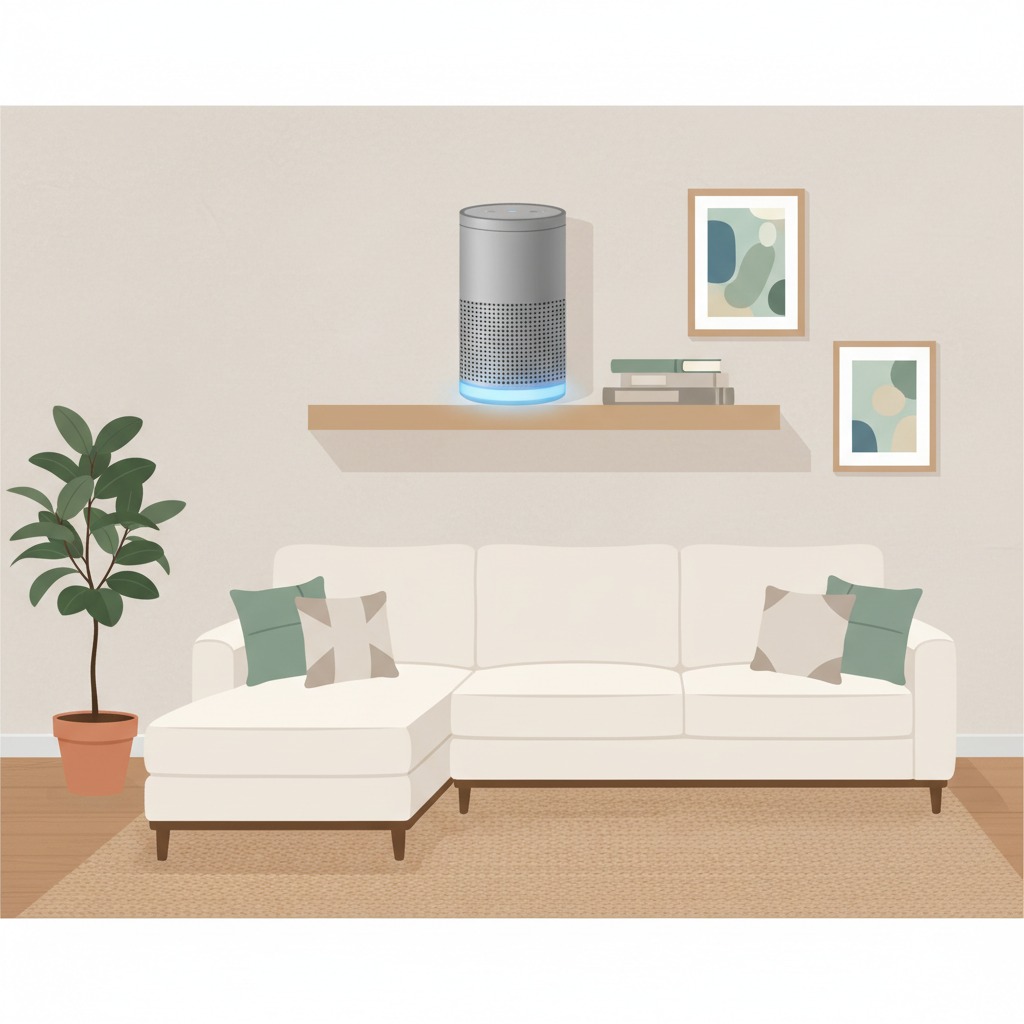
Battery life wasn’t the only cost. Without DSP-level processing, a third-party assistant listening for its wake word had to either accept a much less efficient detection method or ask for broader, less sandboxed microphone and camera permissions than Google’s assistant needed for the same feature. In practice, choosing a non-Google assistant meant picking between worse battery life, looser always-on listening permissions, or just giving up and going back to Gemini.
None of those were really a choice about which assistant worked better for you; they were a choice about which technical compromise you were willing to live with.
Why “Equally Effective” Is the Real Threshold
Regulators requiring a company to open up a platform have run into this exact problem before: a company technically complies while making the opened-up path noticeably worse than its own product, satisfying the letter of a ruling while leaving the practical outcome unchanged. A vague “must allow access” requirement would have let Google do exactly that here, shipping some technically-functional-but-degraded API and calling it compliance.
The “equally effective” language exists specifically to close that loophole. It ties compliance to measurable outcomes, ease of use, speed, and energy consumption named explicitly, rather than to the mere existence of an access point. That’s the detail that turns this from a symbolic ruling into one with a real enforcement hook: a third-party assistant still burning noticeably more battery than Gemini for the same wake-word job wouldn’t just be an unfortunate side effect, it would be evidence the ruling isn’t being followed.
What Google Has to Open Up, Specifically
The ruling isn’t vague about what changes. Among the 11 required features, Google has to grant equally effective access to: always-on wake-word detection with the same DSP-level processing Gemini uses, ambient sensor access (microphone and camera), screen automation, the long-press home gesture that currently invokes Gemini specifically, structured access to apps like Gmail, Calendar, and Maps, system-level controls, on-device AI model access, and the background-execution rules that let an assistant stay ready without the OS killing it to save power.
The European Commission’s own language requires this access to be “equally effective,” specifically on ease of use, speed, and energy consumption, not just technically possible in some degraded form.
That “equally effective” standard is the part worth paying attention to. A technical compliance path that still leaves third-party assistants slower or hungrier for battery than Gemini wouldn’t satisfy it; the ruling is written to close the exact gap described above, not just require Google to open a door that’s still hard to walk through.
A Legal Commitment, Not a Same-Year Fix
This isn’t live yet, and it’s worth being upfront about how far out it actually is. Most of the required features have to ship with Android 18, due by August 1, 2027. Concurrent multi-assistant wake-word detection, letting more than one assistant listen for its own wake word at the same time, is pushed further out to Android 19, due by August 1, 2028.
If you’re shopping for a smart speaker or hub today, this doesn’t change anything about your phone’s Android version this year or next; it’s a real, dated regulatory commitment, not a rumor, but it’s also not a same-year fix.
Why the European Commission Was Involved At All
It’s worth understanding why this came from a regulator rather than a voluntary platform decision. Android and the Play Store were designated as “core platform services” under the EU’s Digital Markets Act back in 2023, a classification that places an open-ended obligation on Google to let third-party services interoperate with the software and hardware features it controls.
That’s a materially different mechanism than Google choosing, on its own timeline, to open up assistant access the way it periodically opens up other APIs. This is a legal requirement with fixed dates attached, which is exactly why the Android 18 and Android 19 deadlines above are concrete commitments rather than a roadmap Google could quietly slip.
The Open Home Foundation’s direct involvement in the consultation process is also worth noting for anyone specifically invested in open smart-home standards. This wasn’t decided in a vacuum between regulators and Google; the organization building the leading open-source alternative had a seat at the table shaping what “equally effective” actually has to mean in practice, not just in principle.
What This Means for What You Buy Now
For anyone currently choosing between a Google-ecosystem smart speaker and something built around an open assistant like Home Assistant’s Nabu, the calculation you’re making today is temporary in a way it wasn’t before this ruling. The battery and permissions tradeoff that’s made non-Google options feel like a compromise has an actual expiration date attached to it now, even if that date is a couple of years out.
That’s worth factoring in if you’re deciding between locking into one ecosystem versus hardware that’s built to work with more than one assistant: platform flexibility is about to become less of a technical sacrifice and more of a genuine, equally-supported choice.
It’s also a reasonable prompt to revisit whatever assumptions led you to a Google-only setup in the first place. If battery drain or permission scope was the reason you ruled out a third-party assistant rather than genuine feature limitations, that specific reason is now on a fixed timeline to stop being true.
What to Do While You Wait
None of this means holding off on a smart home purchase until 2027. Hardware built around open standards, particularly Matter and Thread, doesn’t lose value or compatibility while this rollout plays out; a Matter-certified speaker or hub bought today will still work the same way once third-party assistants gain equal access, since Matter operates at the device layer rather than the assistant layer this ruling addresses.
The DMA decision changes which assistant can efficiently listen and act on your phone, not which smart home devices those assistants can control.
If you’re choosing hardware now with an eye toward eventually running a non-Google assistant without the current battery penalty, the safest purchase is device-standard-agnostic: pick Matter-compatible hardware over anything locked to a single ecosystem’s proprietary protocol, and the assistant question becomes something you can revisit later without having to replace the hardware underneath it. That separation, between what device you buy and which assistant eventually controls it efficiently, is exactly what this ruling is pushing the whole platform toward.
*Source: Open Home Foundation — “A big win for Android interoperability”*
Bottom Line
The EU mandate gives third-party Android voice Assistant a fixed timeline to match Gemini’s battery efficiency and permissions by 2027. Consider Matter-certified speakers now for flexibility across assistants as the platform opens up.