Nearly every smart home starter guide still opens with the same line: pick one ecosystem, Apple or Google or Amazon, and stick with it, because mixing brands means devices that don’t talk to each other. That advice was accurate for years. It’s no longer the whole story, and repeating it without qualification means missing the actual reason to shop differently now.
Matter, the cross-platform smart home standard, has reached the point where a single device can genuinely work across Apple Home, Google Home, and Amazon Alexa without being reconfigured for each one. That’s real. It’s also not the same as saying ecosystem no longer matters at all, and the gap between those two claims is exactly where a smart home purchase can still go wrong.
What Changed, Concretely
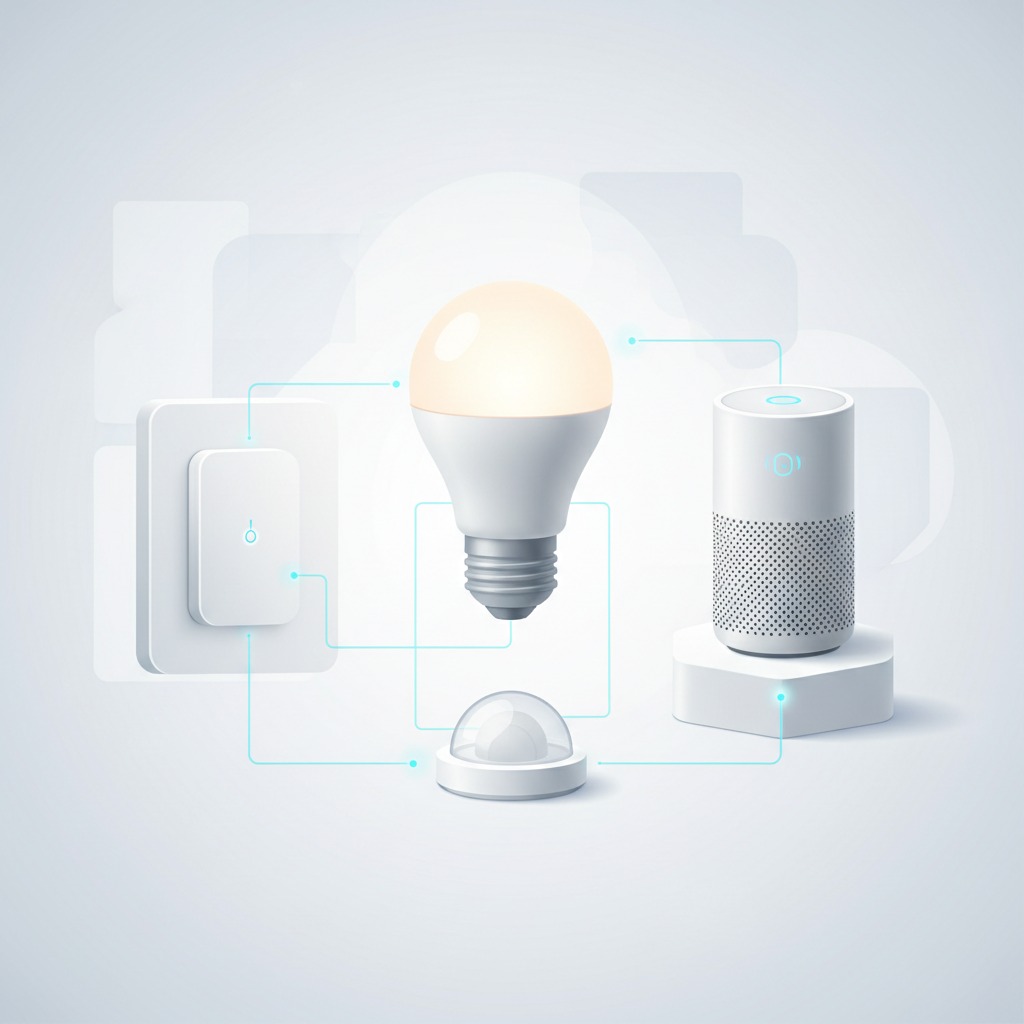
The core Matter feature that makes this possible is multi-admin support: a Matter-certified device can be controlled from more than one ecosystem’s app at once, over your home network rather than routed through each platform’s own cloud. In practice, that means a Matter smart bulb bought without knowing which voice assistant you’ll eventually settle on can still end up working with whichever one you pick, or more than one at the same time. That’s a genuine structural shift from the old model, where a device built for Alexa simply had no path into Google’s or Apple’s ecosystem at all.
Over 750 Matter-certified products now exist, spanning both consumer devices and a growing professional segment, with major manufacturers including Ikea specifically pushing mass-market products priced under $10. This isn’t a niche standard with a handful of expensive early-adopter devices; it’s reached genuine retail scale.
The Part the “It Just Works Now” Version Skips
Here’s where the outdated advice and the overcorrected version both miss something real: how each ecosystem implements Matter varies enough to cause genuine, specific compatibility problems, not just missing polish. Google Home is still on Matter 1.2 and hasn’t rolled out generic switch support that was part of Matter’s very first release. Amazon’s Alexa claims Matter 1.4 SDK support but doesn’t yet support leak sensors. Apple Home picked up robot vacuum control starting with iOS 18.4 while still lacking most Matter 1.4 features overall.
These aren’t abstract version-number gaps. Ikea’s Bilresa remote control has been reported to fail specifically in Google’s ecosystem. Ikea’s Klippbok water detector has compatibility problems specifically with Alexa. Even basic interaction details like whether a button’s single-press, double-press, and long-press actions all register correctly varies by which platform is doing the controlling, not just by which device you bought.
Thread Is the Other Half of This Story
Matter frequently runs on top of Thread, a separate low-power wireless networking protocol, and Thread has its own version of the same “getting there, not there yet” story. As of January 1, 2026, Thread 1.4 certification became mandatory for new Border Routers, the devices that connect your Thread network to the rest of your home network. Battery life on Thread devices has been closing the gap with older Zigbee devices, though not uniformly: one cited real-world example, the Aqara FP300 sensor, gets roughly 3 years on Zigbee against roughly 2 years running Thread.
A more practical issue: running multiple Thread networks in the same home, which can easily happen if different devices set up their own Border Routers independently, is a documented common cause of connection problems. That’s a genuinely useful thing to know before buying, and it’s the kind of detail that “just buy Matter devices and you’re fine” oversimplifies away.
Not Every Device Category Is Equally Affected
The gaps above aren’t spread evenly across every kind of smart home product, which matters when deciding where to worry about this and where not to. Simple, single-function devices, a plug that turns on and off, a basic light bulb with brightness control, tend to hit the common ground every ecosystem supports reasonably well, since there’s not much surface area for an implementation gap to hide in. The problems concentrate in devices with more specific, less universal behavior: sensor types that aren’t part of every platform’s supported list yet (leak sensors on Alexa, for instance), multi-stage button interactions, and anything leaning on a newer Matter revision that a given ecosystem hasn’t caught up to.
That’s a genuinely useful filter when shopping: a smart plug or basic bulb is about as safe a Matter purchase as exists right now, close to the “just buy it and it works” ideal the marketing promises. A specialized sensor or a device with layered button behavior is exactly where it’s worth the extra few minutes checking your specific ecosystem’s current support list before assuming Matter certification alone guarantees it’ll do what you expect.
What This Means When You’re Shopping
The realistic middle ground: buying Matter-certified devices is a genuinely good default now, since it keeps your options open on which voice assistant or hub you eventually standardize around, in a way that wasn’t possible a few years ago. But “Matter-certified” isn’t a guarantee that every feature will behave identically across every ecosystem, and specific, documented gaps exist right now between what Apple, Google, and Amazon each currently support.
Before assuming a specific feature, like a particular sensor type, a specific button-press pattern, or a specific automation trigger, will work the way you expect, it’s worth checking whether the ecosystem you’re using has full support for it yet, rather than assuming Matter certification alone settles the question. This connects directly to the broader shift already underway: the EU’s 2026 ruling forcing Google to open Android’s voice-assistant layer to competitors is addressing the assistant side of ecosystem lock-in, while Matter is addressing the device side. Neither one has fully finished that job yet, but both are real, dated, verifiable progress away from the old all-or-nothing ecosystem choice, not just marketing language claiming the problem is already solved.
Matter Also Changed What “Starting Cheap” Means
The old starter-guide advice to begin with a smart plug or two wasn’t wrong about the category, just outdated about the stakes involved in picking wrong. Ikea has been aggressively pushing mass-market Matter products, some priced under $10, specifically into that entry-level space. Buying one of those a few years ago meant committing to whatever ecosystem it was built for; buying the Matter version now means that same cheap plug isn’t a wrong-ecosystem mistake waiting to be discovered later; it’s compatible with Apple Home, Google Home, and Alexa from the same purchase.
That changes the actual risk calculus of experimenting. The old advice to “start with one lamp or one plug and see how often you use it” made sense partly because a wrong first purchase was cheap to replace but annoying to have picked incorrectly for your ecosystem. With Matter-certified basics this inexpensive and this broadly compatible, that specific downside has mostly disappeared for the simple device categories, even though it hasn’t disappeared for the more specialized ones covered above.
The Practical Takeaway
Don’t throw out ecosystem consideration entirely, and don’t treat it as the rigid, permanent choice it used to be either. Buying Matter-certified hardware protects you from the worst version of vendor lock-in that made “pick one ecosystem and never deviate” necessary advice in the first place. Checking the specific feature you actually care about against your specific ecosystem’s current, real implementation status protects you from the newer mistake: assuming a “works with everything” label means every feature works identically everywhere, when the honest 2026 answer is “works across ecosystems for the basics, with real, specific gaps still worth checking first.”
*Source: Matter-SmartHome.de — “The Matter Standard in 2026: A Status Review”*