
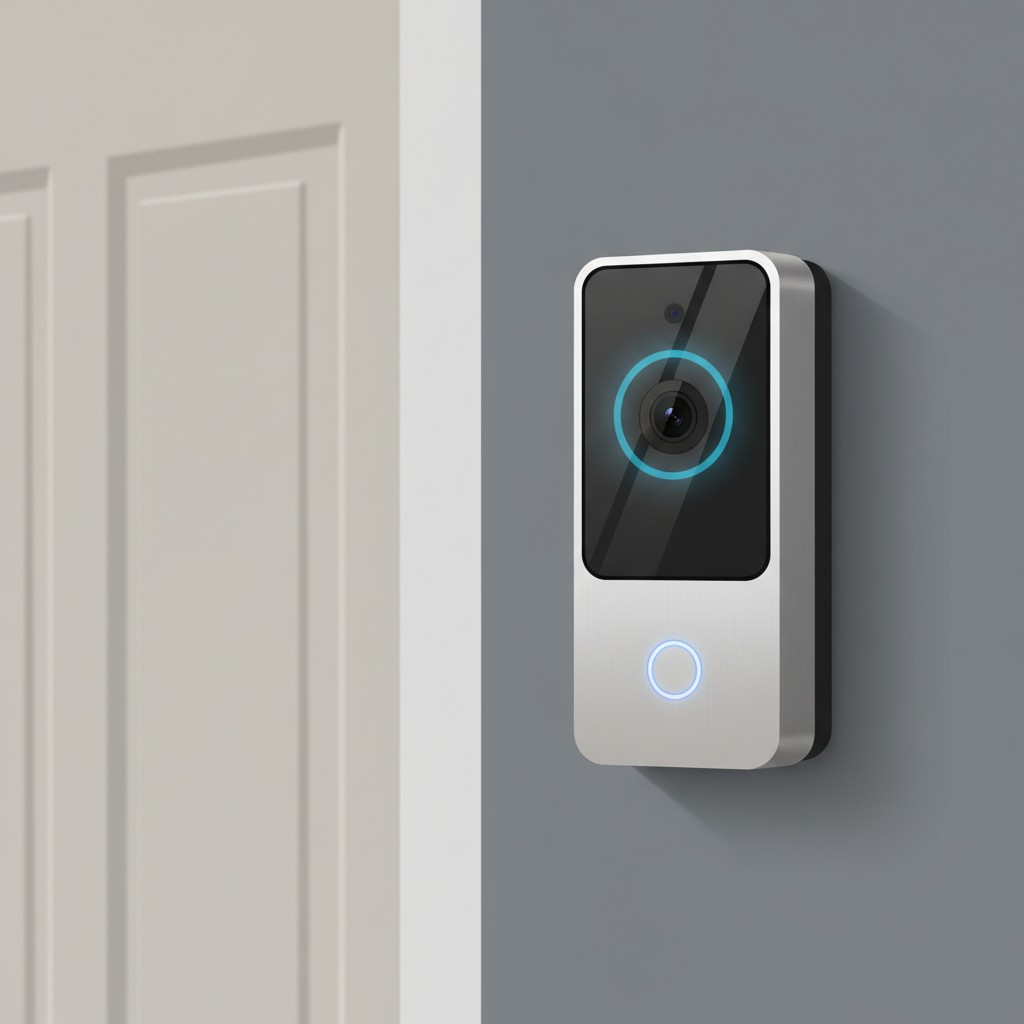
Video Doorbell: Key Takeaways
- Modern video doorbell models like the Tapo D260 and Eufy S4 offer subscription-free detection through on-device AI or local storage hubs.
- Both video doorbell options require separate hardware – microSD card or HomeBase hub – for local recording without monthly fees.
- Radar-enhanced video doorbell detection cuts false alerts from passing cars or animals more effectively than older PIR-only sensors.
- Package detection capabilities differ across video doorbell models, with the Tapo D260 adding quick-response messaging for delivery interactions.
For most of the last decade, “smart” video doorbell detection meant sending every clip to the cloud and paying a monthly fee for the software that tells a person apart from a passing car.
That’s changed enough in 2026 that it’s worth explaining how, not just which model to buy: Eufy released a new doorbell on September 28, 2026, and TP-Link recently announced its own new model, and between the two of them they show how far subscription-free detection has come: TP-Link confirms its detection runs directly on the doorbell itself, and Eufy’s design centers on local storage that serves the same no-subscription goal, no monthly fee required for the core feature that used to be the reason to subscribe.
Table of Contents
What “On-Device AI” Actually Means
The distinction matters because it changes what you’re paying for. A cloud-based system uploads video to a server, runs detection software there, and sends the result back to your phone, which is why providers like Ring have historically charged monthly for that processing. On-device AI runs the same kind of detection using a chip built into the doorbell itself, so the classification (person, vehicle, package, animal) happens locally before anything is sent anywhere.
TP-Link’s recently announced Tapo Doorbell Pro D260 does exactly this: subscription-free, on-device AI identifying people, animals, vehicles, and packages, plus an optional facial-recognition feature that stores up to 50 local profiles.
Eufy’s Video Doorbell S4, launched September 28, 2026 at $299, takes a related approach with its OmniTrack system, which uses radar tracking (out to about 8 meters, via dual PIR sensors) to keep a moving subject centered in a 180-degree panoramic frame, paired with local storage on a HomeBase S380 hub to “bypass monthly subscription fees,” per Eufy’s own description.
The Catch: Local Storage Still Usually Needs a Box
Subscription-free doesn’t mean hardware-free. The Tapo D260 stores footage on a microSD card, up to 512GB, directly in the doorbell. The Eufy S4 instead connects to its separate HomeBase S380 hub to get local storage, which is how it bypasses monthly fees; Eufy’s own materials don’t spell out what happens without that hub, so it’s worth confirming directly whether live viewing alone still works or whether the hub is effectively mandatory.
That HomeBase is an added cost most buyers won’t see mentioned in the headline price, and it’s the detail worth checking before assuming a “no subscription” doorbell has no ongoing or upfront cost beyond the unit itself. Before buying either doorbell, checking whether the box includes the hub or requires buying it separately is worth an extra minute on the product page.
What Genuinely Still Costs Extra
A few features on both doorbells are gated behind more than the base unit. Eufy’s VR viewing and full OmniTrack tracking specifically require Eufy’s own app rather than a generic smart-home app, and using the S4 with Apple HomeKit specifically needs that separate HomeBase S380 gateway, not just the doorbell.
On the Tapo D260, the core AI detection (people, animals, vehicles, packages) is free and local, but the 50-profile facial recognition feature is the kind of add-on that’s worth confirming still works without an account tied to a paid tier, since “optional” features on connected hardware sometimes turn out to require an account even when they don’t require a monthly fee.
How This Compares to Older Subscription-Free Doorbells
Eufy and TP-Link aren’t inventing subscription-free detection from scratch this year; earlier models like the Eufy E340 (dual cameras, 8GB built-in local storage) and the original Tapo D225 (up to 8 months of battery life, free AI detection for people, vehicles, packages, and pets) already established local-storage, no-subscription doorbells as a real category, not a gimmick.
What’s new in the S4 and D260 specifically is the jump in resolution and detection sophistication: the S4’s 3K sensor and radar-based subject tracking, and the D260’s 4K resolution with 3D motion mapping and on-device facial recognition, are meaningfully more capable than what the older, still-solid E340 and D225 offer at their lower price points.
If a 2K camera with basic package detection is enough, the older models are worth checking for a lower price; if the newer AI tracking and higher resolution matter, the S4 and D260 are the current top of that specific, subscription-free tier.
Battery vs. Hardwired: The Tradeoff That Doesn’t Change
Regardless of which subscription-free doorbell you pick, the battery-vs-hardwired decision is unrelated to the AI question and worth deciding separately. The Tapo D260 supports both: hardwired for 24/7 recording with up to 4 seconds of pre-roll footage captured before motion is even detected, or a rechargeable battery lasting roughly 180 days per charge if running wireless.
Hardwired setups catch more (nothing is missed while a battery unit “wakes up” to detect motion), but require existing doorbell wiring or a willingness to run it. Battery models install almost anywhere but need periodic recharging, and a 180-day estimate on any battery-powered smart device is a best-case number that assumes typical, not heavy, doorbell traffic.
Why Radar-Based Detection Cuts Down False Alerts
Both new doorbells lean on radar, not just the passive infrared (PIR) sensors older doorbells rely on exclusively, and the difference shows up directly in how many false alerts you get. PIR sensors detect heat-signature movement, which is why a passing car, a blowing tree branch, or a neighbor’s cat can all trigger the same “motion detected” push notification as an actual visitor.
The Tapo D260 combines radar-based motion detection with its PIR sensors specifically to cut down on that noise, and the Eufy S4’s radar tracking (out to roughly 8 meters via dual PIR sensors) serves a similar filtering role before the panoramic OmniTrack system decides what’s worth centering the frame on.
The practical effect, for anyone who’s used an older doorbell camera, is fewer notifications overall, not just more accurate ones, which matters more day to day than the resolution bump most buying guides lead with.
What Package Detection Alerts Let You Do
Package detection sounds like a single feature, but what a doorbell does with that detection varies. The Tapo D260 also includes a quick-response messaging feature alongside its package-recognition AI, letting a homeowner send a preset message to whoever’s at the door (a delivery driver, for instance) without picking up a phone call, on top of the standard alert that a package was dropped off.
That’s a meaningfully different experience than just getting a notification after the fact: it’s the difference between finding out a package arrived and being able to tell the driver where to leave it while they’re still standing there.
Whether a specific model supports two-way quick responses like this, versus just a one-way “motion detected: package” alert, is worth checking on the product page rather than assuming every doorbell advertising “package detection” handles it the same way.
One More Thing Spec Sheets Don’t Show: Mounting Height and Angle
A 180-degree field of view sounds like a fixed number, but how much of a porch it covers in practice depends heavily on where the doorbell sits relative to the door, not just the sensor’s rated angle. Mounted too high, a wide-angle doorbell camera captures mostly ceiling and the tops of visitors’ heads; mounted at the standard 48-to-52-inch height most manufacturers recommend, the same sensor captures a full-body view of whoever’s standing at the door along with a usable strip of the walkway leading up to it.
Whether a specific doorbell ships with an angle-adjustment mount to correct for an uneven or angled doorframe is worth checking on the product page before buying, since mounting flush on an angled frame and assuming a wide field of view will compensate is a common way to end up with footage that technically covers the area but isn’t actually useful for identifying a visitor.
What to Check Before Buying Either
Given how new both the S4 and D260 are, actual long-term reliability data doesn’t exist yet the way it does for the older E340 or D225.
Before buying either newly released model, it’s worth checking for the specific things a launch-week product page won’t emphasize: whether the local-storage hub or microSD card is included in the box or sold separately, which specific smart-home platforms (Alexa, Google Home, Apple HomeKit, SmartThings) require an extra hub to work at all, and whether the field of view actually covers a full porch or just a narrow strip of the doorway (the S4’s spec is a 180-degree horizontal-and-vertical field of view, while the D260’s is a 180-degree diagonal measurement, which are not the same number in practice), which varies more by mounting height and angle than the spec sheet number alone suggests.
None of that shows up in a features list, and all of it affects whether the specific doorbell fits a specific door.
Bottom Line
New video doorbell models provide subscription-free AI detection but often need extra hardware for local storage. Check product pages to confirm whether the hub or microSD card is included before purchasing.
Related Reading
- mmWave Presence Sensors Are Cheap Now. Here’s What They Actually Do Differently
- A Ring Doorbell Can Cost $920 Over Three Years. Here Are Five That Cost $35 to $180, Total.
- The Real Cost of Smart Home Subscriptions — and What to Buy Instead
Further reading: Original reporting: techdigest.tv.