Oura charges a monthly membership for most of what its ring measures. A smart ring with no subscription is therefore the first thing many buyers look for. Most of the alternatives say they do not charge for core features, but the details vary, and a few pages still contradict each other. This guide sticks to what the manufacturers themselves say, flags the gaps, and gives you a checklist for the things worth confirming before you buy.
The baseline: Oura needs a membership
For Oura Gen3 and newer rings, the membership is $5.99 a month or $69.99 a year in the US. Without it you only see your three daily scores. We cover the details in our guide to what you keep and lose if you cancel your Oura membership.
RingConn: no subscription, according to RingConn
RingConn’s product pages and guides say the Gen 2 has no subscription, with no monthly fee for the core experience. The company also lists sleep apnea related data, including an overnight risk assessment, and says clearly that this is screening information and not a medical diagnosis.
RingConn lists battery life at 10 to 12 days depending on ring size, and the Gen 2 starting price at $299 in the US, against $349 for the Gen 3, when we checked. The Gen 2 Air is also described as subscription-free. These are RingConn’s own claims, so they are the company’s word, not an independent test.
Ultrahuman: no fees for core insights, with conflicting pages
Ultrahuman’s “Why Ultrahuman” page says core features are included with the ring, and a March 2026 press release about its return to the US says the company does not charge ongoing fees for core health insights.
The catches:
- Some regional Ring AIR buy pages we found still listed a yearly subscription price. They may be outdated, but we could not confirm that, so check the page for your country at checkout.
- Ultrahuman also sells UltrahumanX, an optional protection plan. It covers accidental damage and support, not your data.
- A few partner-built PowerPlugs cost extra, while most are free.
- The US availability of each ring model has changed in the past, so confirm what you can actually buy where you live.
Samsung Galaxy Ring: check the phone first
Samsung’s own listing says the Galaxy Ring has to be paired with an Android phone running Android 11 or later, using the Galaxy Wearable and Samsung Health apps with a Samsung account. Its footnote says the Galaxy Wearable app is not supported on iOS, so an iPhone owner cannot pair it.
The idea that it has no subscription mostly comes from reviews. We did not find an official Samsung statement about fees for the ring itself. Treat the “no fee” point as likely, but unconfirmed by Samsung.
A quick checklist before you buy
- Ask what is free, in writing. Find the manufacturer’s own statement about fees, not a review site’s summary.
- Check your country’s page. Pricing and subscription wording differ by region.
- Look for optional paid tiers. Protection plans and partner features are separate from the data subscription.
- Confirm your phone works. Some rings only pair with Android, others with both.
- Treat health data as screening, not diagnosis. Sleep apnea style scores are not medical advice.
When you compare prices, look at the total over a few years, not just the sticker price: a ring with no fees avoids the $69.99 a year that Oura charges. More cost comparisons are in our no-subscription guides.
Sources: RingConn Gen 2, Ultrahuman: Why Ultrahuman, Ultrahuman: back in the US press release, Samsung: Galaxy Ring, Oura support: Oura Membership. Prices and terms change; check each maker’s page before you buy. Last checked 29 October 2026.
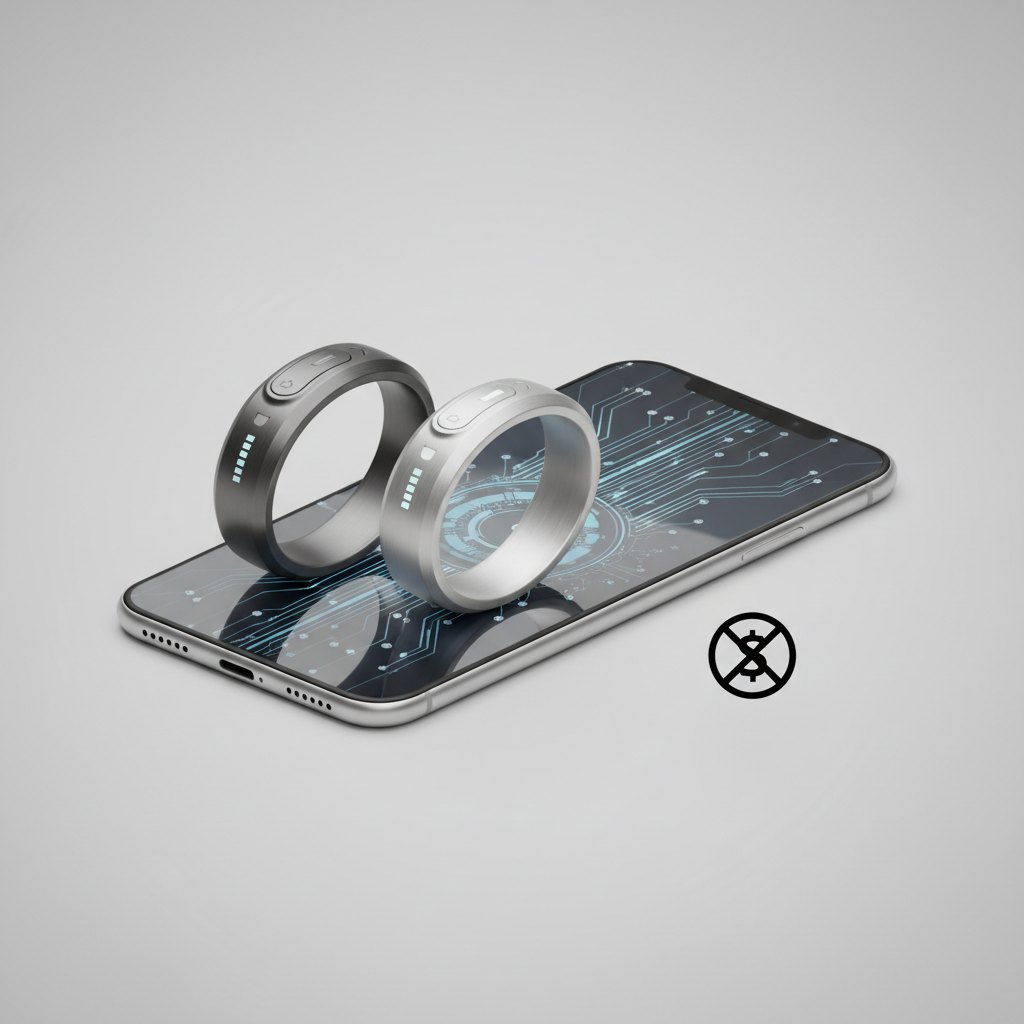
Illustration: AI-generated for iLuxeMart.