Smart Irrigation Controller: Key Takeaways
- An EPA WaterSense certified smart irrigation controller provides independently verified water-efficiency performance beyond marketing claims.
- A smart irrigation controller with zone-by-zone customization delivers more savings by adjusting watering for different sun, soil, and plant needs.
- Most smart irrigation controllers work with existing sprinkler valve wiring, though confirming compatibility with your zone count is advised.
- Checking for local utility rebates on a WaterSense-certified smart irrigation controller can immediately improve the purchase payback math.
A standard sprinkler timer runs on a fixed schedule set once and largely forgotten, watering the same amount on a hot, dry week as it does the day after a heavy rainstorm. A smart irrigation controller replaces that fixed schedule with one that adjusts automatically based on actual local weather data, soil moisture, and plant type, and the water savings from that adjustment, not the convenience of app control, is the real financial case for upgrading.
Table of Contents
How Smart Controllers Actually Decide When to Water
Most smart controllers pull real-time and forecast weather data for the specific local area, factoring in recent rainfall, temperature, and humidity, then automatically skip or reduce a scheduled watering cycle when conditions mean the lawn doesn’t need it. Some models add a physical soil moisture sensor buried in the ground for a more direct, localized reading rather than relying on weather data alone, which is meaningfully more accurate for a yard with uneven sun exposure or drainage, where different zones may need different treatment despite experiencing the same weather.
The EPA WaterSense Label Is a Real, Independently Verified Signal
The EPA’s WaterSense program independently tests and certifies irrigation controllers that meet specific water-efficiency performance standards, providing a genuine, third-party-verified signal distinct from a manufacturer’s own marketing claims about water savings. Checking for this specific certification, rather than relying on a “smart” or “water-saving” label alone, is a reasonably reliable way to identify controllers with independently confirmed efficiency performance rather than just a connected app as the main selling point.
Zone-by-Zone Customization Is Where Real Savings Concentrate
A yard rarely has uniform watering needs across every zone; a shaded area under trees, a full-sun strip along a driveway, and an established flower bed all have genuinely different water requirements. A smart controller that supports zone-specific settings, different plant types, sun exposure, and soil type per zone, delivers meaningfully more water savings than one applying a single blanket adjustment across the entire system, since it can reduce watering specifically where it’s least needed rather than uniformly across zones with very different actual requirements.
Retrofit Compatibility With Existing Sprinkler Wiring
Most smart controllers are designed to work with existing sprinkler valve wiring, meaning a full sprinkler system replacement isn’t required, just swapping the controller unit itself. It’s still worth confirming a specific controller’s compatibility with the existing system’s wiring configuration and number of zones before buying, since older or unusual multi-zone setups occasionally require an adapter or aren’t fully supported by every smart controller on the market.
Local Watering Restrictions and Municipal Rebates
Many municipalities, particularly in drought-prone regions, offer rebates specifically for installing a WaterSense-certified smart irrigation controller, sometimes covering a meaningful portion of the purchase cost, as part of broader water conservation programs. Checking for a local utility or municipal rebate program before buying is worth the search time, since it can directly and immediately improve the purchase’s payback math beyond the water savings alone.
A Practical Buying Approach
- Look specifically for EPA WaterSense certification as an independently verified efficiency signal, rather than relying on general “smart” marketing.
- Choose a controller supporting zone-by-zone customization for a yard with genuinely different watering needs across different areas.
- Confirm compatibility with existing sprinkler valve wiring and zone count before buying, to avoid needing additional adapters or a partial system replacement.
- Check for local utility rebates specific to WaterSense-certified smart controllers before purchase.
The Honest Trade-Off
A smart irrigation controller’s real value comes from its ability to skip or reduce unnecessary watering based on actual conditions, not from app convenience alone, and that value concentrates most in yards with meaningful zone-to-zone variation in sun, soil, and plant type. For a yard with straightforward, uniform watering needs, the savings are more modest; for a larger or more varied yard, particularly in a region with real water costs or restrictions, the payback case is considerably stronger.
Bottom Line
A smart irrigation controller’s value comes from skipping unnecessary watering based on actual conditions, especially in yards with varied zones. Check for EPA WaterSense certification, confirm wiring compatibility, and search for local rebates before buying.
Related Reading
- Motorized Blinds Aren’t Just a Gadget. They’re a Real Energy Bill Lever.
- A Smart Thermostat Can Pay You $50 to $200 a Year Just for Letting Your Utility Nudge the Temperature. Most Owners Never Sign Up.
- A $13 Smart Plug Found the Appliance Costing Me $180 a Year. It Was Sitting There Turned ‘Off.’
Sources: EPA WaterSense: weather-based irrigation controllers.
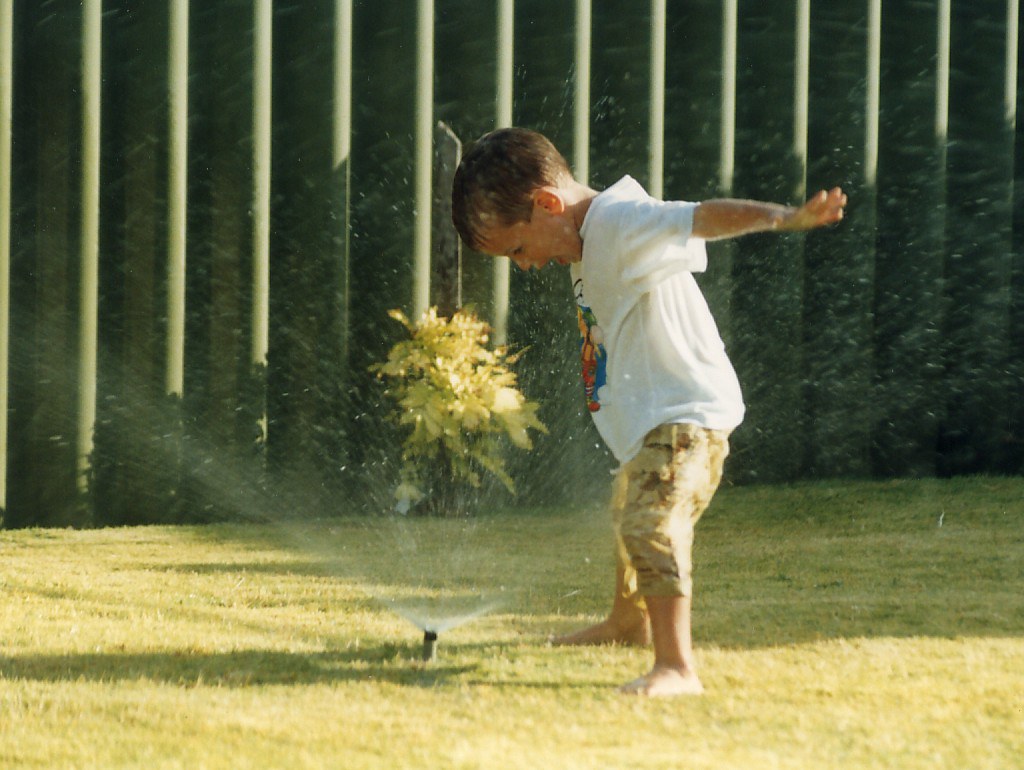
Photo credit: “sprinkler fun” by StormyDog, licensed BY (https://creativecommons.org/licenses/by/2.0/). Source: https://www.flickr.com/photos/32184789@N00/68543986