Kids Smartwatch: Key Takeaways
- A kids smartwatch transmits location and communication data to manufacturer servers, making privacy policies and security practices as important as physical features.
- Independent researchers have documented real security vulnerabilities across multiple kids smartwatch brands, so checking for past findings on a specific model is essential diligence.
- A kids smartwatch with enforced contact-list restrictions meaningfully reduces unwanted contact risk, but parents should verify this works correctly and cannot be bypassed.
- Short battery life that dies during a school day defeats the core safety purpose, so real-world endurance should be tested against actual daily use patterns.
A kids’ smartwatch is functionally a real-time location tracker and communication device built into an appealing, colorful form factor, and the features parents actually shop for, GPS tracking, calling, messaging, are also exactly the features that mean a real company somewhere is collecting, storing, and processing a child’s precise location history and communications. That’s not a reason to avoid the category, but it is a reason to evaluate one with the same scrutiny given to any other device handling a child’s sensitive personal data.
Table of Contents
The Core Feature Set and What It Requires Behind the Scenes
Most kids’ smartwatches offer GPS location tracking viewable by a parent through a companion app, two-way calling or messaging limited to an approved contact list, and sometimes a “SOS” button for the child to alert a parent directly. Every one of these features requires the watch to transmit data, location, call logs, message content, to a server somewhere, generally the manufacturer’s own cloud infrastructure, which means the manufacturer’s data handling and security practices matter as much as the watch’s physical features.
Questions Worth Answering Before Buying, Not After
Checking a specific product’s privacy policy for concrete answers to a few direct questions is worth the ten minutes it takes: how long is location history retained, is data ever shared with or sold to third parties, is the connection between watch and app properly encrypted, and does the company have any documented history of data breaches or security research findings.
A vague or evasive privacy policy that doesn’t clearly answer these questions is itself useful information, since a company confident in its data practices generally states them plainly.
Security Research Has Found Real, Documented Problems in This Category
Independent security researchers have periodically found and reported significant vulnerabilities in specific kids’ tracking watch models over the past several years, including cases where a device’s location or communications could be accessed by unauthorized parties due to weak security implementation, not a hypothetical risk but a documented pattern across multiple brands and incidents in this specific product category.
Checking for known past security research findings on a specific model or brand before buying, via a general search of the product name alongside “security vulnerability” or “researcher,” is a genuinely useful diligence step given this documented history.
The Contact List Restriction Is a Real Safety Feature, Not Just a Feature Checkbox
A watch that restricts calling and messaging to a parent-approved contact list, rather than allowing open communication with any number, meaningfully reduces the risk of unwanted contact reaching a child directly. This is worth confirming explicitly works as described and can’t be easily bypassed, rather than assuming any watch marketed for children automatically includes this restriction correctly implemented.
Battery Life Affects Actual Safety Utility, Not Just Convenience
A kids’ smartwatch with short battery life that dies partway through a school day defeats its own core safety purpose at exactly the time it might matter, since a dead watch provides no location tracking or emergency contact capability at all. Real-world battery life, factoring in GPS tracking’s genuine power draw, tends to run shorter than marketed figures suggest, making this a practical safety consideration, not just a convenience spec, worth checking against actual daily use patterns like a full school day away from a charger.
A Practical Buying Approach
- Read the specific product’s actual privacy policy for data retention, sharing, and encryption practices, rather than assuming all kids’ watches handle data the same way.
- Search for documented security research or past vulnerabilities on the specific brand and model before buying, given this category’s real history of security issues.
- Confirm the contact-list restriction is genuinely enforced and can’t be easily circumvented by the child or outside contacts.
- Test real-world battery life against actual daily use, not just the marketed figure, given how much a dead watch undermines its own safety purpose.
The Honest Trade-Off
A kids’ smartwatch can provide genuine, valuable peace of mind for a parent and independence for a child, but the category has a real, documented history of security and privacy shortcomings that make it worth more scrutiny than a typical wearable purchase. Checking a specific product’s actual privacy and security track record before buying is a reasonable and necessary step, not excessive caution, given what the device is actually designed to collect and transmit.
Bottom Line
A kids smartwatch offers valuable safety features but carries documented privacy and security risks that require scrutiny. Before purchasing, read the specific model’s privacy policy and search for known security vulnerabilities to make an informed decision.
Related Reading
- A VPN Provider Was Hacked, Exposing 865,000 Users Who Thought Nothing Was Being Logged. Here’s What VPNs Actually Do.
- A Flaw in One Baby Monitor Platform Exposed Over a Million Cameras. Here’s the Everyday Mistake Behind Most Baby Monitor Hacks.
- The Pebble Time 2 Costs $225 Once. Your Oura Ring Costs That Every Three Years Just to Keep Working.
Sources: CSO Online: FTC urged to investigate easy-to-hack smartwatches for kids, National Law Review: FTC warning letters to kids’ smartwatch companies (COPPA).
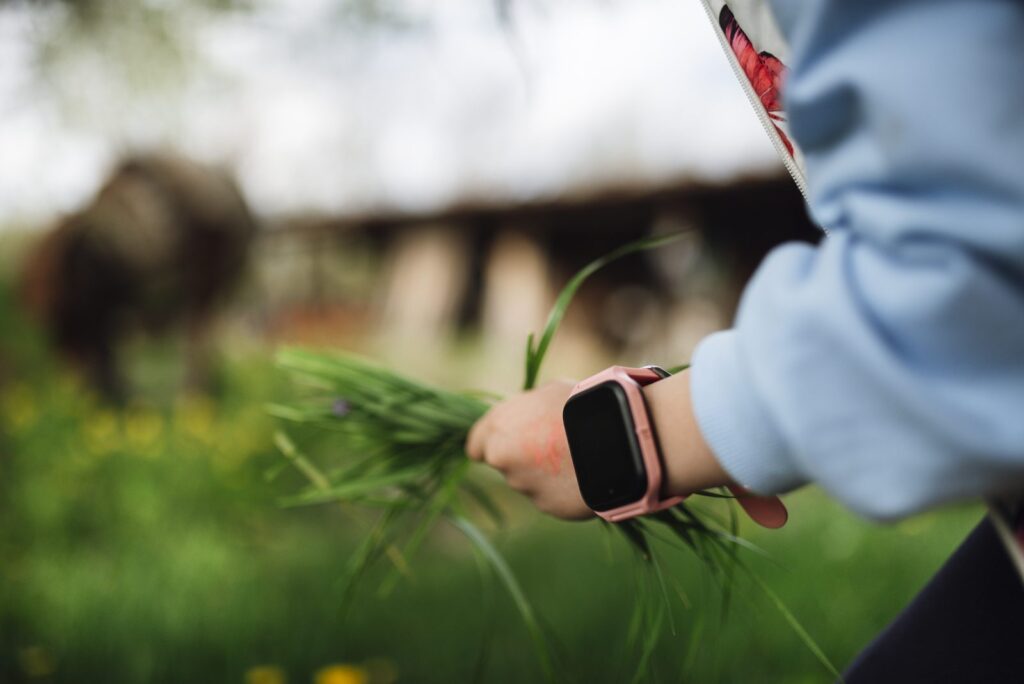
Photo credit: “A child wears a smartwatch on her wrist while picking grass” by Shixart1985, licensed BY (https://creativecommons.org/licenses/by/2.0/). Source: https://commons.wikimedia.org/w/index.php?curid=188690223