GPS Tracker: Key Takeaways
- A GPS tracker only helps if the person consistently wears it.
- Watch-style GPS tracker visibility can aid acceptance but also invites removal.
- Shoe-insert GPS tracker integrates into daily routine, reducing forgetfulness.
- Geofencing alerts on a GPS tracker give earlier warning than manual checks.
Wandering, leaving a safe location and becoming lost or disoriented, is one of the most serious and common safety risks associated with dementia, and, according to the Alzheimer’s Association, about six in ten people with dementia will wander at least once. GPS tracking devices address this risk directly, but the category includes genuinely different form factors with different real-world compliance rates, meaning the “best” tracker is less about raw GPS accuracy and more about which format the person will actually keep on their body consistently.
Table of Contents
Why Compliance Matters More Than Any Spec Sheet
A GPS tracker with perfect location accuracy provides zero safety benefit if the person doesn’t wear or carry it, and a genuinely common real-world problem with this category is a tracker being removed, forgotten, or left behind specifically because a person with dementia may not understand or remember why they’re wearing it.
This makes the actual physical format, and how easily it can be removed or how naturally it integrates into daily routine, arguably the most important practical factor, more so than comparing GPS accuracy specs between devices that are all generally accurate enough for the purpose.
Wearable Watches and Wristbands
A watch-style or wristband tracker is visible and can double as a genuine timepiece, which sometimes helps acceptance since it doesn’t look purely like a monitoring device. The visibility that helps with acceptance in some cases works against it in others, since a person who becomes resistant to being monitored may specifically remove a visible tracking watch more readily than a less obvious alternative.
Pendant and Clip-On Trackers
A pendant worn on a necklace, or a small clip-on tracker attached to clothing or a belt, is less visually obvious than a watch and in some cases better tolerated for that reason, though a necklace can still be removed as easily as a watch, and a clip-on device can be forgotten when clothing is changed if it isn’t consistently moved to the new outfit.
Shoe-Insert and Sew-In Trackers
A tracker designed to be inserted into a shoe sole or sewn into frequently worn clothing addresses the compliance problem more directly than a separate wearable item, since it becomes part of an existing daily routine, putting on shoes, rather than an additional object to remember. The trade-off is that this format is tied to specific footwear or clothing, meaning it doesn’t travel with the person if they change shoes or clothes without the tracker being moved or duplicated across multiple items.
Geofencing and Alert Features Worth Comparing
Most modern trackers in this category support geofencing, a virtual boundary around a safe area like the home, that triggers an automatic alert to a caregiver’s phone the moment the tracker crosses that boundary, providing much earlier warning than only checking location after already noticing the person is missing.
Response time and alert reliability between different devices’ geofencing implementations is a real, worthwhile point of comparison, and checking user reviews specifically for reported alert delays or missed notifications is more informative than the manufacturer’s stated accuracy claims alone.
Battery Life and Charging Realities
A tracker that needs daily charging introduces a real compliance risk of its own if a caregiver or the person themselves forgets to charge it, and this failure mode, a device with a dead battery providing no tracking at all right when it might be needed, is functionally identical to the person not wearing a tracker at all.
Devices with longer battery life between charges, or ones a caregiver can build into an existing daily routine like an overnight charging dock, reduce this specific risk meaningfully compared to a device requiring more frequent, easy-to-forget charging.
A Practical Approach to Choosing One
- Prioritize the format most likely to actually be worn or kept on the person consistently, based on their specific behavior and preferences, over comparing GPS accuracy specs alone.
- Set up geofencing around the home and other frequent locations to get the earliest possible alert, rather than relying on manually checking location only after noticing someone is missing.
- Choose the longest practical battery life or an easy charging routine a caregiver can reliably maintain, since a dead battery defeats the entire purpose.
- Involve the person in the decision where their cognitive stage allows it, since acceptance and willingness to wear a tracker consistently matters more for actual safety than any technical feature.
The Honest Trade-Off
The most technically accurate GPS tracker on the market provides no real safety benefit if it isn’t consistently worn, which makes format and compliance the central decision in this category, not GPS precision. Matching the tracker type to the specific person’s habits, resistance level, and daily routine is a more important buying consideration than any single spec comparison between devices.
Bottom Line
Choose a GPS tracker format that matches the person’s habits and set up geofencing alerts for the home. Then test the device daily to ensure it stays charged and worn.
Related Reading
- A Kids’ Smartwatch Is a Location Tracker and a Phone. Check the Privacy Policy Like It’s Both.
- Pixel Tag vs. AirTag: The Ecosystem Question Matters More Than the Specs
- Wire-Free Robot Mowers Don’t Need a Buried Cable. They Still Need to Match Your Yard.
Sources: Alzheimer’s Association: wandering.
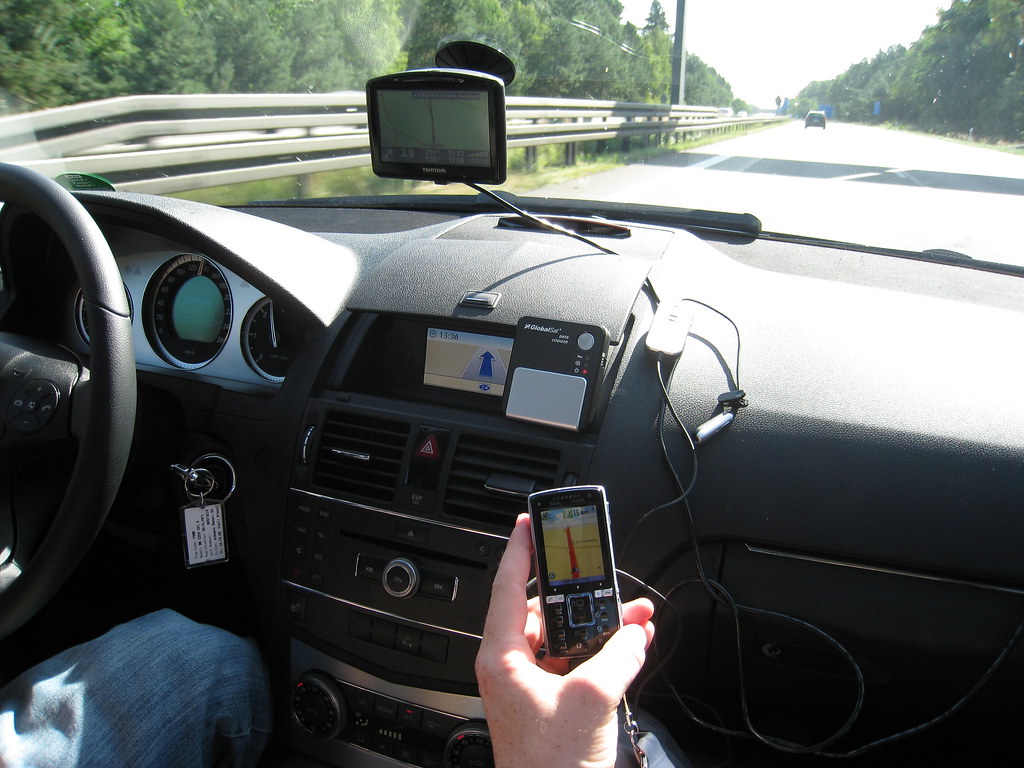
Photo credit: “Loads of GPS devices in our car” by mroach, licensed BY-SA (https://creativecommons.org/licenses/by-sa/2.0/). Source: https://www.flickr.com/photos/73569497@N00/2765757383