
Smart Thermostat Rebates: Key Takeaways
- Smart thermostat rebates from utilities typically range from $25 to $100 for eligible ENERGY STAR models.
- Demand response programs add recurring payments, such as $50 enrollment plus $25 annually, on top of smart thermostat rebates.
- Baseline energy savings from learning algorithms can add $50 to $196 yearly, separate from smart thermostat rebates.
- Checking the DSIRE database and your utility site confirms eligibility for smart thermostat rebates and demand response enrollment.
Smart thermostats already save money on their own through basic scheduling and learning algorithms, but two separate financial incentives layered on top, a one-time purchase rebate and an ongoing demand response payment, go unclaimed by a large share of owners simply because they aren’t widely known. One of these got smaller in 2026; the other one is a genuinely underused, recurring source of money that costs almost nothing to claim.
Table of Contents
The Federal Tax Credit Is Gone
Worth knowing upfront, since older articles and even some current retailer marketing still reference it: the federal Section 25C Energy Efficient Home Improvement Credit, which covered smart thermostats among other home efficiency upgrades, expired December 31, 2025. A smart thermostat purchased in 2026 does not qualify for that federal credit, a real change from the incentive landscape of just the past few years. Utility-level rebates, described below, remain a separate, still-available source of savings unaffected by the federal credit’s expiration.
Purchase Rebates: A One-Time Payment for Buying the Right Model
Many utility companies still offer a direct rebate for buying an eligible smart thermostat, typically an ENERGY STAR-certified model, though the specific amount varies meaningfully by utility and state. Massachusetts’s Mass Save program offers up to $100. New Jersey’s PSE&G offers up to $100 in post-purchase rebates on ENERGY STAR models. Pennsylvania’s EnergySavePA offers $50.
More broadly, typical rebate amounts across different utilities range from $25 to $100 depending on the specific program and thermostat model purchased. These rebates are usually claimed through a simple post-purchase submission process, often just uploading a receipt and the thermostat’s model information through the utility’s own rebate portal.
Demand Response: The Recurring Payment Most People Miss Entirely
This is the less-known, genuinely more valuable ongoing incentive, and it works differently from a one-time purchase rebate. Demand response programs pay homeowners an enrollment bonus plus recurring annual payments in exchange for letting the utility make small, automatic temperature adjustments to a smart thermostat during periods of peak electrical grid demand, typically hot summer afternoons when overall electricity usage spikes. Ameren’s Peak Time Savings program, as one concrete example, pays a $50 enrollment bonus plus a $25 annual appreciation bonus for every year of continued participation.
Colorado Springs Utilities runs a similar structure, $50 enrollment plus $25 annually through one program, or $100 enrollment plus $25 per season through a separate, more involved option. Combined across various utilities offering this kind of program, homeowners can earn $50 to $200 annually in bill credits simply for allowing minor, automatic thermostat adjustments during a limited number of peak hours each year.
What Actually Happens During a Peak Event
It’s worth understanding what the temperature adjustment actually involves before assuming it means real discomfort in exchange for the payment. These programs generally make small adjustments, a few degrees at most, for a limited window during genuinely peak demand periods, not an all-day override of a household’s normal temperature settings. Most programs also allow a homeowner to opt out of a specific event or override the adjustment manually if the timing is genuinely inconvenient, without losing enrollment in the broader program entirely.
The tradeoff is a real but modest one: a few degrees of temperature adjustment during specific, limited windows, in exchange for a recurring annual payment that requires essentially no ongoing effort once enrolled.
The Baseline Energy Savings, Separate From Either Incentive
Before layering in rebates and demand response payments, it’s worth quantifying the baseline energy savings a smart thermostat delivers just from its core scheduling and learning features, since that’s a real, separate source of savings that applies regardless of whether either incentive program is used. Ecobee backs a 23% energy savings guarantee with independent testing showing average annual reductions of roughly $196 on combined heating and cooling bills. Google Nest’s learning algorithms are reported to reduce energy use by roughly 10 to 12% annually through similar automatic schedule optimization.
More broadly, across smart thermostat brands generally, a typical household saves somewhere between $50 and $145 a year simply from the device learning household patterns and avoiding heating or cooling an empty home during typical away hours. That baseline savings range is worth treating as the floor of a smart thermostat’s total financial value, before any purchase rebate or demand response enrollment is added on top.
Which Thermostats Qualify
Google Nest, Ecobee, and Honeywell Home smart thermostats are the most commonly supported models across these programs, with specific eligible models varying by utility, Ecobee’s Smart Thermostat Premium and Enhanced models and the Google Nest Learning Thermostat appearing frequently across different programs’ eligibility lists. Ecobee has also partnered directly with select utilities to offer a free smart thermostat to residents in exchange for program enrollment, effectively covering the hardware cost entirely for households in the right service area, worth checking directly with a local utility before assuming a thermostat purchase is required at all.
How to Find and Claim These
A few concrete steps worth taking, since neither incentive shows up automatically without action:
- Search the DSIRE database (dsireusa.org) by zip code, a comprehensive, regularly updated listing of state and utility incentive programs including both purchase rebates and demand response programs specific to your area.
- Check your specific utility’s website directly for a “smart thermostat” or “demand response” program page, since utility-specific offerings, like Ameren’s or Colorado Springs Utilities’ programs described above, aren’t always surfaced clearly through general search results.
- Confirm your specific thermostat model’s eligibility before purchasing, if a rebate or demand-response payment is a deciding factor, since eligibility lists are specific to certain models rather than covering “any smart thermostat” universally.
- Enroll in the demand response program separately from claiming any purchase rebate, since they’re typically distinct programs with separate signup processes even when offered by the same utility.
Between a one-time purchase rebate and a genuinely recurring, low-effort demand response payment, a smart thermostat’s real financial value extends well beyond the basic energy savings from scheduling and learning algorithms alone, provided the enrollment steps actually get done rather than left as an unclaimed benefit sitting on a utility’s own program page.
Stacking all three sources together gives a realistic picture of a smart thermostat’s total first-year value: a $50-to-$100 purchase rebate, a $50-to-$100 demand response enrollment bonus plus $25-or-more in annual recurring payments after that, and $50 to $196 in baseline energy savings from the device’s own scheduling algorithms. For a thermostat that typically costs $150 to $250 upfront, that combined first-year value can meaningfully offset, or in some cases fully cover, the purchase price, a math problem worth actually running for a specific household and utility rather than assuming a smart thermostat is a modest convenience upgrade with a long, uncertain payback period.
Sources: Aggregated 2026 utility rebate and demand response program reporting, cross-checked against Ameren’s and Ecobee’s own program documentation.
Bottom Line
Search the DSIRE database by zip code to find available smart thermostat rebates and demand response programs. Then confirm your thermostat model’s eligibility before purchasing.
Related Reading
- Windows 10 Support Ended. Here’s What Staying On It Actually Costs You Now.
- Your Credit Card Might Already Cover What You Almost Paid for a Protection Plan. Most People Never Check.
- Streaming Went Up 20% Since 2023, and Now Disney Is Merging Hulu Into Disney+. Here’s the Actual Math.
Further reading: ENERGY STAR: smart thermostats.
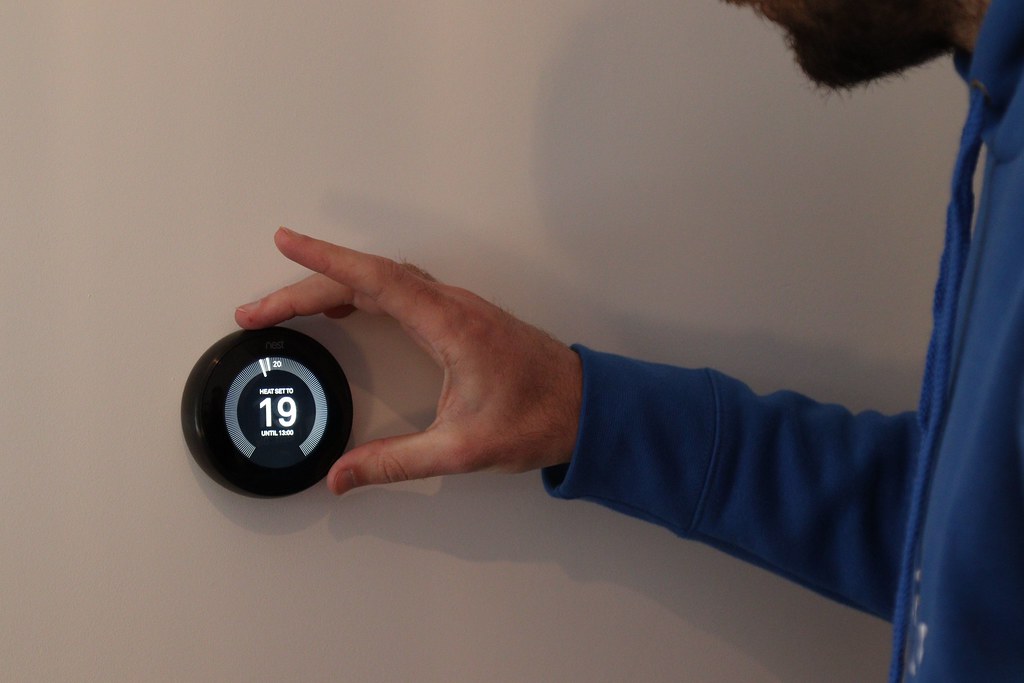
Photo credit: “Nest smart thermostat demo (Creative commons by https://heatable.co.uk/)” by Heatable, licensed BY (https://creativecommons.org/licenses/by/2.0/). Source: https://www.flickr.com/photos/194279519@N04/51635370423