
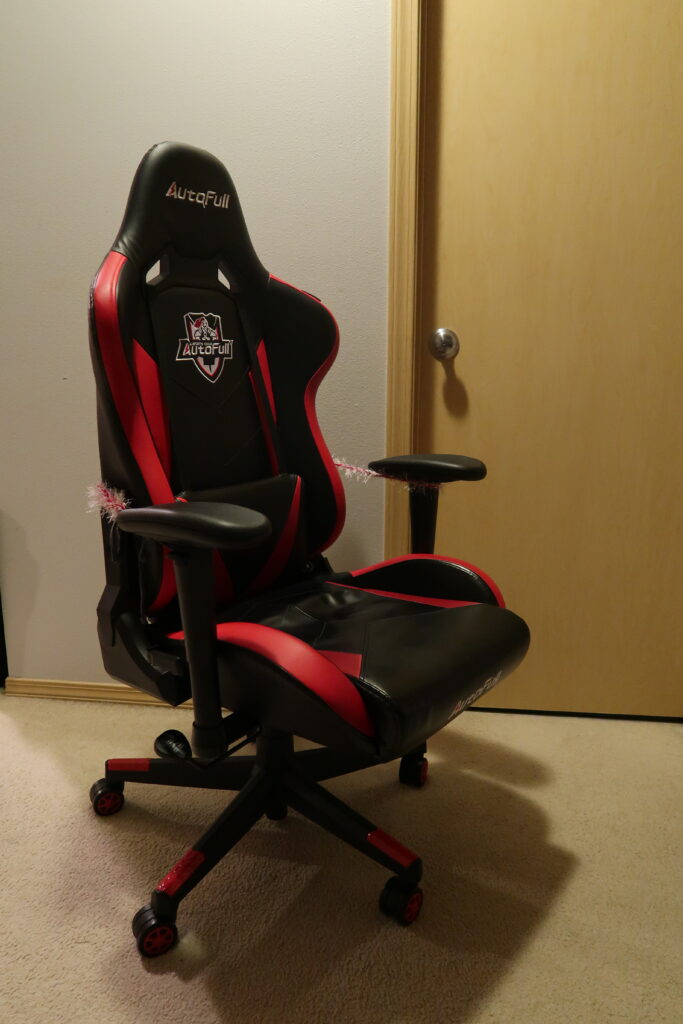
Gaming Chair vs Office Chair: Key Takeaways
- In the gaming chair vs office chair comparison, adjustable lumbar support with independent height and depth adjustment is the most critical feature for reducing back discomfort.
- In the gaming chair vs office chair debate, a 2019 study found ergonomic office chairs with adjustable lumbar support reduced lower back discomfort by 54%.
- The gaming chair vs office chair durability gap is real, with gaming chairs lasting 2-4 years versus 5-10 years for quality office chairs.
- For the gaming chair vs office chair choice, fabric or mesh upholstery outperforms PU leather in breathability and long-term durability.
Gaming chairs are marketed heavily on racing-inspired aesthetics and aggressive cushioning, but the actual ergonomic evidence points toward a more nuanced picture: a well-designed office chair frequently outperforms a gaming chair on the specific features that matter most for back health during long periods of sitting, even though gaming chairs remain a genuinely reasonable choice for some buyers.
Table of Contents
The Feature That Matters More Than Any Other
If back discomfort during long sessions is the main concern, adjustable integrated lumbar support is the single feature worth prioritizing above all others, more than any other spec on a gaming chair’s list. Critically, that lumbar support needs to adjust in both height and depth independently, not just up and down; a fixed or single-axis lumbar pillow can’t match the actual curve of an individual’s spine the way a chair with separate height and depth controls can.
This distinction, height-only adjustment versus true height-and-depth adjustment, is worth checking directly on any chair’s spec sheet before assuming “adjustable lumbar support” means the same thing across different models.
What the Actual Study Found
This isn’t just ergonomist opinion; there’s real published research behind the comparison. A 2019 study in the Journal of Physical Therapy Science found that ergonomic office chairs with adjustable lumbar support reduced lower back discomfort by up to 54% compared to standard seating during prolonged sitting tasks, a substantial, measurable improvement rather than a marginal one. That finding specifically favors the structured, engineering-focused adjustability found in quality ergonomic office chairs over the more aesthetics-driven design philosophy common in gaming chairs.
Why the Two Chair Categories Differ in Design Philosophy
The core difference comes down to what each category is actually optimizing for. Gaming chairs generally emphasize racing-style aesthetics and aggressive, deep cushioning, prioritizing visual appeal and a specific gaming-culture look. Office chairs prioritize subtler, more precisely tuned ergonomic adjustment and breathable materials, generally enforcing a stricter neutral sitting posture by design, while gaming chairs tend to allow more seated flexibility and reclining range.
Neither philosophy is objectively wrong, but they produce genuinely different real-world outcomes for back health specifically, which is why the more rigorously engineered office chair category tends to outperform gaming chairs on the specific metric of reducing back discomfort over long sitting periods.
The Durability Gap Is Real Too
Beyond ergonomics, a genuinely practical, often overlooked difference: gaming chairs typically last 2 to 4 years before their cushions go flat and materials start visibly deteriorating, while quality ergonomic office chairs commonly last 5 to 10 years or more. That gap matters directly for total cost of ownership, a gaming chair replaced twice or more over the lifespan of a single quality office chair can end up costing more in aggregate despite a lower individual purchase price, a real factor worth including in any direct price comparison between the two categories.
Armrests Are a Frequently Overlooked Spec
Beyond lumbar support, armrest adjustability is worth checking directly rather than assuming any “adjustable armrest” claim is equivalent. Genuinely effective armrests need at least 4D adjustment, height, width, depth, and pivot, since anything less consistently produces shoulder or wrist misalignment for at least some body types and desk setups. Current 2026 gaming chairs have started pushing this further with 4D-to-6D armrest adjustability alongside newer features like motorized lumbar support with vibration massage and improved ventilated seat designs for breathability, real hardware improvements worth checking for specifically on higher-end current models rather than assuming all gaming chairs share the same basic feature set.
Material Choice Affects Both Durability and Comfort
Beyond structural design, upholstery material is a genuinely significant, often underweighted factor in a gaming chair purchase. PU leather, common on many racing-style gaming chairs, typically begins cracking and peeling within 6 to 18 months, sometimes stretching to one to three years depending on build quality and climate, with humid conditions accelerating the damage noticeably on mid-range and budget models specifically. Once PU leather starts peeling, the damage is irreversible, and temporary leather repair kits rarely hold up and can make the texture worse rather than better.
Fabric and mesh materials age differently: without a separate surface coating to peel, wear shows up instead as gradual fading, pilling, or fiber breakdown, changes that are typically slow and rarely catastrophic the way PU leather’s peeling can become. Fabric options using reinforced weaves like Jacquard or 3D-knit textiles hold up particularly well structurally. Breathability is a separate, related consideration: PU leather traps body heat against skin, often causing noticeable sweating within an hour of continuous sitting in a warm room, while fabric and mesh materials breathe significantly better, a real, practical advantage specifically in hot or humid climates.
The Bigger Point Research Keeps Making
It’s worth ending on the most important, if less marketable, finding from recent research: no chair, however well-designed, fully solves lower back pain on its own. A 2024 study published in The Lancet found that a progressive walking program reduced lower back pain recurrence by 28% compared to a control group, a movement-based intervention outperforming what any chair feature alone can deliver.
That’s a genuinely important context for this entire comparison: chair ergonomics matter and are worth getting right, but they’re a complement to regular movement and posture breaks throughout a long sitting session, not a substitute for either.
A Practical Buying Checklist
A few concrete steps worth taking regardless of which category is ultimately chosen:
- Prioritize independently height-and-depth-adjustable lumbar support above every other spec, treating this as the single feature most directly tied to the documented back-discomfort reduction described above.
- Check for genuine 4D-or-better armrest adjustability, not just a generic “adjustable armrests” claim, especially if shoulder or wrist discomfort during long sessions is a specific concern.
- Factor the real durability gap into a price comparison, since a gaming chair’s shorter 2-to-4-year lifespan against an office chair’s 5-to-10-year lifespan changes the actual cost-per-year math meaningfully.
- Don’t treat any chair purchase as a complete fix for back pain on its own, building in regular movement and posture breaks as a genuinely necessary complement rather than an optional afterthought.
- Choose fabric or mesh upholstery over PU leather if long-term durability and climate comfort matter more than a specific racing-chair aesthetic, given how directly PU leather’s peeling risk and poor breathability compare against fabric’s slower, less severe wear pattern.
Weighed together, a genuinely well-specced gaming chair with real 4D+ armrests, height-and-depth lumbar adjustment, and fabric or mesh upholstery can hold its own against an office chair for back health specifically; the issue isn’t the “gaming chair” category itself, it’s that a large share of gaming chairs on the market skip one or more of those specific features in favor of aesthetics alone.
Sources: Aggregated 2026 gaming chair and ergonomics reporting from Gamer Hardware and Ergonomic Trends, cross-checked against published research in the Journal of Physical Therapy Science and The Lancet.
Bottom Line
In the gaming chair vs office chair decision, prioritize adjustable lumbar, armrests, and upholstery; a well-specced gaming chair can match office chairs for back support. Test chairs for independent height-and-depth lumbar and 4D armrests before buying.
Related Reading
- GoPro’s $50 Annual Subscription Includes a Free Camera Replacement. DJI Doesn’t Offer That at Any Price.
- A New Laptop Battery Costs $80 to $150. A New Laptop Costs $800 to $1,500. Check This Number First.
- A ‘Solar Generator’ Isn’t a Generator. Here’s What You’re Actually Buying, and Why the Battery Chemistry Matters More Than the Price.
Further reading: OSHA: computer workstations, chairs, Gaming chair (Wikipedia).
Photo credit: Gaming chair by Ndurliat, licensed BY-SA (https://creativecommons.org/licenses/by-sa/4.0/). Source: https://upload.wikimedia.org/wikipedia/commons/b/b2/Gaming_chair.jpg