Action Camera: Key Takeaways
- GoPro’s action camera subscription includes camera replacement and unlimited cloud backup for $49.99 annually.
- DJI’s action camera lacks a comparable subscription plan, leaving buyers responsible for their own backup and replacement.
- Insta360’s action camera leads in 360-degree capture and creative features but offers only about 100 minutes of 4K battery life.
- Battery life varies significantly, with DJI lasting roughly four hours compared to GoPro’s 2.5 hours and Insta360’s shorter runtime.
Choosing between GoPro, DJI, and Insta360 in 2026 involves more than comparing stabilization footage side by side; the three brands take genuinely different approaches to subscriptions, cloud backup, and camera replacement that can matter as much to the total cost of ownership as the hardware itself.
Table of Contents
Stabilization: A Close Race With Specific Differences
All three brands deliver genuinely strong stabilization in 2026, but with real, specific differences worth matching to actual use. GoPro’s HyperSmooth 7.0 handles high-frequency vibration, the kind produced by a motorcycle engine or off-road biking, particularly well, giving it a slight edge specifically for that use case. DJI delivers smoother horizon leveling, a meaningful advantage for footage where keeping the horizon visually level matters more than absorbing high-frequency shake.
Insta360 is somewhat more sensitive to extreme engine vibration by comparison, a real, if narrow, gap in that specific scenario. For general everyday action footage, the practical difference between all three is smaller than the marketing suggests, but for a specific use case like motorcycle vlogging, GoPro’s specific strength is worth weighing directly.
The Subscription Models Are Genuinely Different Products
This is the part of the comparison most buyers underweight relative to its real financial impact. GoPro’s subscription runs $49.99 a year and bundles unlimited cloud storage for GoPro footage, automatic cloud upload, automatic highlight video generation, guaranteed camera replacement for any reason, up to 50% off accessories, and up to $150 off two camera purchases annually.
That camera replacement benefit is a real, substantial value: a GoPro subscriber who damages or loses their camera gets it replaced as part of the subscription cost, a meaningfully different risk profile than owning the hardware outright with no equivalent coverage.
Insta360 Offers a Comparable, Not Identical, Plan
Insta360 runs a similar model through its Insta360+ subscription, offering tiered cloud storage options at 200GB, 1TB, or 2TB, along with automatic file backup, straightforward sharing of 360-degree footage, cloud-based editing and export tools, a replacement camera benefit, an extended warranty, and expedited shipping. The core structure closely mirrors GoPro’s approach, cloud backup plus camera replacement bundled into an annual fee, though the specific storage tiers and exact benefit list differ in the details worth comparing directly against a buyer’s actual footage volume and storage needs.
DJI Doesn’t Offer an Equivalent Subscription Plan
This is the clearest, most consequential difference in the current three-way comparison: DJI does not prominently offer a comparable subscription bundling cloud backup and camera replacement the way GoPro and Insta360 both do. That means a DJI action camera buyer is generally responsible for their own backup solution and doesn’t have an equivalent built-in camera replacement safety net available at any price point, a real structural difference in total ownership risk and cost that isn’t obvious from comparing hardware specs and stabilization quality alone.
Current Top Picks and Their Core Strengths
As of 2026, the DJI Osmo Action 6, GoPro Hero13 Black, and Insta360 Ace Pro 2 are the commonly recommended flagship options across each brand. GoPro’s Hero13 Black is generally considered the strongest choice for buyers who want the deepest accessory ecosystem and proven creative flexibility built up over the brand’s longer history in the category. DJI’s Osmo Action 6 has genuinely caught up on video quality and specifically pulled ahead on battery life and sensor size compared to GoPro’s equivalent model, a real, measurable advantage for anyone prioritizing longer shooting sessions or better low-light performance over accessory breadth.
Insta360 leads specifically in creative features and 360-degree video capture, a genuinely different capability the other two don’t match as directly.
Battery Life Differs More Than Expected
Beyond stabilization and subscriptions, battery life is a real, concrete difference between the three current flagship models worth checking directly rather than assuming rough parity. The DJI Osmo Action 6 offers roughly 4 hours of battery life, the longest of the three by a meaningful margin. The GoPro Hero13 Black records for more than 2.5 hours at 1080p30, a real but shorter window than DJI’s, and one that shortens further at higher resolutions and frame rates.
The Insta360 Ace Pro 2 runs closer to 100 minutes at 4K, notably shorter than either competitor, though it partially offsets that with fast charging capable of reaching 80% battery in just 18 minutes, a real, practical mitigation for anyone able to grab short charging breaks during a day of shooting. For anyone planning extended shooting sessions without easy charging access, DJI’s roughly 4-hour window is a genuinely significant practical advantage over Insta360’s shorter runtime specifically.
Distinct Hardware Features Worth Knowing About
Each brand’s current flagship also carries a genuinely distinct hardware feature beyond the broader stabilization and subscription differences already covered. The DJI Osmo Action 6 includes a variable aperture, a first for the action camera category, paired with a notably large 1/1.1-inch sensor, both of which contribute to its stronger low-light performance. The GoPro Hero13 Black supports interchangeable lens mods, a real, practical flexibility advantage tied directly to GoPro’s broader accessory ecosystem.
The Insta360 Ace Pro 2 offers 8K video recording, a Leica-branded lens, a flip screen for easier self-filming framing, and AI-powered editing features built into its companion app, priced at $399. These aren’t marginal differences; each represents a genuinely distinct hardware bet by its respective manufacturer, worth weighing directly against whichever specific capability matters most for an individual buyer’s actual shooting style.
Matching the Choice to What Actually Matters
A few honest questions worth answering before choosing between the three:
- Does camera replacement and cloud backup, bundled into a predictable annual cost, matter enough to weigh heavily in the decision? If so, GoPro and Insta360’s subscription models offer a real, comparable safety net that DJI currently doesn’t match with an equivalent plan.
- Is motorcycle or high-vibration footage the primary use case? GoPro’s HyperSmooth stabilization holds a specific, real edge there, even as the overall stabilization gap between brands has narrowed.
- Do battery life and low-light performance matter more than accessory ecosystem breadth? DJI’s recent hardware improvements specifically target those two areas, a genuine advantage over GoPro’s traditionally stronger accessory lineup.
- Is 360-degree footage a genuine creative goal, not just an occasional novelty? Insta360’s specific strength in that format is a real differentiator worth weighing if that capability is a priority rather than an afterthought.
The Bottom Line
None of the three current flagships is a strictly better choice than the other two; each represents a genuinely different set of tradeoffs across stabilization style, subscription and replacement coverage, battery life, and signature hardware features. GoPro remains the default recommendation for buyers who value its accessory ecosystem, interchangeable lens mods, and the subscription’s camera-replacement safety net most. DJI has closed the video-quality gap and pulled ahead specifically on battery life and low-light sensor performance, a real reason to reconsider the assumption that GoPro is automatically the right default.
Insta360 stands apart specifically for 360-degree footage and AI-assisted editing, a genuinely different creative toolset the other two don’t match as directly. The right choice depends less on which brand currently “wins” in aggregate and more on which specific tradeoff, stabilization style, subscription coverage, battery runtime, or signature feature, matters most for how the camera will actually be used.
Sources: Aggregated 2026 action camera reporting from Amateur Photographer and Digital Camera World, cross-checked against GoPro’s and Insta360’s own subscription program documentation.
Bottom Line
Each action camera brand offers distinct tradeoffs across stabilization, subscriptions, battery life, and hardware features. Match your priority – vibration handling, replacement coverage, 360 capture, or battery endurance – to the right model before purchasing.
Related Reading
- The Real Difference Between Kindle and Kobo Isn’t the Screen. It’s Whether You Can Borrow Library Books Without a Workaround.
- The Cheapest Tablet Isn’t the One With the Lowest Price. It’s the One That Still Gets Updates in Four Years.
- A Ring Doorbell Can Cost $920 Over Three Years. Here Are Five That Cost $35 to $180, Total.
Further reading: Action camera (Wikipedia).
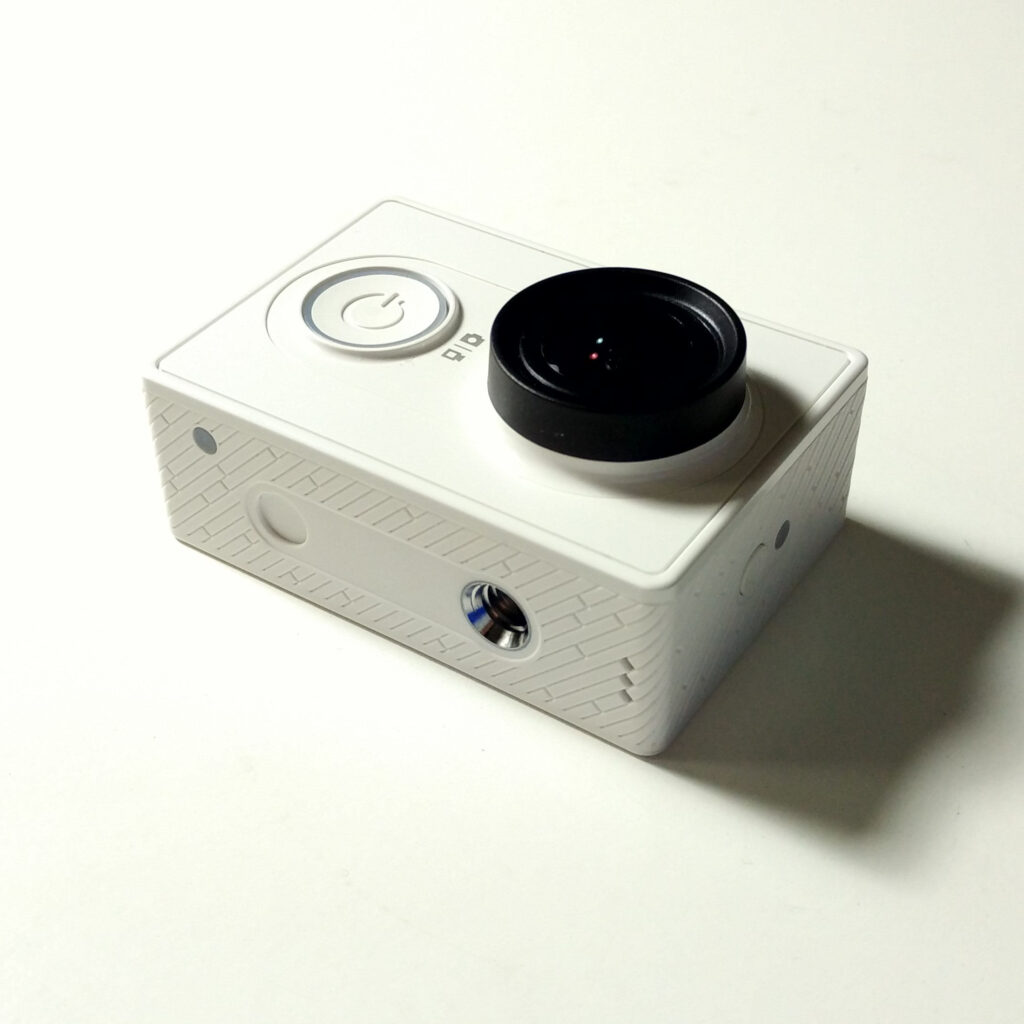
Photo credit: Yi Action Camera by Michaeeas, licensed BY-SA (https://creativecommons.org/licenses/by-sa/4.0/). Source: https://upload.wikimedia.org/wikipedia/commons/3/30/Yi_Action_Camera.jpg