
Portable Power Station: Key Takeaways
- The “solar generator” label is marketing shorthand for a portable power station, which is fundamentally a large battery with built-in inverters and outlets.
- A portable power station using LiFePO4 chemistry typically delivers 2,500 to 4,000 charge cycles, far exceeding older NMC units rated around 600 cycles.
- Calculating cost per cycle reveals a portable power station with higher upfront price often provides better long-term value than cheaper NMC alternatives.
- Matching capacity to actual use cases prevents overspending, since outage backup needs 2,000 to 3,000 watt-hours while device charging requires meaningfully less.
“Solar generator” is one of the more misleading product names in consumer electronics: it isn’t a generator at all, and it doesn’t require solar panels to function. The term is marketing shorthand for a portable power station, a large rechargeable battery with built-in inverters and outlets, sometimes bundled with a compatible solar panel and sometimes sold on its own.
Table of Contents
Understanding that distinction, and the battery chemistry decision underneath it, matters more to getting a good value here than most of the marketing copy on the box.
What’s Inside the Box
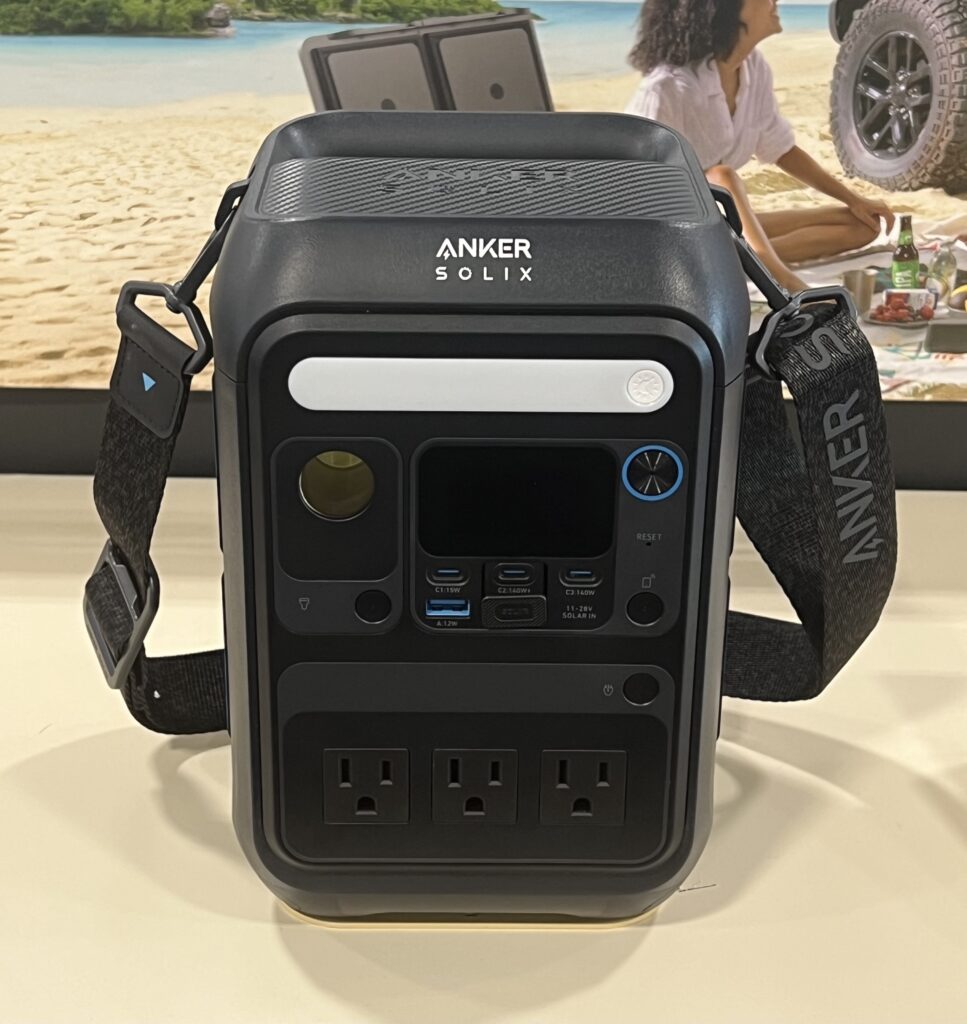
A portable power station is fundamentally a large battery pack with AC outlets, USB ports, and often a car-style DC output built in, capable of running or charging devices without being plugged into wall power. Pairing one with a solar panel lets it recharge from sunlight rather than only from a wall outlet or car charger, which is the entire basis for the “solar generator” label, a bundle, not a fundamentally different product category.
Buying the power station and a compatible solar panel separately is often cheaper than a pre-bundled “solar generator” package, and it’s worth pricing both ways before assuming the bundled option is the better deal.
The Battery Chemistry Decision That Matters Most
The single biggest factor in a portable power station’s long-term value is the battery chemistry inside it, specifically whether it uses LiFePO4 (lithium iron phosphate) or an older NMC (nickel manganese cobalt) lithium-ion chemistry. LiFePO4 batteries last 2,500 to 4,000 charge cycles, translating to roughly 6.8 to 11 years of full-capacity service under daily use.
Most new 2026 releases from major brands, EcoFlow, Bluetti, Anker, and Jackery among them, now use LiFePO4 as the standard chemistry, a real shift from just a few years ago when NMC was still common across the category.
The Actual Cost-Per-Use Math
Here’s the number worth running before comparing sticker prices directly: a $1,200 LiFePO4 unit rated for 3,000 charge cycles works out to roughly $0.40 per cycle over its lifetime. An $800 NMC unit rated for only 600 cycles works out to about $1.33 per cycle, more than three times higher, despite the NMC unit’s lower upfront price.
For anyone using a power station more than a few times a month, the cheaper-looking NMC option is the more expensive choice once its shorter lifespan is factored into the real cost per use, a genuine case where the higher sticker price is the better value.
What Capacity You Need
Capacity requirements vary enough by use case that a single “get the biggest one” recommendation doesn’t serve most buyers well. For running essential devices during a power outage, a refrigerator, some lighting, phone charging, and a home router, 2,000 to 3,000 watt-hours of capacity is generally the minimum worth considering, since smaller capacities run out too quickly to bridge anything beyond the shortest outages.
A buyer whose main use case is charging phones and small electronics while camping or working remotely needs meaningfully less capacity than that outage-backup scenario, and paying for outage-scale capacity when the actual use case is device charging is a common way to overspend on this category.
How to Calculate Real Runtime Before Buying
Watt-hour capacity numbers on a spec sheet don’t translate directly into hours of use without doing a bit of math first, and skipping this step is a common way buyers end up disappointed with a unit that “should” have lasted longer on paper. The formula: runtime in hours equals the battery’s capacity in watt-hours, multiplied by 0.85 to account for real-world inverter efficiency losses, divided by the wattage of whatever device is being run.
A 500Wh power station running a 50-watt device works out to 500 times 0.85 divided by 50, or 8.5 hours of runtime, meaningfully less than the naive “500Wh divided by 50W equals 10 hours” calculation that ignores the inverter’s real efficiency loss.
Running this formula against the specific devices intended for use, rather than relying on a manufacturer’s generic “charges a phone X times” marketing claim, gives a far more accurate sense of whether a specific capacity actually meets a specific need.
How Fast You Can Recharge One
Recharge speed varies enough across models and charging methods that it’s worth checking specifically rather than assuming all power stations charge at a similar rate. Standard AC wall-outlet charging typically takes 4 to 8 hours for a full recharge depending on capacity, though some newer models support fast AC charging capable of reaching 80% in under an hour, or even a full charge in as little as 2.5 hours on select models.
Solar charging speed depends heavily on the unit’s maximum solar input rating, some models cap out around 500W of solar input while others support up to 1,200W, a real difference that directly affects how long a full recharge takes from panels alone.
As a rough reference point, a 100-watt solar panel in full sun can charge a 500Wh station from empty to full in about 5 hours, a ratio worth scaling proportionally when comparing a specific power station and solar panel combination against actual anticipated sunlight conditions.
Current Pricing Worth Knowing
As a reference point for what current pricing looks like at the LiFePO4 tier, one widely available model runs around $799 on sale for 2,048Wh of LiFePO4 capacity, working out to roughly $0.39 per watt-hour, a useful benchmark figure for comparing other listings’ price-to-capacity ratio directly rather than judging a unit’s price in isolation.
A Practical Buying Checklist
A few concrete steps worth running through before choosing a specific model:
- Confirm the battery chemistry explicitly, looking for “LiFePO4” or “lithium iron phosphate” stated directly in the listing, rather than a vague “lithium battery” description that could mean either chemistry.
- Calculate cost per cycle, not just sticker price, dividing the purchase price by the manufacturer’s stated cycle count to get a real per-use cost comparable across different models and price points.
- Match capacity to the actual use case, outage backup versus device charging versus a specific appliance’s running wattage, rather than defaulting to the largest capacity available regardless of what it’ll actually be used for.
- Price the power station and any solar panel separately before buying a bundled “solar generator” package, since bundling doesn’t guarantee the better combined price.
Why the Safety Difference Matters Too, Not Just the Cost
Beyond the cost-per-cycle math, LiFePO4’s chemistry carries a real safety advantage worth knowing about separately: it’s significantly more thermally stable than NMC lithium-ion, meaning it’s less prone to the thermal runaway failures, the rapid overheating that can lead to fire, that have driven high-profile battery safety recalls in other lithium-ion product categories. That’s not a reason to panic about NMC-based power stations specifically, reputable manufacturers build in protection circuitry regardless of chemistry, but it’s a genuine additional reason LiFePO4 has become the default choice across the category beyond its longer cycle life and better cost-per-use economics, and it’s worth weighing alongside the financial math above rather than treating this purely as a value calculation.
Putting all of this together, the buying decision comes down to running three numbers specifically for the intended use case, not just comparing sticker prices: the cost-per-cycle math for the chemistry, the runtime formula for the actual devices being powered, and the recharge-speed specs for whatever combination of wall, car, or solar charging will realistically be used day to day.
A power station that looks like a great deal on price alone can turn out to be the more expensive option once those three numbers are actually run for a specific household’s needs.
Sources: Aggregated 2026 portable power station and battery chemistry reporting from Portable Power Lab and Backup Power Hub, cross-checked across multiple sources.
Bottom Line
The portable power station category has largely shifted to LiFePO4 chemistry, offering better cost-per-cycle and thermal stability than older NMC models. Before buying, confirm LiFePO4 chemistry in the listing, calculate your needed watt-hours, and price the unit and solar panel separately.
Related Reading
- That Projector’s ‘3,000 Lumens’ Might Actually Be 180. Here’s the Number That Matters.
- The Refurbished Phone Grade Isn’t the Number That Matters Most
- Two USB-C Cables Can Look Identical and Differ by 250x in Speed. Here’s How to Actually Tell Them Apart.
Further reading: Lithium iron phosphate battery (Wikipedia).
Photo credit: Anker SOLIX C300X Portable Power Station by TaurusEmerald, licensed BY-SA. Source: https://upload.wikimedia.org/wikipedia/commons/b/b2/Anker_SOLIX_C300X_Portable_Power_Station.jpg