
Electric Scooter: Key Takeaways
- UL 2272 certification is mandatory for electric scooters sold in the US, and missing it risks platform bans or customs seizure.
- Most electric scooter fires happen while charging unattended, so avoid leaving one charging overnight or away from home.
- An electric scooter’s real-world range averages about 61% of advertised figures, so apply that discount to match your commute.
- Cities like New York now legally require UL 2272 certification for electric scooters, so check local laws before buying.
Electric scooters have become common enough as everyday transportation that the safety certification behind them is easy to overlook entirely, but that certification, UL 2272, is the specific thing standing between a scooter’s lithium-ion battery behaving safely and the same battery becoming a genuine fire risk inside a home.
Table of Contents
What UL 2272 Tests
UL 2272 is Underwriters Laboratories’ safety standard for personal mobility devices, developed specifically in response to a wave of lithium-ion battery fires in consumer hoverboards and scooters. The standard evaluates a scooter’s entire electrical system as a whole, not just the battery in isolation, testing battery packs, wiring, motors, and charging units together for resistance to overheating, electrical short circuits, water exposure, and mechanical stress.
For electric scooters sold in the US, UL 2272 functions as the mandatory practical standard: a scooter without it risks being banned from sale on major platforms like Amazon, Walmart, or Target, or even seized at customs before it reaches a buyer at all.
The Real Fire Statistics Worth Knowing
The scale of this risk is genuinely documented, not a marketing scare tactic. The Consumer Product Safety Commission reported 119 e-scooter fire incidents in the US in 2025, a real number that represented a 15% decrease from 2024, an improvement attributed specifically to stricter safety standards taking effect. Within those incidents, the pattern is worth understanding directly: 80% of fires occur specifically while the scooter is charging, and 60% happen while the scooter is left unattended during that charging process, meaning the highest-risk moment for a scooter fire is a predictable, specific window rather than a random, unavoidable event during actual riding.
Why Lithium-Ion Batteries Specifically Carry This Risk
The underlying mechanism is worth understanding rather than treating scooter fires as an unexplained hazard: lithium-ion batteries, when damaged, overcharged, or exposed to extreme heat, can enter a state called thermal runaway, a self-sustaining chemical chain reaction that releases flammable gas and fire. That’s the same fundamental battery chemistry risk behind other lithium-ion product recalls covered elsewhere in this category, power banks and e-bike batteries among them, applied specifically to the electric scooter context, where a damaged or degraded cell charging unattended overnight is exactly the scenario UL 2272 testing and safe charging practices are both designed to prevent.
Speed Limits Vary Meaningfully by State
Beyond battery safety, legal speed limits are a separate, genuinely important factor to check before buying, since a scooter’s top speed can exceed what’s legally permitted in a specific location. At the federal level, electric scooters are classified with a maximum speed of 20 mph and 750 watts or less of motor power. States set their own caps within or below that federal ceiling: California and New York cap operation at 15 mph, while Illinois currently limits its equivalent category to 10 mph, a meaningfully lower ceiling than either coastal state.
Most states treat electric scooters similarly to bicycles for regulatory purposes, requiring no license or registration and permitting use in bike lanes and on roads posted 25 to 35 mph, but individual cities frequently layer additional restrictions on top of state law, making a specific city’s local ordinances worth checking directly rather than assuming state-level rules are the complete picture.
Advertised Range Rarely Matches Actual Range
A separate spec worth reading skeptically: manufacturer-claimed range figures consistently overstate real-world performance by a meaningful margin. Across tested models, real-world range testing delivers roughly 61% of the manufacturer’s claimed range on average, meaning a scooter advertised for 40 miles of range should realistically be expected to deliver closer to 24 miles under normal riding conditions. Typical battery capacities range from 150 to 624 watt-hours for standard adult scooters, with commuter-focused models generally running 400 to 700 watt-hours, while dedicated long-range models with 1,500 to 2,880 watt-hour batteries can deliver a genuinely higher 50 to 105 miles of real-world range.
Matching the actual expected range, applying that roughly 61% real-world discount to any advertised figure, against a specific commute or use case is worth doing directly before assuming a scooter’s box specs translate cleanly into daily practical range.
Cities Are Now Legally Requiring This Certification
This isn’t purely a voluntary safety recommendation anymore in a growing number of jurisdictions. Under New York City’s Local Law 39, enacted in 2023, it’s illegal to sell, lease, or rent an e-scooter, e-bike, or standalone lithium-ion battery within the city without certification to an accredited safety standard: UL 2272 specifically for e-scooters, UL 2271 for standalone batteries, and UL 2849 for e-bikes.
Other US cities have adopted similar requirements in response to the same rising lithium battery fire trend, meaning UL certification has moved from a nice-to-have safety indicator to, in a meaningful and growing number of places, a genuine legal requirement for a scooter to be sold or rented at all.
How to Reduce the Actual Risk
Given that 80% of fires happen during charging and 60% happen while unattended, the practical safety guidance concentrates heavily on that specific window rather than general scooter use:
- Confirm UL 2272 certification (and UL 2271 for the battery specifically) before buying, checking the product listing or packaging directly rather than assuming certification based on brand recognition alone.
- Never leave a scooter charging unattended overnight or while away from home, given that 60% of documented fires happen during exactly that scenario.
- Charge on a hard, non-flammable surface away from exits and flammable materials, a real, low-effort precaution given how quickly a genuine thermal runaway event can escalate.
- Use only the charger that came with the scooter, or a certified direct replacement, since a mismatched charger is a documented contributor to overcharging-related battery failures.
- Watch for warning signs of a failing cell: unusual swelling, an unusual smell, excessive heat during charging, or visible damage to the battery housing, treating any of these as reason to stop using and properly dispose of the battery rather than continuing to charge it.
What to Check Before Buying
A few concrete steps worth taking specifically at purchase time, beyond confirming the UL certification itself:
- Check whether your specific city has adopted a legal certification requirement similar to NYC’s Local Law 39, since local regulations increasingly go beyond general product safety recommendations into enforceable legal requirements.
- Verify the certification applies to the actual model being purchased, not just the manufacturer’s brand generally, since certification is typically granted per specific product model rather than covering an entire company’s full lineup automatically.
- Treat an unusually low price on an uncertified or vaguely-labeled scooter as a real warning sign, given that UL 2272 testing and compliance add real, legitimate cost that a corner-cutting manufacturer skipping certification avoids passing on to a buyer.
Sources: Aggregated 2026 electric scooter safety reporting from UL Solutions and Zwheel, cross-checked against CPSC fire incident data and New York City’s Local Law 39.
Bottom Line
UL 2272 certification is essential for electric scooter safety and legal compliance in many jurisdictions. Before buying, confirm the specific model carries UL 2272 and review your city’s local requirements.
Related Reading
- The CPSC Just Proposed Mandatory E-Bike Battery Rules. Here’s What to Check Before They’re Law.
- Anker Recalled Nearly 500,000 Power Banks Over Fire Risk. Check Your Model Number Now.
- A ‘Solar Generator’ Isn’t a Generator. Here’s What You’re Actually Buying, and Why the Battery Chemistry Matters More Than the Price.
Further reading: Electric scooter (Wikipedia).
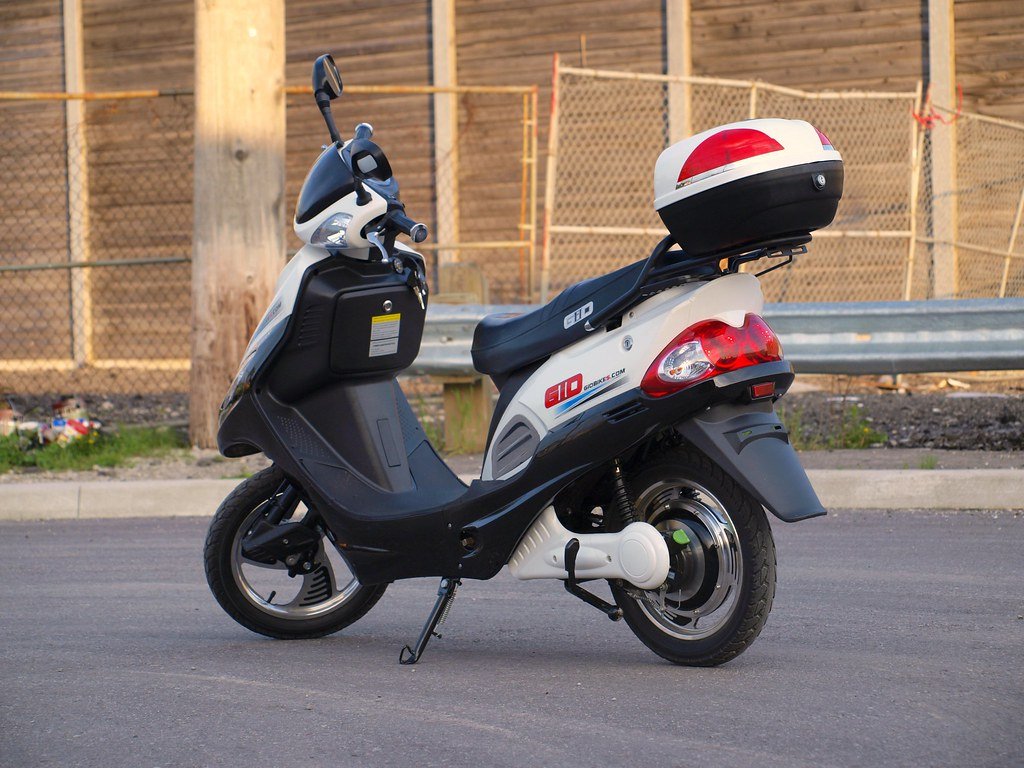
Photo credit: “My New GIO Electric Scooter” by MSVG, licensed CC BY 2.0 (https://creativecommons.org/licenses/by/2.0/). Source: https://www.flickr.com/photos/13907834@N00/5738084783