Kindle vs Kobo: Key Takeaways
- The Kindle vs Kobo decision now hinges on ecosystem lock-in and library borrowing workflow rather than screen hardware.
- In Kindle vs Kobo library borrowing, Kobo’s built-in Libby support avoids the extra step Kindle requires every time.
- For Kindle vs Kobo library gaps, neither fully supports all Libby content, with Kobo missing audiobooks and magazines.
- Beyond screens, Kindle vs Kobo hardware differs with Kobo’s page buttons and stylus against Kindle’s wireless charging.
Kindle and Kobo’s newest color e-readers have converged enough on hardware that the screen itself is no longer the deciding factor between them. The Kindle Colorsoft and Kobo Libra Colour both use 7-inch color E Ink panels built on the same underlying Kaleido 3 technology, at 300 ppi for black-and-white text and 150 ppi for color. The actual decision comes down to something less visible on a spec sheet: which ecosystem the device locks you into, and specifically, how each one handles borrowing library books.
Table of Contents
The Library Borrowing Difference Is the Biggest Practical Gap
This is the single most consequential difference for anyone who borrows ebooks from a public library, and it’s rarely the headline feature in a spec comparison. Many current Kobo e-readers include built-in support for Libby, the library ebook app, letting you browse, borrow, and start reading a library book directly on the device itself, no separate app or extra step required.
Kindle has no equivalent native integration. Borrowing a library book for a Kindle still requires using the Libby app on a separate phone or computer first, then sending the book over to the Kindle account from there, a real extra step every single time rather than a one-time setup.
For a household that borrows library ebooks regularly, that difference compounds meaningfully over the life of the device, while someone who buys most books outright or subscribes to Kindle Unlimited won’t notice it at all.
Neither Library System Is Perfectly Complete Either
It’s worth being precise about the limits on both sides rather than treating Kobo’s library integration as flawless. Not every ebook available through Libby is compatible with Kobo’s system, so some library loans won’t sync to a Kobo device even with the built-in support working as intended. Audiobooks and magazines borrowed through Libby aren’t supported on Kobo devices at all, regardless of the ebook integration.
That’s a real caveat worth knowing before assuming Kobo solves library borrowing completely; it solves the ebook-specific workflow well, but the broader library media catalog still has gaps on both platforms.
Current Pricing Across the Lineup
As of 2026, the Kindle Colorsoft runs $249.99, and the Kobo Libra Colour runs $259.99, close enough that price alone doesn’t clearly favor either device at the color tier. For a lower-cost entry into color e-readers, the Kobo Clara Colour runs $149, a full $130 less than the Colorsoft, without the larger screen or some of the hardware extras of the higher-tier models. That’s a meaningful budget option worth considering if color E Ink itself is the priority over screen size or premium hardware features.
Hardware Differences Worth Knowing About
Beyond the screen and library question, a few concrete hardware differences separate the two current flagship color models. The Kobo Libra Colour includes physical page-turn buttons, a rotation sensor for reading in either orientation, and stylus support for note-taking directly on the screen, with its power button positioned on the back, recessed to avoid accidental presses. The 32GB Kindle Colorsoft supports wireless charging, a feature the standard Kindle Paperwhite doesn’t have.
Neither set of extras is objectively better; physical page buttons and stylus support matter more for someone who takes notes or reads with wet or gloved hands, while wireless charging matters more for someone who already has a charging pad in their regular reading spot and wants one less cable to manage.
The Color Screen Tradeoff Both Brands Share
Before assuming color E Ink is a strict upgrade over black-and-white, it’s worth understanding the real tradeoff both the Colorsoft and Libra Colour share, since it’s a limitation of the underlying Kaleido 3 technology itself, not a difference between the two brands. A color E Ink screen is fundamentally a standard black-and-white E Ink panel with a passive color filter layered on top, and that filter measurably darkens the screen and softens clarity compared to a black-and-white-only e-reader.
Kaleido 3, the current generation used in both devices, is a real improvement over earlier color E Ink attempts, which produced washed-out, almost pastel colors many readers found genuinely unusable, but the colors remain noticeably muted compared to an LCD tablet screen. Lighting conditions affect the color rendering too: colors look best in naturally lit rooms with the front light off or low, while using the front light in dim conditions washes out the color filter’s already-muted palette further due to the light’s bluish white balance.
That darker base screen also means most readers end up running the front light more often just to read comfortably, which has a real, if modest, battery life cost compared to reading on a black-and-white-only e-reader with the light off. None of this makes color E Ink a bad choice, but it’s worth going in with accurate expectations rather than assuming color e-ink looks like a tablet or phone screen.
The Ecosystem Lock-In Question
Beyond the specific features, the deeper decision is which company’s ecosystem a reader is already invested in, or willing to commit to going forward. Kindle’s strength is deep integration with Amazon’s existing services: Audible audiobooks, Kindle Unlimited’s subscription catalog, and a purchase history already tied to an Amazon account if one exists. Kobo’s strength runs the other direction: broader file format support, including native EPUB compatibility that Kindle’s proprietary format history has historically made more complicated, and that stronger built-in library borrowing described above.
Someone who already owns Kindle books, uses Audible regularly, or subscribes to Kindle Unlimited faces real switching costs moving to Kobo, since existing purchases don’t transfer between ecosystems. Someone starting from scratch, or who values format flexibility and library access more than Amazon’s specific subscription services, doesn’t carry that same switching cost either direction.
A Practical Way to Decide
A few honest questions worth answering before choosing, rather than picking based on the screen comparison alone:
- Do you already own Kindle books, or subscribe to Kindle Unlimited or Audible? If yes, the switching cost to Kobo is real and worth weighing against whatever specific features are drawing you toward it.
- Do you borrow ebooks from a public library regularly? If this is a frequent habit, Kobo’s built-in Libby integration removes a genuinely repetitive extra step that Kindle requires every time.
- Does note-taking, physical page buttons, or wireless charging matter more to your reading habits? These hardware differences are real and worth weighing directly against your actual reading routine rather than the marketing copy for either device.
- Is budget the primary constraint? The $149 Kobo Clara Colour is a meaningfully cheaper entry into color E Ink than either flagship model, at the cost of some screen size and hardware extras.
The screen quality gap that used to clearly separate these two brands has largely closed at the flagship tier, which means the decision now genuinely comes down to ecosystem fit and the library-borrowing workflow rather than which device simply looks or reads better on a shelf.
Whether Color Is Worth the Premium at All
One more question worth asking honestly before comparing Colorsoft against Libra Colour specifically: does the reading material actually benefit from color in the first place? Color E Ink’s clearest use case is content where color genuinely carries information, comics, graphic novels, cookbooks with photos, children’s books, rather than standard prose fiction or nonfiction, where color adds essentially nothing to the reading experience and simply comes bundled with the screen’s other tradeoffs described above.
A reader whose library is almost entirely text-based novels may get more practical value from a cheaper black-and-white model, Kindle Paperwhite or a standard Kobo Clara, putting the price difference toward something else entirely, while a reader with a meaningful comics or illustrated-book collection is the buyer color E Ink is actually solving a real problem for.
Sources: Aggregated 2026 e-reader comparison reporting from Tom’s Guide and The eBook Reader, cross-checked against Kobo’s and OverDrive’s own help documentation on library borrowing compatibility.
Bottom Line
The Kindle vs Kobo choice depends on whether you prioritize existing Amazon ecosystem investments or smoother library borrowing and format flexibility. Test your actual reading habits against each device’s specific workflow before committing.
Related Reading
- Your Galaxy Phone Can Now Be Your House Key. Five Months In, Is It Worth Switching Locks For?
- Meta Now Sells Three Tiers of Smart Glasses, $299 to $799. Here’s What the Extra Money Actually Buys.
- Pixel Tag vs. AirTag: The Ecosystem Question Matters More Than the Specs
Further reading: E-reader (Wikipedia).
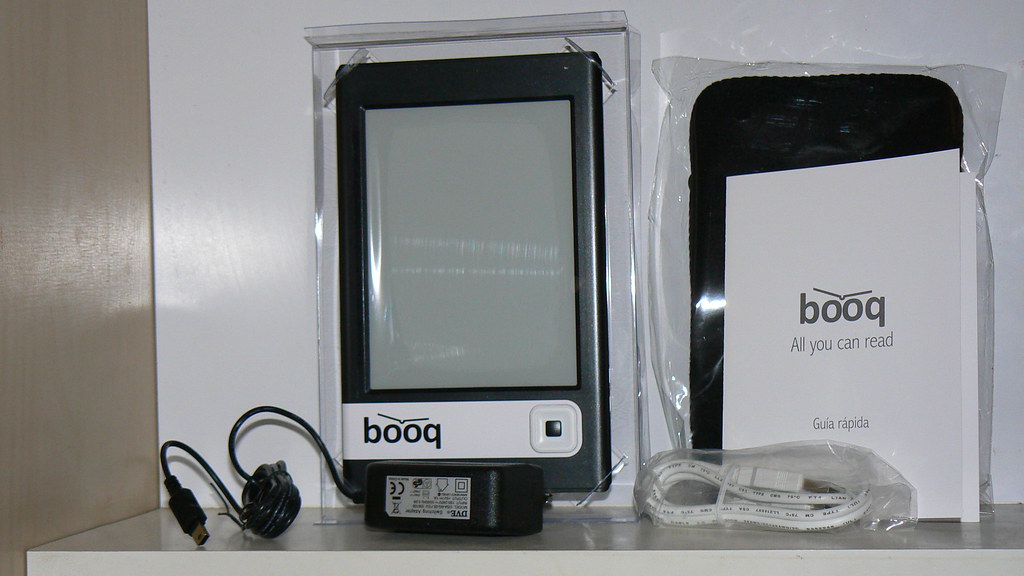
Photo credit: “e-reader ebook booq” by ceslava.com, licensed BY-SA (https://creativecommons.org/licenses/by-sa/2.0/). Source: https://www.flickr.com/photos/53152904@N00/4278734712