Water Leak Detector: Key Takeaways
- A whole-home water leak detector like Flo by Moen monitors flow and pressure to automatically shut off water when leaks are detected.
- Point-sensor water leak detectors alert via phone when moisture is detected but cannot stop water flow themselves.
- Insurance discounts for water leak detectors vary significantly by provider and device type, requiring direct confirmation with your insurer.
- Renters can use battery-powered point sensors without plumbing modifications, though renters insurance discounts are less common.
Water damage is one of the most common and most expensive homeowners insurance claims, which is why a growing number of insurers now offer a premium discount for installing a smart leak-detection or shutoff device, not just a security-system discount for cameras and locks. That changes the math on a category of device that otherwise looks like a pure upfront cost, and it’s worth understanding both what these devices catch and what specific insurance benefit, if any, applies before assuming the discount alone justifies the purchase.
Table of Contents
What a Whole-Home System Actually Does
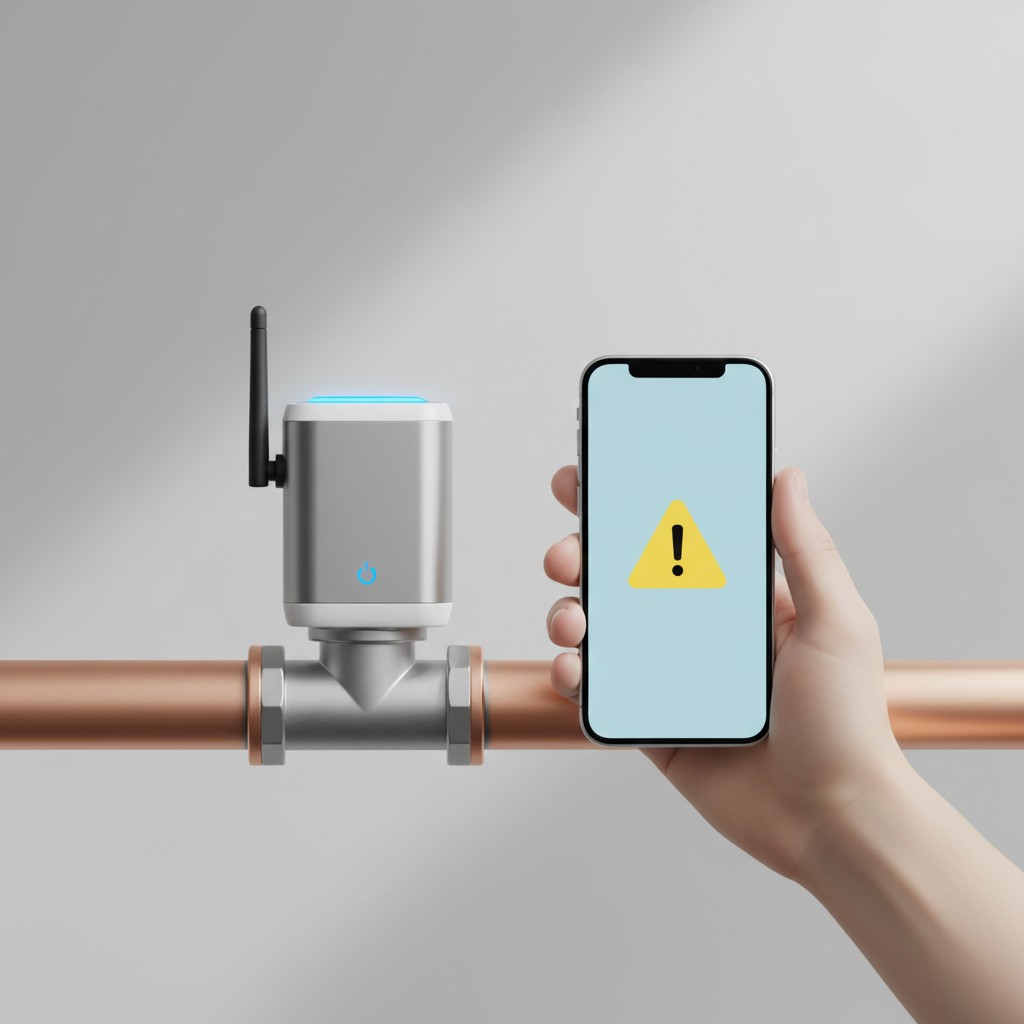
Flo by Moen is the most established whole-home option: a device installed directly on the main water line that monitors real-time water usage, tracks flow and pressure, and can automatically shut off the water supply when it detects a leak. It’s sensitive enough to catch a leak as small as one drip per minute, well below what a homeowner would notice on their own, and runs daily automated pressure checks (Moen calls this a MicroLeak Test) to catch small plumbing issues before they become a burst pipe.
It integrates with Alexa, Google Home, Ring, and a few other smart-home and monitoring platforms, and offers three modes (Home, Away, Sleep) that adjust sensitivity and shutoff behavior depending on whether anyone’s expected to be running water.
The real cost picture includes more than the device itself. Flo by Moen runs $399 to $760 depending on the mainline size it’s built for (¾ inch, 1 inch, or 1¼ inch), and installation requires cutting into the home’s main water line and wiring in a power connection, which most reviews and Moen itself recommend leaving to a licensed plumber rather than a DIY install.
Budgeting for that labor cost alongside the device price is necessary to get an accurate total, since the unit price alone understates what a working installation costs.
Point Sensors: The Cheaper, Partial Alternative
Not every leak-detection device shuts off the water. A separate, much less expensive category, often called point sensors or standalone leak detectors, are small battery-powered units placed near specific risk points (under a water heater, behind a washing machine, under a sink) that send a phone alert when they get wet, without doing anything to stop the water themselves.
The First Alert WiFi Water Leak and Freeze Detector is one commonly cited example of this category. These are meaningfully cheaper and require no plumbing modification at all, but the tradeoff is real: they tell you a leak is happening, they don’t stop it, which matters most for a leak that happens while nobody’s home to act on the alert.
The Insurance Discount, and Why the Numbers Vary So Much
Multiple insurers have added discounts tied to these devices, but the size and structure of the discount differs enough by company that it’s worth checking rather than assuming a number. Mercury Insurance has cited average annual savings of roughly $75 for a monitoring-only device and about $100 for one with automatic shutoff. USAA has offered a discount for members who install at least two qualifying leak detectors, with cited member savings in the 20-29% range, though USAA’s own materials don’t spell out exactly which part of the bill that percentage is measured against.
Some regional programs advertise considerably larger percentage discounts tied to specific shutoff devices like Phyn Plus, though these vary heavily by state, insurer, and policy type, and a number quoted for one zip code or one company isn’t a reliable stand-in for what any specific homeowner would receive. The only way to get an accurate figure is calling your own insurer and asking specifically which devices qualify and what the discount actually amounts to on your policy, since marketing pages for both the insurance and the device side of this tend to lead with the most favorable number found anywhere in their program, not the typical one.
Where This Changes the Buying Decision
None of this means a $399-$760 whole-home system pays for itself purely on insurance savings in a year or two at the smaller end of the discount range; a $75-100 annual credit takes several years to offset the device and install cost alone. Where the math changes is for homes already dealing with older plumbing, a history of leaks, or a high-value renovation the owner specifically wants protected, where the insurance discount is a secondary benefit stacked on top of the primary reason (avoiding a repeat of expensive water damage) rather than the reason by itself.
For a lower-risk home on a budget, a handful of point sensors at the highest-risk spots, combined with checking whether the insurer’s discount extends to that simpler category of device (not all programs require the more expensive shutoff-capable unit), can capture a meaningful share of the protection and part of the discount at a fraction of the cost.
The Renter’s Version of This Problem
Everything above assumes owning the plumbing being protected, which rules out whole-home shutoff systems for a large share of renters outright: cutting into a landlord’s main water line isn’t a modification most leases allow, and most renters wouldn’t want to pay for permanent plumbing hardware in a home they don’t own. Point sensors are the realistic option in a rental, since they’re battery-powered, require no plumbing work, and move with you at lease-end.
The insurance angle changes here too: the discount programs described above are almost always tied to the homeowner’s policy, not a renter’s policy, so a renter shouldn’t expect the same premium credit even when using an identical device, though it’s still worth asking a renters-insurance provider directly, since a smaller subset of renters’ policies do offer their own version of a discount for basic protective devices.
Flow-Based vs. Moisture-Based: Why the Two Types Catch Different Leaks
The mechanism difference between these two categories matters as much as the price difference. A whole-home system like Flo by Moen is flow-based: it sits on the main line and watches for water-usage patterns consistent with a leak, which means it can catch a problem anywhere in the house’s plumbing, including inside a wall or under a slab, where no point sensor could ever be placed.
A point sensor is moisture-based: it only knows a leak happened when water physically reaches the sensor itself, which means it’s blind to any leak that doesn’t happen to occur within a few inches of wherever the sensor was placed.
The two aren’t strictly better-or-worse; they’re catching different failure modes, and a slow drip behind a wall that a flow-based system would flag through a subtle change in usage pattern is exactly the kind of leak a handful of point sensors placed under visible fixtures would never detect at all.
What to Check Before Buying Either Type
Before buying a whole-home shutoff system, get a real installation quote from a licensed plumber rather than assuming the device price is the full cost, and confirm the mainline size your home uses so the correct model size is ordered. Before buying point sensors, check whether they need a hub or work directly over WiFi, since a hub-dependent system adds a point of failure if the hub itself loses power during the exact kind of event (a burst pipe near an electrical panel, for instance) a leak sensor exists to catch.
And for either type, call your insurer before buying anything: get the specific device brands or categories that qualify, the actual discount amount for your policy, and whether it requires notifying them after installation, since the answer to all three of those questions varies enough between insurers that assuming based on this article’s numbers, or any other article’s, is the one mistake worth avoiding here.
Bottom Line
A whole-home water leak detector provides automatic shutoff but costs significantly more than point sensors that only alert. Call your insurer to confirm qualifying devices and actual discounts before purchasing either type.
Further reading: Original reporting: digitized.house.
Related Reading
- Home Assistant Just Removed the Thing That Scared Beginners Off
- “Pick One Smart Home Ecosystem” Is Outdated Advice Now
- SmartThings’ New ‘Emergency Button’ Doesn’t Do What You’d Assume