Robot lawn mowers spent years requiring a buried perimeter wire, a genuinely off-putting installation step that involved trenching a cable around the entire edge of a yard before the mower could do anything. Most premium and mid-tier models released since 2024 have eliminated that requirement, mapping a yard’s boundaries on the first run using satellite positioning, laser mapping, or onboard cameras instead. That’s a real, meaningful improvement in setup friction, and it’s also not a single, uniform technology; the three main approaches to wire-free navigation have genuinely different strengths, and matching one to a specific yard matters more than the marketing “no wire required” headline suggests.
Three Different Ways to Navigate Without a Wire
RTK, real-time kinematic positioning, uses satellite signals combined with a fixed reference station to achieve centimeter-level positioning accuracy, letting a mower follow precise, repeatable paths without any buried cable. It’s strongest specifically when the mower has a clean, unobstructed satellite view, which makes it a genuinely good fit for open lawns without heavy tree cover overhead.
LiDAR-based systems, like the dual-LiDAR mapping used in ECOVACS’s current lineup, build a physical map of the yard using laser distance sensing rather than satellite positioning, which makes them meaningfully better suited to properties with heavier tree cover or more complex obstacle layouts, since laser mapping doesn’t depend on an open sky view the way satellite-based RTK does.
Vision-only systems, relying entirely on onboard cameras rather than satellite or laser hardware, skip the need for any external reference station entirely, a real cost and setup simplification. The tradeoff is real too: a camera-based system needs clear, well-lit grass boundaries it can visually distinguish, and works less reliably in inconsistent lighting or where the yard’s edges aren’t visually distinct from surrounding terrain.
What This Actually Costs Across the Market
Pricing varies meaningfully by both navigation technology and coverage area. The Segway Navimow i110N, combining RTK with vision backup, runs $789 and covers up to a quarter acre. Husqvarna’s Automower 410iQ, also RTK-plus-vision, runs $1,549.99 for up to half an acre of coverage. ECOVACS’s Goat A2000 LiDAR PRO, at $1,599, also covers up to half an acre using its dual-LiDAR approach. The eufy Robot Lawn Mower E15, the vision-only option in this comparison, runs $1,199.99 but covers only up to 0.2 acres, the smallest coverage area of the group despite a price well above the cheapest RTK option.
That pricing pattern is worth sitting with: the cheapest model here (Segway) and the smallest-coverage model (eufy) aren’t the same device, and coverage area doesn’t scale predictably with price across different navigation technologies. A buyer comparing purely on price without checking the actual coverage-area number for their specific yard size risks ending up with a mower genuinely undersized for the property, regardless of how much was spent.
The Honest Limitation Every Wire-Free Mower Shares
Here’s the framing worth internalizing before shopping this category at all: wire-free mowers remove the buried cable, but they don’t remove the need to match the specific machine to a specific yard’s actual conditions. Slope, tree coverage density, narrow passages between sections of lawn, and even WiFi signal strength near the charging dock all remain real reliability factors regardless of which navigation technology a given mower uses. A steep slope can affect any of these systems’ ability to maintain accurate positioning; a yard split into multiple disconnected sections by a driveway or path is a genuine navigation challenge for RTK and vision systems alike, even without a wire in the equation at all.
Matching the Technology to the Actual Yard
Given the three approaches have different real strengths, the practical shopping question isn’t which technology is objectively best, it’s which one fits the specific conditions a mower will actually operate in:
- Open lawn with a clear view of the sky, minimal tree cover: RTK is the strongest fit here, and it’s generally the most mature, most widely available technology among the three, which also tends to make it the most affordable option at a given coverage size.
- Heavily wooded or tree-covered property, complex layout with multiple obstacles: LiDAR-based mapping handles this better than RTK specifically because it doesn’t depend on satellite visibility, at the cost of typically higher pricing for comparable coverage.
- Priority on avoiding any external hardware or reference station, well-lit, visually distinct lawn boundaries: Vision-only systems are the simplest to set up, but come with the tightest real-world requirements around lighting and boundary clarity, and currently the most limited coverage area per dollar spent among the three approaches.
Narrow Passages Are Where Wire-Free Systems Struggle Most
A detail worth specifically flagging for anyone with a yard split by a driveway, a garden path, or a narrow side-yard connection between larger lawn sections: this is one of the most consistently cited reliability challenges across all three navigation approaches, not a weakness specific to one technology. A buried wire, whatever its installation downsides, provided an unambiguous physical boundary a mower could follow through a narrow gap without needing to visually or positionally interpret the space correctly. RTK, LiDAR, and vision systems all have to actively recognize and navigate a narrow passage as a deliberate feature of the yard’s layout, and a property with this kind of segmented structure is worth researching a specific model’s narrow-passage handling directly, through owner reviews rather than manufacturer marketing, before assuming any wire-free system will handle it smoothly out of the box.
Larger Properties Need a Different Conversation Entirely
Everything above covers the quarter-acre-to-half-acre range most residential wire-free mowers target, but properties genuinely larger than that, an acre or more, sit in a different tier of the market with different navigation demands. RTK-based systems built specifically for larger coverage, extending to 1.7 acres or more on some current models, still rely on the same satellite-positioning strengths and open-sky requirements described above, just scaled up with a more powerful reference station and typically a correspondingly higher price. Anyone shopping for a genuinely large property shouldn’t assume the quarter-acre and half-acre comparisons above scale linearly; coverage-area claims at the larger end of the market are worth verifying specifically for the terrain and tree-cover conditions of that particular property, since the same open-sky-versus-tree-cover tradeoff between RTK and LiDAR becomes a bigger factor as the area needing consistent coverage grows.
Setup Time Is a Real Selling Point, Not Just Marketing Language
It’s worth being fair to what wire-free systems have genuinely improved, beyond just skipping a trenching step. A buried-wire mower’s initial setup often took the better part of a day, digging or burying cable around every bed, tree, and obstacle the mower needed to avoid, with a real risk of needing to redo sections if a boundary was misjudged the first time. A wire-free mower’s first-run mapping process, whether RTK, LiDAR, or vision-based, typically completes in well under an hour for a residential-sized yard, with boundary adjustments handled through an app afterward rather than requiring physical re-digging. That’s a genuine, meaningful difference in the barrier to entry for this entire product category, not just a marketing talking point layered onto the same underlying experience.
The Bottom Line
Wire-free robot mowers represent a genuine improvement in setup friction over buried-wire predecessors, and the underlying navigation technology has matured enough that North American sales grew 28% in 2025 largely on the strength of that improvement. But “wire-free” describes how a mower avoids needing a buried cable, not a guarantee that any specific model will handle any specific yard’s slopes, tree cover, or layout complexity well. Matching the navigation technology, RTK, LiDAR, or vision, to the actual conditions of the yard it’ll operate in remains the real decision, with the wire-free convenience layered on top rather than replacing that homework entirely.
*Source: The Gadgeteer’s 2026 wire-free robot mower comparison, cross-checked against manufacturer specifications for pricing and coverage figures.*
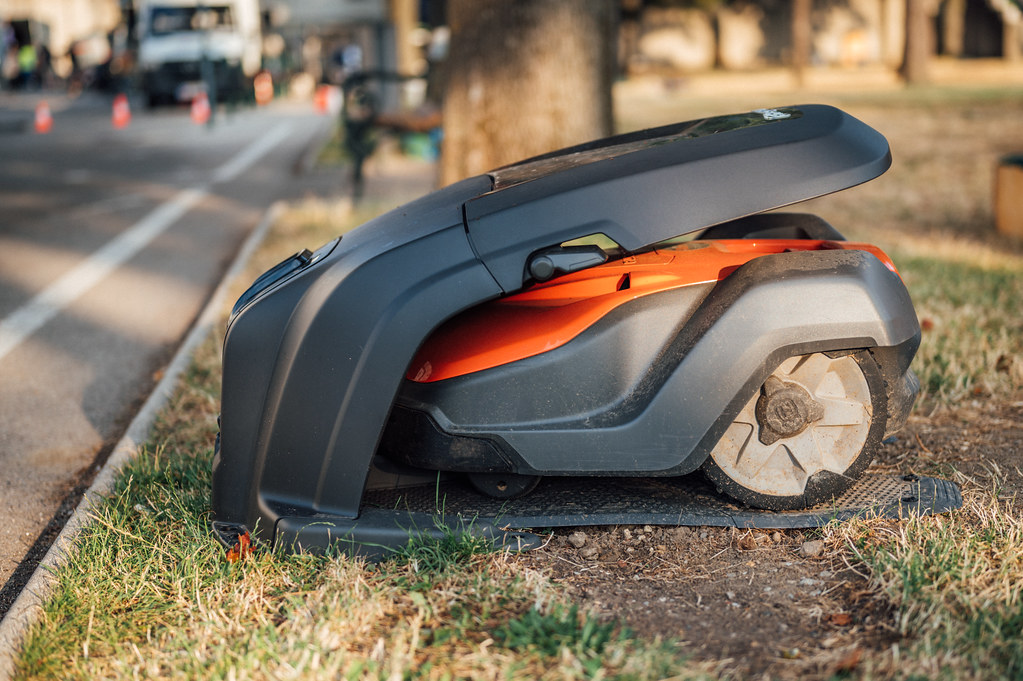
Photo credit: “Robot lawn mower close-up” by Ivan Radic, licensed BY (https://creativecommons.org/licenses/by/2.0/). Source: https://www.flickr.com/photos/26344495@N05/51331550196