Foldable phones spent their first several generations with a genuinely deserved reputation problem: visible screen creases, hinges that wore out faster than the rest of the phone, and a real sense that buying one meant accepting a shorter functional lifespan than a normal slab phone in exchange for the folding party trick. That reputation is now meaningfully out of date on the hardware side, even though the category still hasn’t fully answered the harder question of who actually needs one.
The Hinge Number That Matters
Samsung’s Galaxy Z Fold 7 hinge is rated for roughly 500,000 folds, up from the Z Fold 6’s 200,000-fold rating, a genuine, more-than-doubling of rated mechanical lifespan in a single generation rather than an incremental bump. Samsung frames that as good for roughly a decade of average daily use before hinge failure becomes a real practical concern, a meaningfully different promise than earlier foldable generations were making. Most major brands now target at least 200,000 folds as a baseline, with some reviewers citing figures above that for specific models, meaning the 200,000 rating that used to represent Samsung’s flagship-tier durability is increasingly becoming an industry floor rather than a competitive advantage.
Water Resistance Caught Up, Dust Still Hasn’t Fully
The Google Pixel 10 Pro Fold became the first foldable phone with full IP68 dust and water resistance, a genuine first for the category rather than an incremental spec bump. That matters specifically because dust, not water, has historically been the bigger long-term threat to a folding phone’s hinge mechanism: a fully sealed hinge that can also handle submersion is a different engineering achievement than the water-resistant-but-dust-vulnerable designs that preceded it. Samsung’s Galaxy Z Flip 7 carries IP48 protection in some reviewed configurations, water-resistant but with a lower dust-protection number than full IP68, which is worth knowing if you’re comparing the two brands’ current flagships directly rather than assuming “water resistant” means the same protection level across both.
What Teardowns Found
Independent teardowns published in early June 2026 found clear hinge wear and screen scratches on multiple current-generation folding phones after fewer than 30 open-close cycles, a number that sounds alarming set against a 500,000-fold rating until you understand what it’s actually measuring. A fold-count rating describes mechanical survival, whether the hinge still physically opens and closes correctly, not cosmetic wear on the screen surface or visible signs of use. Early, minor cosmetic wear showing up well before a hinge’s rated mechanical lifespan is expended isn’t necessarily evidence the durability improvements are overstated; it’s evidence that a foldable’s ultra-thin cover glass and crease-prone display surface remain more delicate than a slab phone’s screen regardless of how much the underlying hinge mechanism has improved.
The Remaining Weakness: Uneven Pressure on Thin Glass
Even a hinge rated for hundreds of thousands of folds can still contribute to a foldable aging badly if dust works its way in over time or if the hinge mechanism applies uneven pressure across the phone’s necessarily ultra-thin folding glass. That’s a structural tension foldables haven’t fully engineered away yet: a screen has to be thin and flexible enough to fold without cracking, which inherently makes it more vulnerable to pressure irregularities than the thicker, rigid glass a normal phone can use since it never needs to bend. External hinge protection has genuinely improved across the current generation, but the hinge area remains more exposed to environmental wear than a standard phone’s sealed, non-moving chassis, a real, ongoing tradeoff rather than a solved problem.
What a Repair Costs If Something Goes Wrong
The financial risk if a foldable’s screen does fail out of warranty is worth knowing upfront rather than discovering after the fact: out-of-warranty screen repairs on current foldable models frequently exceed $600, a genuinely significant repair cost relative to buying a comparably specced non-folding phone outright. That figure is worth weighing directly against whatever extended warranty or device protection plan a retailer offers at purchase, since the math on paying for protection changes meaningfully when the alternative repair cost is high enough to represent a real fraction of the phone’s original price, not just a minor inconvenience fee.
Software Support Length Varies More Than the Hardware Story Suggests
A foldable’s actual usable lifespan depends on more than hinge durability, and software support commitments vary meaningfully across brands in a way that’s easy to overlook while comparing fold-count ratings. Samsung currently offers a seven-year software support promise on its current foldable lineup, a genuinely long commitment. Google’s support timeline on its foldable lineup, while solid, currently trails Motorola’s on this specific measure, and Motorola in turn offers shorter support windows than either Samsung or Google on its own foldable models. A phone with a hinge rated to outlast a decade of daily folding is a weaker long-term purchase than the fold-count number alone suggests if its software support runs out years before the hardware would actually need replacing.
What to Check Before Buying One in 2026
Given how much has genuinely changed generation over generation, a few concrete things are worth comparing directly rather than assuming durability is now a solved, undifferentiated category:
- The specific fold-count rating for the exact model being considered, not the brand’s reputation generally. A 200,000-fold baseline and a 500,000-fold flagship-tier rating are both currently on the market simultaneously, sometimes from the same manufacturer’s own current and previous-generation devices sold side by side.
- IP rating specifics, dust and water separately, since a device can be strong on one and weaker on the other, as the Z Flip 7’s IP48 rating versus the Pixel 10 Pro Fold’s full IP68 illustrates directly.
- Out-of-warranty repair pricing for the specific model, checked directly against the manufacturer’s own support site, before assuming a device protection plan isn’t worth the added cost.
- Software support end date relative to how long you actually plan to keep the phone, since this varies by brand in ways that don’t track neatly with hardware durability improvements.
Battery Life Follows the Same Pattern as the Hinge Story
Battery longevity on current foldables is a similarly improved but not fully solved part of the picture. Devices in the Google Pixel 9 Pro Fold’s class are estimated around 500 full charge cycles before dropping to 80% of original capacity, a respectable number for a lithium-ion battery but not meaningfully different from what a well-built non-folding flagship phone delivers. That’s worth knowing specifically because foldable marketing tends to lead entirely with hinge and screen durability improvements, leaving battery longevity as an assumed constant rather than a separate spec worth checking, when in practice it’s aging at roughly the same rate a standard phone’s battery would under comparable use.
Who a Foldable Makes Sense For Now
The honest industry consensus at this point isn’t that foldables are still too fragile to recommend; hinge and water-resistance improvements have genuinely closed most of the durability gap that justified that hesitation a couple of generations ago. The real remaining question is closer to figuring out who specifically benefits enough from the folding form factor to justify a still-meaningful price premium and a still-higher repair cost if something does go wrong, not whether the hardware itself can be trusted to survive normal daily use. For anyone who’s held off specifically over durability concerns, that’s a genuinely different, more favorable landscape than even two years ago; for anyone comparing a foldable against a standard flagship purely on cost and repair-risk grounds, the math still favors the non-folding phone in most cases.
The clearest current buyers are people who’ve already identified a specific, recurring use for the larger unfolded screen, reading, multitasking between two apps side by side, a genuinely different note-taking or productivity workflow, rather than people drawn primarily to the novelty of a phone that folds. That distinction matters more now than it did when durability alone was the deciding factor, since the hardware case against foldables has largely closed while the use-case case for them remains exactly as specific and personal as it always was.
*Sources: Aggregated 2026 foldable phone durability testing and reviews (teardown coverage, manufacturer specifications, and independent hinge/IP-rating comparisons), cross-checked across multiple sources.*
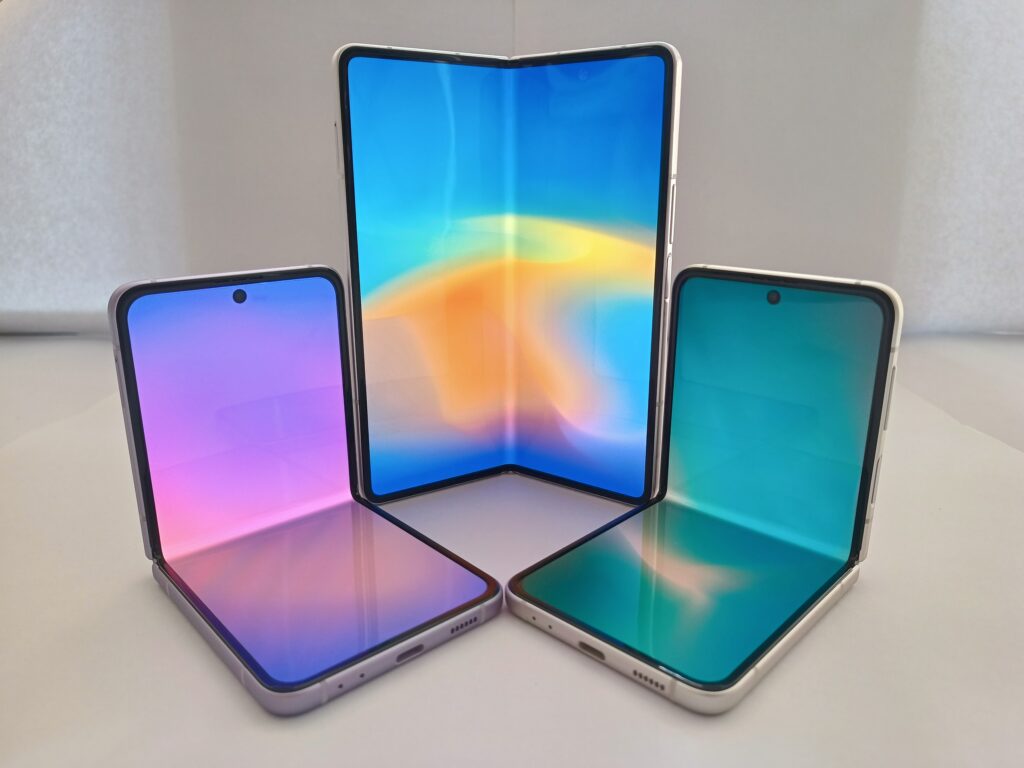
Photo credit: “Foldable Smartphones” by Ka Kit Pang, licensed BY (https://creativecommons.org/licenses/by/3.0/). Source: https://commons.wikimedia.org/w/index.php?curid=112715299