Projector spec sheets have a brightness number problem serious enough that it’s led to actual lawsuits between manufacturers. Epson has sued competitors specifically over misleading brightness advertising, and the reason is a genuinely confusing measurement landscape: “lumens” on a projector’s box can mean at least three different things, and the gap between them isn’t a rounding difference, it’s the difference between a projector that’s genuinely bright enough for a living room and one that isn’t, sold under numbers that look identical on paper.
The Three Different Things “Lumens” Can Mean
ANSI lumens is the only standardized, trustworthy measurement, and it’s tested the same way regardless of manufacturer: a solid white image is projected onto a screen, divided into a 3-by-3 grid, measured at each of the nine points with a professional light meter, and averaged. That process exists specifically to prevent manufacturers from cherry-picking the brightest possible measurement conditions.
“Peak lumens” describes something very different: the absolute maximum brightness a light source can produce in its most blown-out setting, frequently with a heavy green tint that makes actual video content look wrong. LED lumens and light-source lumens are different measurements again, describing the raw output of the light-emitting component itself rather than what actually reaches the screen as usable, color-accurate image brightness.
The Conversion Numbers That Should Change How You Read a Spec Sheet
Here’s the part worth sitting with directly: 1,000 LED lumens converts to roughly 417 ANSI lumens, and 1,000 light-source lumens converts to as little as 60 ANSI lumens. That’s not a modest measurement discrepancy; a projector advertising “1,000 lumens” using the light-source measurement could be delivering real, usable brightness closer to what a 60-ANSI-lumen projector would produce, a genuinely dim device being marketed with a number that sounds mid-range. Separately, even a projector’s own advertised peak-lumens figure typically drops by 30% to 50% once it’s calibrated for accurate colors and realistic skin tones rather than left in its brightest, least accurate factory mode. A projector that looks impressively bright on a spec sheet and in a showroom demo running an oversaturated preset can lose nearly half that brightness the moment it’s adjusted to actually look correct.
Why This Escalated to Actual Lawsuits
Epson’s decision to sue competitors over brightness advertising is worth knowing about specifically because it signals this isn’t a minor industry quirk that careful shoppers should just work around quietly; it’s a big enough problem that a major manufacturer decided litigation was the right response to how badly some competitors’ marketing numbers were misrepresenting real output. That’s a stronger signal than a review site’s complaint about marketing copy, since Epson has direct financial incentive to only pursue that fight if the misrepresentation was actually costing it real sales to a projector that couldn’t back up its advertised brightness with anything close to real-world performance.
What a Real 2026 Spec Sheet Comparison Looks Like
Current market pricing shows genuine ANSI-lumen figures spanning a wide, honest range once you’re looking at the right number: the Anker Nebula X1 lists at 3,500 ANSI lumens, the Epson Home Cinema 980 at 4,000, the Hisense PX3-PRO at 3,000, the ViewSonic PX701-4K at 3,200, and the Formovie Cinema Edge at 2,100. A genuinely portable, battery-powered option like the Anker Nebula Capsule 3 sits much lower at 300 ANSI lumens, appropriate for its compact, battery-powered category rather than a living-room home theater setup, and honestly labeled as such rather than inflated with a peak or LED-lumen figure to look competitive with much larger plugged-in units.
That spread is worth using as a real reference point: any projector advertising a brightness number that seems to dramatically outperform comparably priced and sized competitors is worth checking specifically for whether that number is ANSI-rated, before assuming it’s simply a better deal.
How to Check Before Buying
A few concrete steps that cut through the measurement confusion directly:
- Look specifically for the word “ANSI” or “ISO” next to the lumens figure, not just a bare number. If a listing doesn’t specify which standard it’s using, treat that omission itself as a warning sign rather than assuming ANSI by default.
- Be skeptical of a lumens number that looks unusually high for the price, especially on budget projectors from less-established brands. A projector significantly cheaper than ANSI-lumen-comparable competitors while claiming similar or higher brightness is one of the clearest signals the number isn’t measured the same way.
- Check independent reviews for real-world brightness testing, not just the manufacturer’s own listed spec, since third-party reviewers frequently measure ANSI lumens directly with their own equipment specifically because manufacturer claims have proven unreliable enough to warrant it.
- Remember that calibrated, accurate-color brightness runs 30-50% below whatever peak figure is advertised, and factor that reduction into whether a specific projector will actually be bright enough for your room’s ambient light level, not the number on the box.
The Light Source Matters Too, Separately From the Lumens Question
Brightness measurement standards aside, the underlying light source technology is a real, separate factor worth checking alongside the ANSI-lumen figure. Laser light sources last 10,000 hours or more before needing replacement, compared to a maximum of roughly 2,000 hours for traditional bulb-based projectors, a five-times difference in usable lifespan before the light source itself degrades enough to matter. Laser projectors have moved meaningfully into mainstream pricing as of 2026, with genuinely capable models now available well under $2,000, a category that used to require a premium well beyond that price point. A DLP-based projector tends to produce bright, punchy images but can show a “rainbow effect,” visible red, green, and blue color fringing on high-contrast edges that some viewers find distracting and others don’t notice at all; LCD-based projectors avoid that specific artifact and often deliver more accurate color, at a typically higher price and with a greater tendency toward gradual image degradation over the unit’s lifespan. Neither technology choice fixes a misleading lumens claim, but combined with a genuine ANSI rating, it’s a real second axis worth comparing rather than treating brightness as the only spec that matters.
The Room Brightness Reality Check
Beyond the marketing-number problem, it’s worth matching the actual ANSI-lumen figure to the room a projector will be used in, since even an honestly labeled number doesn’t automatically mean “bright enough.” A fully darkened, dedicated home theater room can look genuinely excellent with a projector in the 1,500-2,500 ANSI lumen range. A living room with regular daytime use and ambient light from windows needs meaningfully more, generally 3,000 ANSI lumens or higher, to maintain a watchable, non-washed-out image without requiring blackout curtains every time it’s used.
The Bottom Line
The gap between what a projector’s box claims and what actually reaches your screen has gotten wide enough to trigger lawsuits between manufacturers, which is a genuinely useful signal for how seriously to take spec-sheet skepticism in this specific category. A projector’s real brightness is the ANSI or ISO lumens figure, full stop, and any other number on the box, peak, LED, or light-source lumens, requires converting down significantly before it means anything comparable. That single check, confirming the standard behind whatever number is advertised, is a bigger factor in whether a projector purchase turns out well than almost any other spec on the sheet.
It’s a check that costs nothing beyond a few extra minutes of reading, and it’s the difference between comparing projectors on a level, honest playing field and comparing numbers that were never measuring the same thing to begin with.
*Sources: Aggregated 2026 projector brightness standards reporting (BenQ’s ANSI/LED/light-source lumen conversion data, Valerion’s lumen comparison analysis, industry lawsuit coverage), cross-checked against Engadget’s 2026 projector model and pricing comparison.*
\n
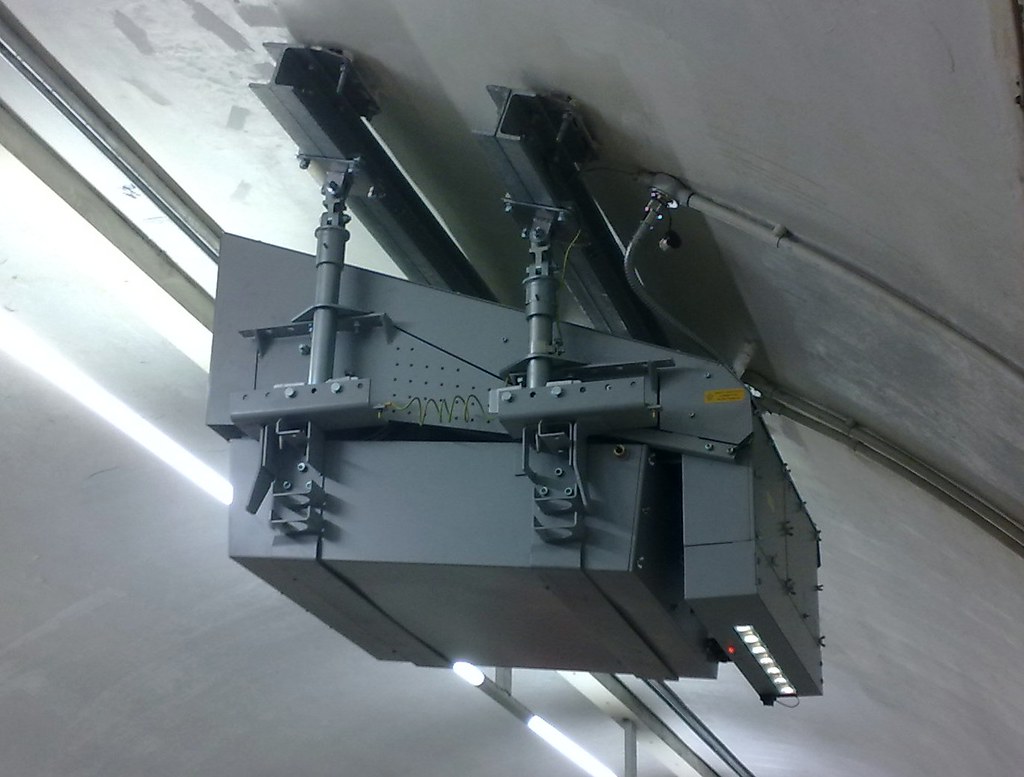
Photo credit: "london underground video projector" by fsse8info, licensed BY-SA (https://creativecommons.org/licenses/by-sa/2.0/). Source: https://www.flickr.com/photos/37031529@N00/3074520922