This site has already covered the AI-driven memory shortage pushing up the price of laptops, TVs, Mac Minis, and the Steam Deck. Graphics cards are getting hit harder than any of them, for a specific, measurable reason: memory now makes up more than 80% of a modern high-end GPU’s total bill of materials, the single largest cost component by a wide margin. When memory prices roughly doubled in early 2026, GPU prices didn’t just follow; they amplified the increase, because there’s so little else in a graphics card’s build cost left to absorb it.
The Real Numbers, Not Just “Prices Are Up”
Street pricing by July 2026 had pulled meaningfully away from launch MSRP across the board. The RTX 5070 Ti launched at $749 and was selling for $900 to $1,300 depending on retailer and model. The RTX 5080, launched at $999, was running $1,300 to $1,450. AMD’s RX 9070 XT, which launched at $599, had climbed as high as $989 on some board partner models by mid-2026. Those aren’t scalper markups on a hot launch-week item; they’re sustained street prices months after release, reflecting real, ongoing cost pressure rather than temporary demand spikes.
Board partner pricing tells the same story from a different angle: ASUS raised its Prime RX 9070 XT OC from $799.99 to $939.99 and its TUF Gaming RX 9070 XT from $849.99 to $989.99, both a 17.5% jump on cards that had already been on the market for months. AMD itself raised the GDDR memory kit prices it charges board partners by about 10% effective July 2026, the second such increase in roughly six months, a direct pass-through of rising memory costs onto the companies that build finished cards. Nvidia’s own production response included supply cuts to partners ranging from 20% broadly up to 30-40% on certain specific models during the first half of 2026, with prices climbing roughly 19-20% globally since late 2025 as a direct result of that tightened supply.
Why 80% of the Bill of Materials Changes Everything
It’s worth understanding why a GPU is hit harder than, say, a laptop by the same underlying memory shortage. A laptop’s total cost includes a screen, a battery, a keyboard, a chassis, and a processor alongside its RAM and storage, memory is a meaningful but partial slice of the total build cost. A high-end graphics card is comparatively closer to a memory delivery vehicle with a processor attached: the GDDR memory chips surrounding the GPU die account for more than 80% of what it costs to build the card. When the input that dominates that much of a product’s cost roughly doubles, there’s no meaningful room for the rest of the bill of materials to absorb the increase, and the finished-product price has to move by close to the same proportion.
The Root Cause Is the Same Story, at a Larger Scale
The demand side of this traces back to the same AI datacenter buildout behind the broader memory shortage, but at a more extreme scale specifically for GPU-adjacent memory. IDC’s own forecasting puts AI datacenters on track to consume as much as 70% of global memory output in 2026, up from roughly 20-30% just a few years earlier in 2022. That’s not a gradual shift; it’s a demand curve that’s more than doubled its share of a finite global supply in under four years, and consumer GPUs are competing for the same GDDR and HBM memory pools that AI accelerators need in much larger quantities per unit.
Which GPUs Are Getting Harder to Find
The pricing pressure isn’t landing evenly across every tier. Entry-level and budget GPU availability is specifically forecast to worsen through the second half of 2026, since board partners facing tighter memory allocation naturally prioritize their higher-margin, higher-end models when supply is constrained, leaving budget-tier cards further down the priority list for both production and restocking. That’s a meaningfully different dynamic than a simple across-the-board price increase; it means the segment of the market most price-sensitive buyers depend on is also the segment facing the worst combination of higher prices and genuine scarcity, not just sticker shock on cards that are at least sitting on shelves.
What to Do About It
A few concrete, actionable points given where this market currently stands. First, ignore manufacturer MSRP entirely when budgeting for a GPU purchase right now; it’s become a largely theoretical number disconnected from what cards actually sell for, and comparing a listed street price against MSRP will consistently make a purchase look worse than comparing it against other current listings instead. Second, check multiple retailers directly, Newegg, Best Buy, Micro Center, and Amazon have shown real price variance on the same card, and Micro Center specifically has occasionally stocked closer to original launch pricing than competitors during this period. Third, watch for genuine seasonal sales rather than assuming none exist in this market: a summer 2026 sale briefly dropped the RTX 5070 Ti to around $900, a real, meaningful discount off its typical street price even during an otherwise tight supply environment.
Fourth, and possibly most useful for anyone not chasing the newest architecture specifically: a previous-generation card, bought used or from remaining new stock, is offering a genuinely better value proposition during this shortage than it would in a normal market, since the price gap between current and previous-generation hardware has widened alongside the overall price increase rather than narrowing the way it typically does as a generation ages.
This Doesn’t Stop at Standalone Graphics Cards
The same GDDR memory cost pressure driving standalone GPU prices up flows directly into anything built around one. A prebuilt gaming desktop or a gaming laptop with a discrete GPU carries the exact same inflated memory cost inside its own bill of materials, just bundled into a single sticker price rather than itemized as a separate component purchase. That’s worth knowing specifically because it changes how a prebuilt system’s price increase should be read: a gaming laptop that costs more than it did a year ago isn’t necessarily reflecting a worse deal from the laptop manufacturer specifically, it’s very likely reflecting the same GPU memory cost increase passed through as part of a bundled price, in the same way a standalone card’s price increase reflects it directly. Comparing this year’s prebuilt pricing against last year’s without accounting for that shift risks concluding a specific brand got greedier, when the more accurate read is that the underlying component cost genuinely changed for everyone building around the same GPUs.
The Timeline Nobody Wants to Hear
Analysts covering this shortage broadly agree there’s no meaningful relief expected before late 2027, with some more cautious estimates pushing that out to 2028 given how deeply AI datacenter demand has embedded itself into the memory supply chain. That’s consistent with the timeline this site has already reported for the broader laptop, TV, and console side of the same shortage, which reinforces that this isn’t a GPU-specific problem with its own separate resolution coming; it’s the same structural shortage playing out across every product category that depends on the same memory supply, with GPUs simply absorbing the sharpest edge of it given how dominant memory is in their specific cost structure.
The Bottom Line
If a GPU purchase is genuinely needed now, for a new build, a failed card, or a workload that can’t wait, buying sooner rather than hoping for a correction is the more defensible choice given every available signal pointing toward continued tightness rather than relief through 2027 at the earliest. If the purchase is more discretionary, a previous-generation card at a genuinely discounted price, or simply waiting out a temporary sale window, is a more realistic strategy than waiting for MSRP-adjacent pricing to return, since nothing in the current data suggests that’s coming back on any near-term timeline.
*Sources: PC Game Check’s July 2026 GPU pricing analysis, IDC memory-demand forecasting, aggregated 2026 GPU market reporting, cross-checked across multiple sources.*
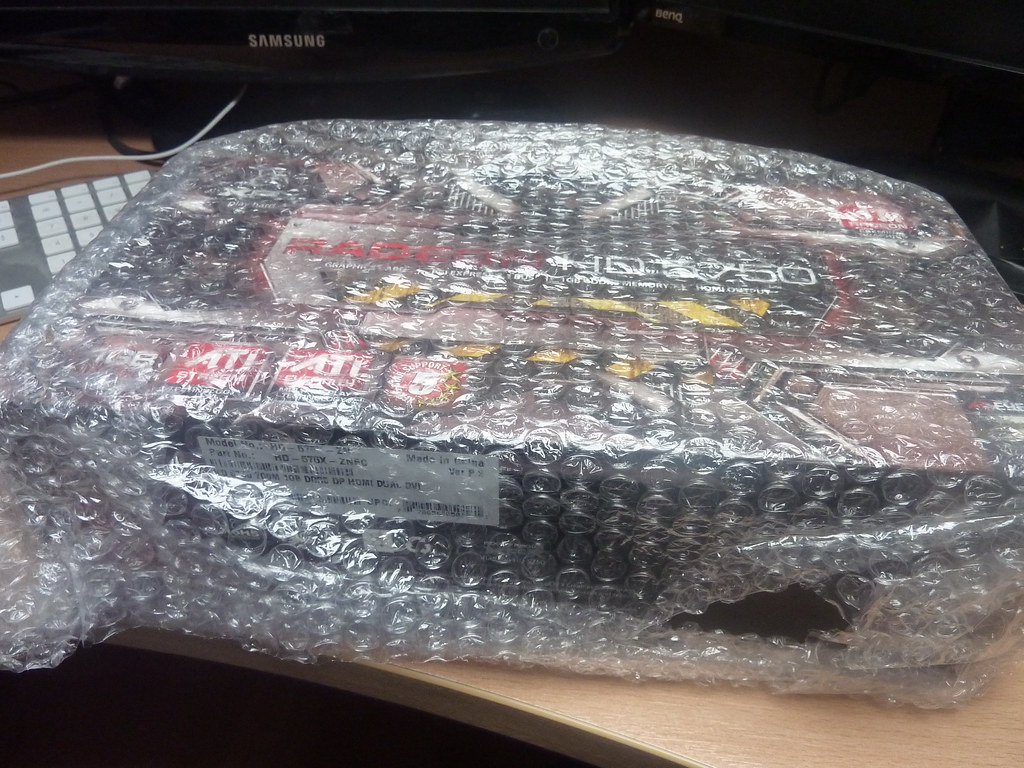
Photo credit: “Graphics Card” by Sean MacEntee, licensed BY (https://creativecommons.org/licenses/by/2.0/). Source: https://www.flickr.com/photos/18090920@N07/6421468805