
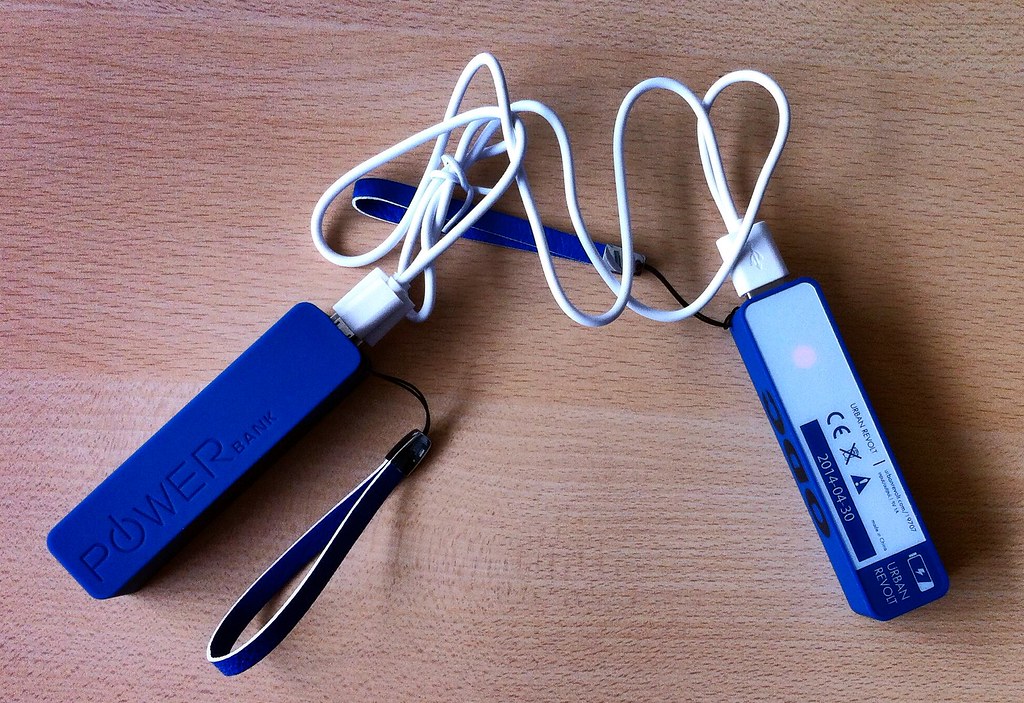
If you’ve flown recently with a power bank tucked into your carry-on’s overhead bin the way you always have, that habit is now against the rules on most major US airlines, and the reason isn’t bureaucratic overcaution. American Airlines banned power banks from overhead bins starting May 1, 2026. United did the same starting March 1. Southwest banned carrying more than one power bank per passenger starting April 20, and Delta has similarly mandated that portable chargers stay in a personal item under the seat rather than overhead. The stated reasoning is consistent across every airline that’s made the change: lithium battery fire risk is significantly higher when a device is out of sight in an overhead bin than when it’s within reach of a passenger who can react to a problem immediately.
Why Visibility Is the Actual Rule, Not Just Capacity
It’s worth understanding what these new rules are actually targeting, because it’s a different concern than the older capacity-based restrictions most travelers already knew about. Lithium-ion batteries can undergo thermal runaway, an uncontrolled overheating and fire event, and when that happens, the difference between a fire noticed in seconds and one noticed minutes later can be significant on an aircraft. A power bank in a seat pocket or under-seat personal item is visible and immediately reachable if something goes wrong; the same power bank in an overhead bin might not be discovered until smoke is already filling the cabin.
That’s why Delta’s requirement isn’t just “keep it in carry-on” but keep it within a personal item under the seat, why United specifically allows it to stay on your person, in a seat pocket, or in an under-seat personal item rather than anywhere in the overhead bin, and why American’s rule requires it stay accessible at all times rather than just present somewhere in the cabin. The rules are built around response time to a battery failure, not just around keeping lithium batteries out of the cargo hold, which was already the older standard rule.
The Quantity and Capacity Limits, Airline by Airline
Beyond the visibility requirement, a separate set of rules governs how many power banks you can bring and how large they can be. The general framework most airlines follow: power banks up to 100 watt-hours are generally permitted without special approval, capacities between 100 and 160 watt-hours require prior airline authorization, and anything above 160 watt-hours is banned outright, a threshold that covers virtually every consumer power bank on the market today regardless of airline.
On top of that capacity rule, specific airlines have added their own quantity limits. American Airlines caps passengers at two power banks under 100Wh. Southwest is more restrictive still, capping passengers at a single power bank as of April 20, 2026. Delta and United haven’t published the same kind of explicit numeric cap as of this writing, focusing their published rules instead on where a power bank has to be kept during the flight, but that’s the kind of detail worth reconfirming directly with the airline before a trip rather than assuming it won’t change. If you’re used to traveling with a backup power bank in addition to your primary one, checking your specific airline’s current limit before packing is worth the two minutes it takes, since these rules have rolled out at different times across different carriers this year rather than as one industry-wide change on a single date.
What’s Completely Banned, Not Just Restricted
Checked baggage is a hard no regardless of capacity or airline: power banks are prohibited from checked bags entirely, not just discouraged, because the specific danger they’re managing against, a battery fire with no one nearby to respond, is at its worst in an unmonitored cargo hold. That rule predates the 2026 overhead-bin changes and remains unchanged; what’s new this year is that “carry-on” itself has been narrowed further to mean “on your person or within immediate reach,” not just “somewhere in the cabin.”
In-flight charging has a restriction worth knowing too: several airlines’ updated policies specify that a power bank can’t be used to charge another device while stored in a way that isn’t directly monitored, and the power bank itself generally can’t be charged during the flight. If you’re planning to top off your phone mid-flight using a power bank, keep it in your actual hands or immediate personal space while it’s doing that job, not tucked away and forgotten.
Labeling Matters More Than It Used To
Security agents at several airports now have explicit authority to confiscate power banks that don’t have clearly legible capacity and safety information printed on the exterior. A power bank with worn-off, scratched-away, or missing labeling showing its watt-hour rating and safety certification (UL, CE, or equivalent regional marks) is now a real confiscation risk at security, not just an inconvenience if questioned. That’s a meaningful shift for anyone who’s had the same power bank for a few years and never thought about whether its label was still legible.
What to Actually Buy Given These Rules
Given the 100Wh threshold most airlines default to without requiring special approval, a power bank in the 10,000-20,000mAh range is the sweet spot for most travelers, comfortably under that limit while still offering multiple full phone charges, and it avoids the extra step of needing airline pre-approval that anything in the 100-160Wh range requires. Look specifically for a model with a clearly printed, durable watt-hour rating on the casing rather than one where the capacity is only listed in the original packaging or manual, since that packaging won’t be with you at a security checkpoint months or years later. And given the new one-or-two-per-passenger limits depending on airline, a single higher-capacity power bank within the 100Wh ceiling is now a more practical travel choice than carrying two smaller ones, on any airline that’s capped quantity at one.
How This Compares to International Rules
If you’re flying internationally, it’s worth knowing these US carrier rules aren’t a global standard, and some regions are notably more permissive on quantity even while sharing the same underlying capacity framework. Hong Kong and Japan, for instance, generally permit up to five power banks under 100Wh per passenger, a meaningfully higher allowance than the one-or-two-unit caps US carriers have introduced this year. That gap matters most for anyone connecting through multiple airlines or regions on one trip: the most restrictive rule among your booked carriers is effectively the one you need to plan around, not the most permissive one, since a power bank that’s fine for an outbound international leg can still get flagged on a connecting US domestic flight with a tighter quantity cap.
China’s enforcement adds another layer worth knowing if that’s part of your itinerary: security there has specifically flagged power banks with unclear labeling or missing 3C certification, a China-specific safety mark, for confiscation, on top of the same capacity and labeling concerns already in play elsewhere. The through-line across every region’s version of these rules is the same: legible, verifiable labeling on the device itself is now treated as a real prerequisite for getting through security with it, not an assumed given.
The Bottom Line for Your Next Flight
None of this means power banks have become impractical to travel with; the core allowance, a reasonably sized power bank in carry-on, hasn’t gone away. What’s changed is where in the cabin it needs to live and how many you can bring, both driven by a real, specific safety concern about response time to battery failures rather than an arbitrary new restriction. Checking your specific airline’s current rule before your next flight, rather than assuming the habits that worked last year still apply, is a genuinely worthwhile two-minute check given how recently and how differently each major airline has rolled this out.
The practical habit worth building going forward: treat your power bank the same way you’d treat a phone or a passport during a flight, something that lives in reach the entire time rather than something you stow and forget about until landing. That single habit change covers nearly every version of these new rules at once, regardless of which specific airline or region you’re flying through, and it costs nothing beyond a small adjustment to where you tuck the thing during boarding.
*Sources: Airline-specific power bank policy announcements (American, United, Delta, Southwest) and IATA capacity guidelines, aggregated from current travel industry reporting, cross-checked across multiple 2026 sources.*
Photo credit: “Infinite Power!….Problem?” by dvanzuijlekom, licensed BY-SA (https://creativecommons.org/licenses/by-sa/2.0/). Source: https://www.flickr.com/photos/52365139@N05/14627546992