Home Blood Pressure Monitor: Key Takeaways
- Cuff size mismatch is the largest source of error for a home blood pressure monitor, so measure arm circumference and match the cuff’s stated range.
- Placing the cuffed arm at heart level when using a home blood pressure monitor reduces reading variance more than the monitor’s sensor.
- For most users, an upper-arm home blood pressure monitor is more consistent than a wrist model because wrist position relative to the heart is harder to maintain.
- Checking an independent validated-device list before purchase ensures the home blood pressure monitor has undergone clinical validation.
Most complaints about home blood pressure monitors giving inconsistent or seemingly inaccurate readings trace back to measurement technique and cuff fit, not the device itself. A validated monitor used incorrectly produces genuinely misleading numbers regardless of how accurate its internal sensor is, which makes proper cuff sizing and body positioning at least as important as which specific model gets purchased.
Table of Contents
Cuff Size Is the Single Biggest Source of Measurement Error
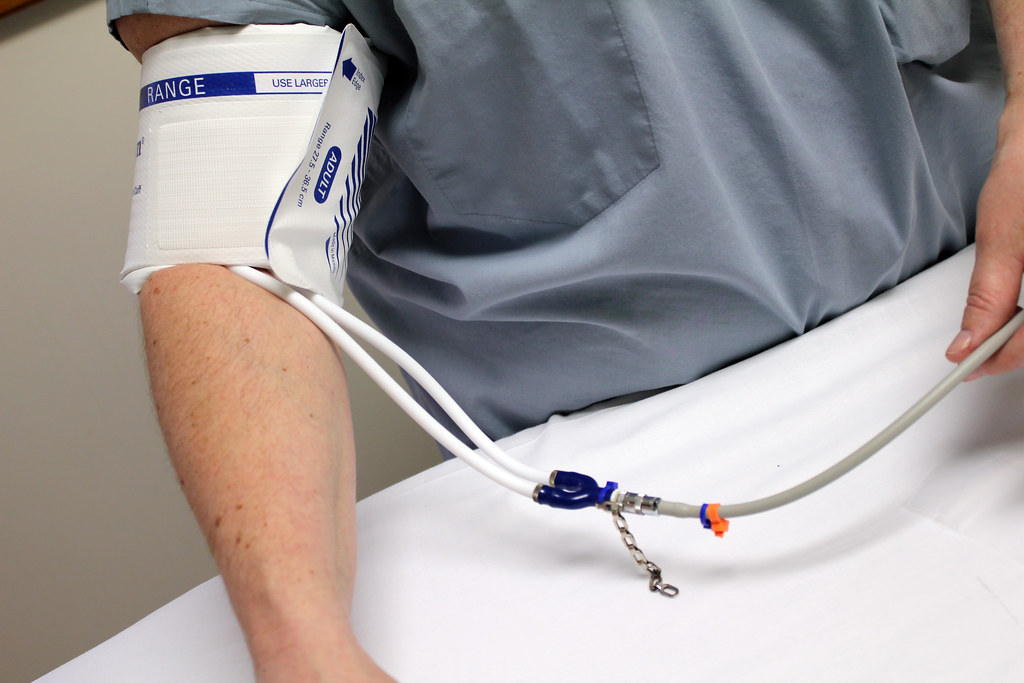
A blood pressure cuff that’s too small for a specific arm circumference reads artificially high, and a cuff that’s too large reads artificially low, an effect well documented in clinical measurement research and large enough to meaningfully change a reading’s interpretation. Most home monitors ship with a single standard-size cuff that fits an average adult arm reasonably well but not universally, and checking actual arm circumference against the specific cuff’s stated size range, rather than assuming a one-size-fits-most cuff fits every arm, is the single highest-impact accuracy check available before even considering the device’s internal sensor quality.
Arm Position Changes Readings More Than People Expect
Blood pressure readings are measurably affected by whether the arm is at heart level during measurement, an arm held below heart level, resting in a lap while seated, for instance, tends to read higher, and an arm raised above heart level tends to read lower, compared to the same arm properly supported at heart height on a table or armrest.
Sitting with feet flat on the floor, back supported, and the cuffed arm resting at heart level on a flat surface is the standard correct positioning, and skipping any of these details introduces real measurement variance unrelated to the device’s actual accuracy.
Wrist Monitors vs. Upper-Arm Monitors
Upper-arm cuff monitors are generally considered more consistently accurate than wrist monitors across validation studies, largely because wrist position relative to heart level is harder to maintain correctly and wrist measurements are more sensitive to positioning error. Wrist monitors remain a reasonable option for someone who genuinely cannot use an upper-arm cuff comfortably, such as due to arm size or certain medical conditions, but for most users an upper-arm monitor is the more reliable default choice.
What “Clinically Validated” Actually Means and Why to Check for It
A meaningful share of consumer blood pressure monitors on the market have never gone through independent clinical validation testing against a recognized accuracy protocol, despite implying medical-grade reliability in marketing. Checking whether a specific model appears on an independently maintained validated device list, rather than trusting a manufacturer’s own accuracy claims alone, is a real and worthwhile step before purchase, particularly for anyone using home readings to inform an actual medical decision or share results with a doctor.
The Multiple-Reading Protocol Most People Skip
Clinical guidance generally recommends taking two or three readings, spaced a minute or so apart, and averaging them, rather than relying on a single reading, since blood pressure naturally fluctuates and a single measurement can be skewed by momentary factors like recent movement, caffeine, or anxiety about the measurement itself. Many home users take one reading and treat it as a definitive number, which introduces exactly the kind of moment-to-moment noise the multiple-reading protocol exists to average out.
A Practical Buying and Use Approach
- Measure actual arm circumference and match it against a specific monitor’s cuff size range before buying, rather than assuming standard sizing fits.
- Choose an upper-arm monitor over a wrist monitor for most users, given the more consistent accuracy across positioning variance.
- Check for independent clinical validation rather than relying on marketing claims of medical-grade accuracy alone.
- Take multiple readings, spaced a minute apart, and average them, rather than treating a single reading as definitive, following standard clinical guidance.
The Honest Trade-Off
A clinically validated home blood pressure monitor, used with a properly sized cuff and correct positioning, gives genuinely useful data for tracking trends over time and sharing with a doctor. The device itself is usually not the actual source of inaccurate readings people experience at home; cuff size mismatch and incorrect positioning cause far more real-world measurement error than differences in accuracy between validated monitor models.
Bottom Line
A clinically validated home blood pressure monitor used with a properly sized cuff and correct arm position provides reliable trend data for sharing with a doctor. Next, measure your arm circumference and select a monitor whose cuff range matches it.
Related Reading
- Drinking a Liter of Water Can Change What Your Smart Scale Says About Your Body Fat. Here’s What These Numbers Actually Measure.
- The Difference Between a $100 and a $600 Espresso Machine Is Mostly One Part
- Continuous Glucose Monitors for Non-Diabetics: What the Data Actually Tells a Healthy Person
Sources: American Heart Association: home blood pressure monitoring, AHA/AMA joint statement on self-measured blood pressure.
Photo credit: “Disposable blood pressure cuff” by quinn.anya, licensed BY-SA (https://creativecommons.org/licenses/by-sa/2.0/). Source: https://www.flickr.com/photos/53326337@N00/5645559731