Google’s Pixel Tag costs $29 for one, $99 for a four-pack, ships November 11, 2026, and on paper it looks like a near-exact AirTag clone. Same price. Same replaceable CR2032 coin battery rated for about a year. Both use ultra-wideband for precise short-range finding. The spec sheets are close enough that a side-by-side comparison table makes them look interchangeable. They aren’t, and the reason has nothing to do with either device’s hardware.
Table of Contents
The Fact That Decides This Before You Compare Anything Else
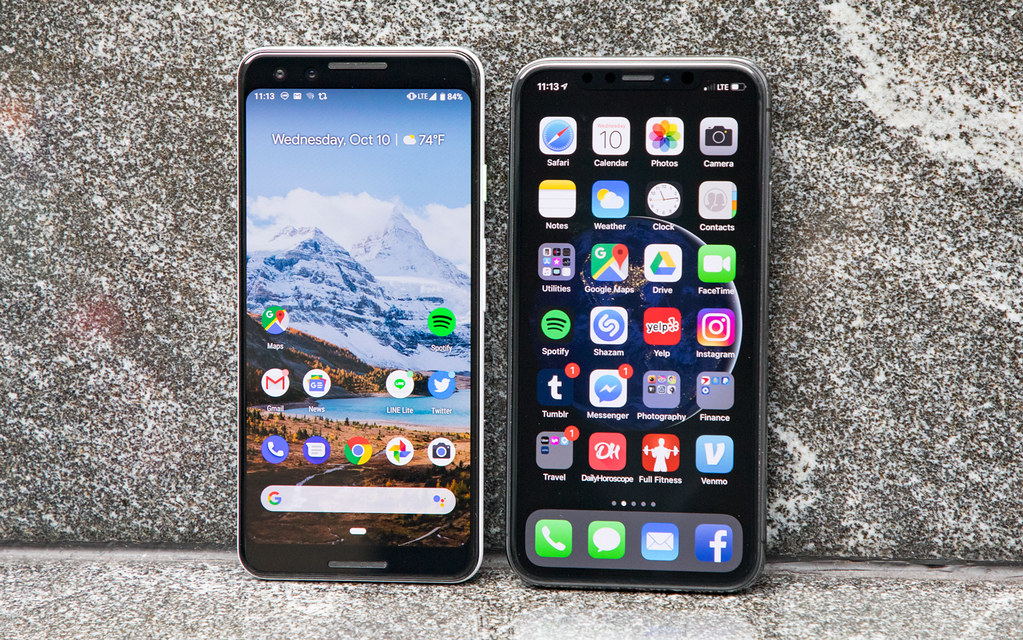
A Pixel Tag will not work at all if you carry an iPhone. An AirTag will not work at all if you carry an Android phone. This isn’t a “works better on X” situation the way most brand-versus-brand comparisons go; it’s a hard wall. Apple’s Find My network runs on iPhones, and Apple doesn’t let Android devices participate as trackers or finders within it.
Google’s Find Hub network runs the same way in reverse, built on the installed base of Android phones worldwide. Whichever tag you buy, its entire value depends on being surrounded by a crowd of the matching phone type, since both trackers work by quietly pinging nearby phones on their respective networks to report a lost item’s location.
That means the buying decision was made the day you chose your phone, not the day you’re comparing trackers. If you’re an iPhone owner asking “Pixel Tag vs. AirTag,” the Pixel Tag is off the table entirely regardless of price or specs; the reverse is equally true for Android owners considering an AirTag.
Where the Hardware Differs
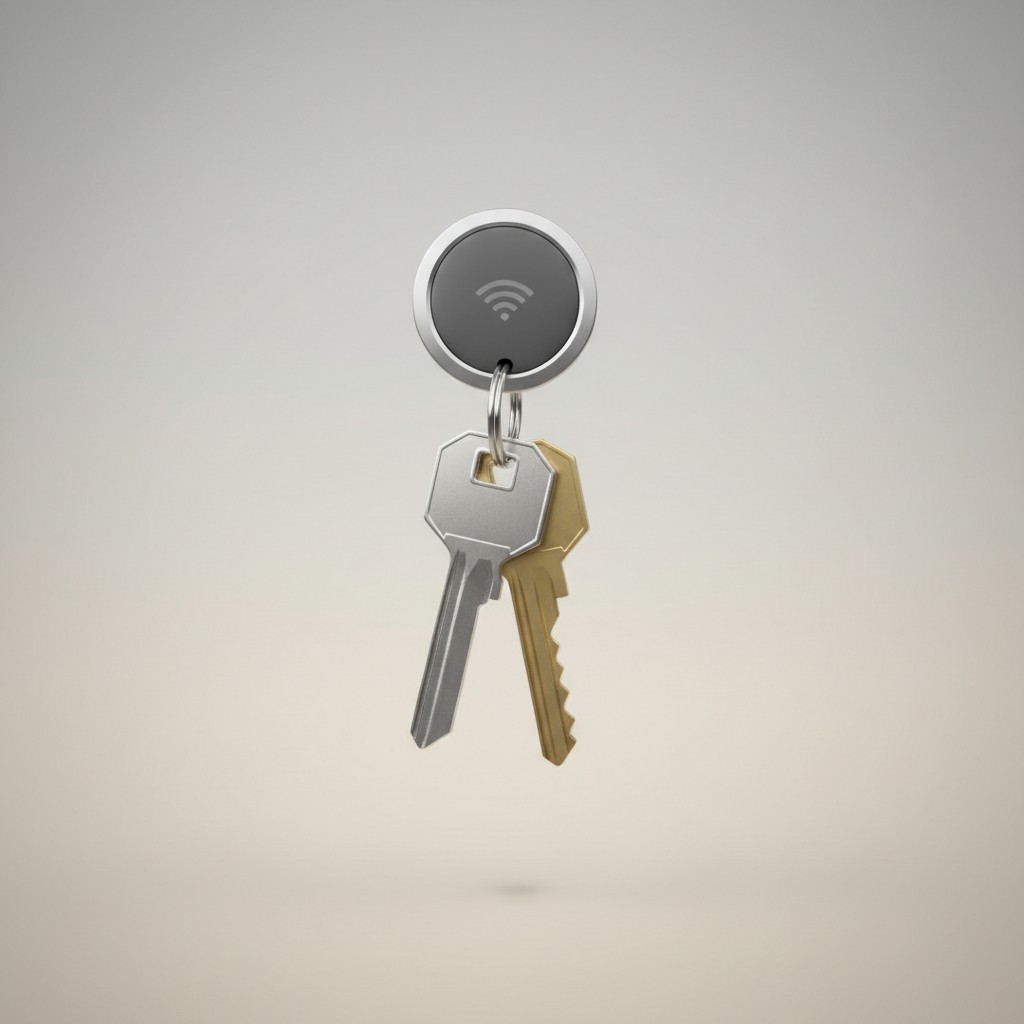
Once ecosystem lock-in rules out one option, the remaining differences are real but secondary. The Pixel Tag uses a pill-shaped, pebble-like body measuring roughly 46 by 28 by 5.4mm and weighing under 12 grams, with no built-in attachment loop, so you’ll need a separate case or holder to clip it to keys or a bag. AirTag’s second generation kept the familiar flat, round disc shape and added an upgraded ultra-wideband chip that Apple says extends Precision Finding range by up to 50% over the first-generation AirTag.
The Pixel Tag pairs its own UWB hardware with Bluetooth Channel Sounding, a newer distance-ranging technology, though independent testing on how that stacks up against Apple’s Precision Finding in real-world use is still limited since the device hasn’t shipped yet.
One notable omission on the Pixel Tag: it drops NFC support, which AirTag includes. NFC lets anyone who finds a lost AirTag tap it with any smartphone to see a “Lost Mode” contact message, no app required. Without NFC, a lost Pixel Tag likely depends more heavily on Google’s own Find Hub app for a stranger to identify and report it, though Google hasn’t detailed exactly how lost-mode discovery will work for a Pixel Tag found by someone without the Find Hub app installed.
The Speaker Matters More Than the Spec Sheet Suggests
Both devices include a built-in speaker for the “it’s somewhere in this room but I can’t see it” scenario, where you trigger a sound from your phone and listen for the tag rather than relying on visual or UWB-guided search. This feature earns more credit than spec sheets usually give it; UWB precision finding works well when you’re actively holding your phone and walking toward the item, but a surprising number of real lost-item situations are “I know it’s in this couch cushion somewhere” moments where a simple audible chirp beats a directional arrow on a screen.
How the Crowd-Sourced Network Actually Protects Your Privacy
Both networks work by having nearby strangers’ phones silently detect a lost tag and relay its location back to the owner, which sounds invasive until you look at how each company built the privacy layer underneath it. Apple’s Find My network encrypts location reports end-to-end, so the iPhones relaying an AirTag’s position can’t read the location data they’re transmitting, and Apple itself says it can’t see it either; only the tag’s owner, using their own device, can decrypt the report.
Google’s Find Hub network was built on the same general principle for Android’s crowd-sourced device finding, encrypting relayed location data so that participating phones and Google’s own servers aren’t able to read what they’re forwarding. Neither system is a simple “everyone can see everyone’s stuff” network, which is worth knowing if the idea of strangers’ phones detecting your tag sounds concerning on first hearing about it, but it’s also not a reason to skip the anti-stalking precautions covered next, since encryption protects the data in transit, not the person being tracked by a device planted without their knowledge.
Anti-Stalking Protection Is Where the Comparison Gets Serious
Item trackers have a well-documented dark side: the same technology that helps you find lost keys can be slipped into a bag or car to track a person without consent. Apple built unwanted-tracking alerts into iOS after early real-world abuse cases, warning an iPhone user when an unfamiliar AirTag is traveling with them over time, and Android has added its own equivalent unknown-tracker alerts to detect Find My network-compatible trackers nearby.
Whether Google’s Find Hub network extends the same detection rigor to the Pixel Tag specifically is a genuine open question until the device actually ships and gets tested outside a controlled demo, since a brand-new tracker hardware platform launching alongside a brand-new safety feature is exactly the scenario where gaps tend to surface first.
Anyone buying either tracker, or anyone concerned about being tracked by one, should treat this as an evolving feature to check on post-launch rather than a solved problem on either platform.
Why Network Size Isn’t the Deciding Factor It Sounds Like
A tracker’s usefulness scales with how many phones are quietly listening for it out in the world, since that’s what makes a lost item findable somewhere its owner isn’t. Apple’s Find My network has a multi-year head start and a famously large iPhone installed base, the strongest practical argument in AirTag’s favor for iPhone owners who travel or lose items in unpredictable places. Google’s Find Hub network is newer as a dedicated lost-item network but rides on Android’s global device count, larger in absolute terms worldwide even if it’s been organized for this specific purpose for less time.
Neither argument should decide anything for an individual buyer, though, since it’s dwarfed by the simple fact that a tracker built for the other ecosystem won’t function on your phone at all.
Third-Party Trackers Solve a Different Problem
If the ecosystem wall itself is the issue, say your household mixes iPhone and Android users and you want one tracker type that works for everyone, neither Pixel Tag nor AirTag solves that. Tile remains the main cross-platform option, with apps for both iOS and Android and a tracking network built independently of either Apple’s or Google’s.
It trades away the deep integration and typically larger network size of the two first-party options for the flexibility of working regardless of which phone finds it. Worth knowing before buying either the Pixel Tag or AirTag on the assumption it’ll cover a mixed-device household, since that assumption is the most common mistake in this specific purchase.
What to Buy
If you carry an iPhone, the decision was never between these two products; it’s between AirTag and a cross-platform option like Tile if you specifically need something that works regardless of who around you owns which phone. If you carry an Android phone, the Pixel Tag becomes a legitimate AirTag-equivalent for the first time from Google directly, at matching pricing, with the caveat that it doesn’t ship until November 11, 2026, so anyone who needs a tracker sooner should look at existing Android-compatible options already on the market rather than waiting.
For everyone else, the practical advice is simpler than any spec comparison: check which phone is in your pocket first.
*Source: Google takes on AirTag with the new $29 Pixel Tag, TechCrunch, August 12, 2026.*