
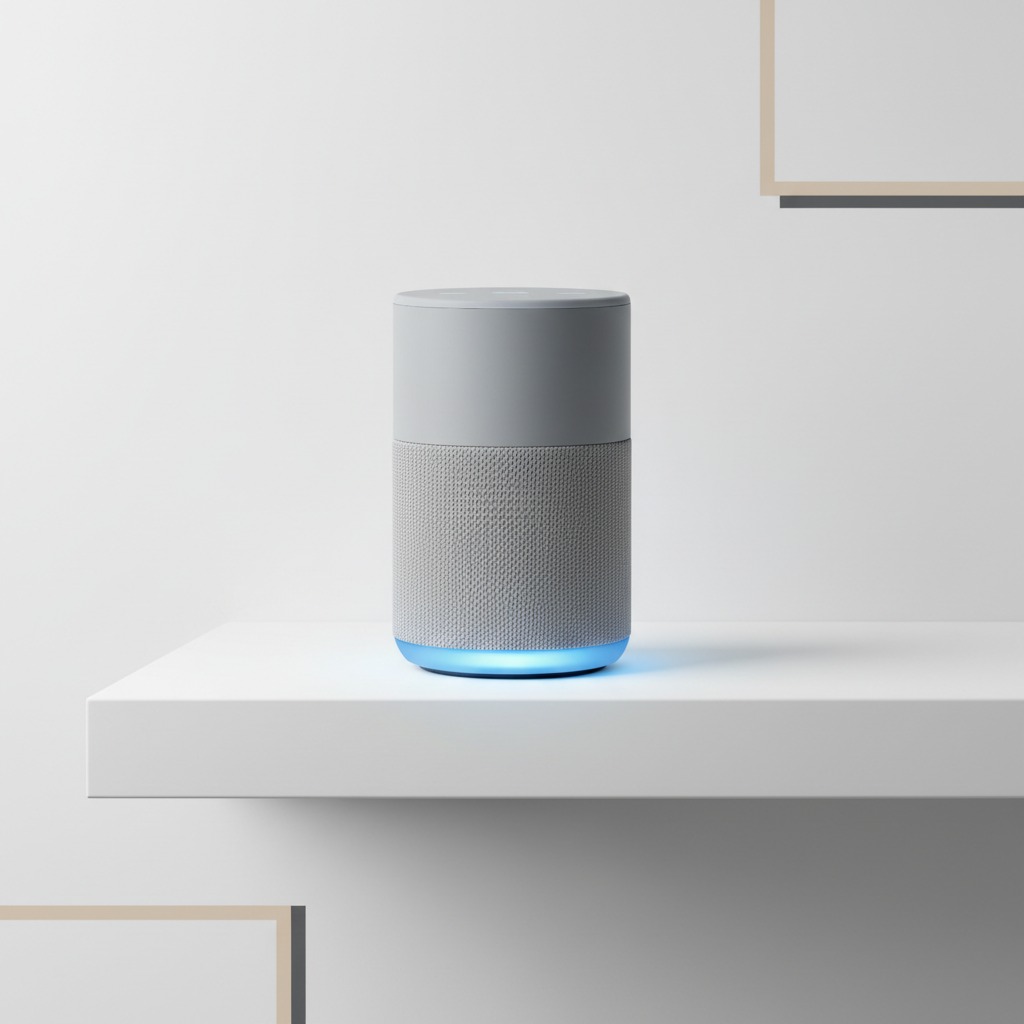
Google went six years without releasing a new smart speaker. The new Google Home Speaker, launched June 25, 2026 at $99.99, ends that gap, and it drops the Nest branding entirely in favor of Gemini for Home replacing Google Assistant as the thing running the device. The headline pitch is natural, multi-step conversation, the kind where you can correct yourself mid-sentence or stack multiple requests together instead of issuing one rigid command at a time. What’s less emphasized in most of the early coverage: the smartest part of that pitch sits behind a subscription, and there’s a real, dated deadline attached to getting it free.
The Hardware Upgrade, Separate From the AI Story
Before the subscription question, it’s worth being clear about what changed physically. This is the first Google speaker built with a dedicated NPU specifically for AI processing, paired with a 58mm driver, twice the size of the one in the Nest Mini it effectively replaces, delivering what Google describes as 2.5 times stronger bass. The design adds three far-field microphones with a hardware mute switch, a 360-degree sound profile instead of a single-direction output, and a dynamic light ring at the base that reflects Gemini’s status. It’s available in Hazel and Porcelain everywhere, with Berry and Jade as additional US-only options.
None of that requires a subscription to use. If you just want a genuinely improved Google smart speaker with better bass and mic hardware than what it replaces, the free tier delivers a real upgrade on its own.
Where the Subscription Requirement Sits, Specifically
Some of Gemini for Home’s more advanced capabilities, beyond the baseline natural-conversation ability included with the speaker itself, specifically require a Google Home Premium subscription to unlock. That means the deeper end of the AI pitch getting the most attention in early coverage isn’t fully included in the $99.99 price the way the hardware improvements are. That’s a real, specific distinction worth separating from marketing language that talks about “Gemini-powered conversation” as if every layer of it is uniformly included.
This isn’t unique to Google. Amazon’s comparable move, Alexa+ on the Echo Dot Max, follows the same basic shape: buy the hardware, then subscribe for the AI features that genuinely differentiate the new generation from the old one. Full smart-speaker AI capability increasingly means the hardware purchase is table stakes, not the complete transaction.
How It Stacks Up Against the Obvious Rival
The closest direct comparison is Amazon’s Echo Dot Max at $79, which undercuts this speaker’s $99.99 price while offering a larger driver and deeper bass out of the box. The tradeoff runs the other direction on the AI side: independent testing has generally rated the new Google speaker’s conversational assistant ahead of Alexa’s for natural, multi-step dialogue, while acknowledging Alexa still has a much deeper library of third-party skills and integrations that Gemini for Home hasn’t caught up to yet.
Subscription economics cut a different way too. Alexa+, Amazon’s equivalent premium AI tier, comes included with an existing Prime membership for many users, effectively folding the subscription cost into something a lot of shoppers are already paying for. Google Home Premium doesn’t have that same built-in bundling, which makes the free six-month window here carry more real weight than a comparable trial might for someone already paying for Prime.
The Deadline That’s Easy to Miss
Here’s the part worth acting on rather than just knowing about: purchases made before September 30, 2026 include six months of Google Home Premium free, described as a $60 value. If you’re going to buy this speaker at all, and you want to genuinely evaluate whether the subscription-gated features are worth paying for ongoing, buying before that date is a real, concrete way to get half a year to decide with no extra cost, instead of paying from day one or skipping the premium features entirely and never finding out what you’re missing.
That’s a genuinely actionable piece of timing information, not just a nice-to-have detail. Waiting past September 30 doesn’t just mean the speaker still works fine without a trial; it means giving up a real $60 evaluation period for free, with no clear indication Google will repeat that specific offer once it lapses.
Making the Six Months Count
A free trial only does its job if you use it to make a real decision, not just enjoy six months of a feature and get surprised when the charge starts. Since the six-month trial runs from your purchase date, not from September 30 itself, setting a reminder for a few weeks before your own trial is due to end, rather than waiting for a billing notification to prompt the decision, keeps this in your control instead of the subscription’s. Worth explicitly testing during that window: whether the multi-step, natural-conversation features you’re paying to unlock actually change how you use the speaker day to day, or whether the free-tier basics were already covering most of what you do with it. Those are genuinely different answers for different households, and six months is enough time to find out which one describes yours, as long as you actually treat it as an evaluation period rather than letting it run out unnoticed.
How This Fits the Pattern You’re Probably Already Seeing
If you’ve been shopping smart home gear at all this year, gated premium tiers on top of hardware you already paid for should feel like a familiar shape by now, not a one-off surprise from Google specifically. It’s the same basic structure behind SmartThings’ shift toward paid API access for advanced automations, and the same logic behind SmartThings Safe’s free-during-beta emergency dispatch feature that could start charging without notice. The industry-wide pattern is consistent: hardware purchases increasingly function as the entry ticket, with the features that genuinely differentiate a “smart” product from a “connected” one landing behind an ongoing subscription decision made separately, and often later.
Knowing that pattern going in changes how you should evaluate a purchase like this one. The right question isn’t just “is $99.99 worth it for the hardware,” it’s “if I decide the subscription features aren’t worth paying for after my free trial, am I still happy with what I paid for on day one.” For this specific speaker, given the hardware improvements alone, that answer is more likely yes than it would be for a device where the free tier feels deliberately crippled to push the subscription. That’s worth confirming for yourself rather than assuming either way.
*Source: GCN — “Google’s first new smart speaker in six years goes on sale at $99.99 with Gemini built in”*