Nearly every home espresso machine advertises a “bar” pressure rating, often 15 or 19 bar, prominently on the box, implying higher numbers mean better espresso. In practice, genuine espresso extraction happens at roughly 9 bar, and machines with much higher rated pressure typically just regulate down to that range internally. The pressure number on the box is one of the least useful specs for judging an espresso machine, and it’s rarely what separates a disappointing machine from a genuinely good one.
Table of Contents
Temperature Stability Is the Spec That Actually Matters
Espresso extraction is highly sensitive to water temperature, and even small fluctuations during a shot measurably affect flavor, commonly producing sour, under-extracted results if the water runs too cool or bitter, over-extracted results if it runs too hot. Cheaper machines with a simple thermoblock heating element often struggle to hold a stable temperature throughout a full shot, while machines with a PID temperature controller, a genuinely useful feature to look for explicitly, actively monitor and correct water temperature in real time.
This single difference explains far more of the espresso quality gap between price tiers than the pressure rating does.
Pump Type: Vibration vs. Rotary
Most budget and mid-range machines use a vibration pump, which is compact, inexpensive, and reasonably capable, but generates the loud buzzing sound associated with entry-level home espresso machines and has less precise pressure control. A rotary pump, standard on higher-end machines, runs quieter and delivers more consistent, controllable pressure, but adds meaningfully to a machine’s size, weight, and price.
For most home users, a good vibration-pump machine with solid temperature control outperforms a rotary-pump machine with poor temperature stability; the pump type matters less than temperature consistency for actual cup quality.
Pressurized vs. Non-Pressurized Portafilter Baskets
A pressurized portafilter basket contains a built-in valve that helps produce a reasonable crema even with mediocre or inconsistent espresso grind, which is genuinely useful for a beginner using pre-ground coffee or a lower-quality grinder. A non-pressurized basket gives no such assistance and demands a proper burr grinder and correctly dialed-in grind size to produce good espresso at all, but rewards that effort with more nuanced, controllable results and a truer measure of the coffee’s actual character.
Buying a machine with a non-pressurized basket without also investing in a real burr grinder is a common mismatch that leads to consistently disappointing shots.
The Grinder Is Often the More Important Purchase
A meaningful share of home espresso disappointment traces back to the grinder, not the machine. Espresso requires a very fine, extremely consistent grind size, which pre-ground coffee and most blade grinders cannot reliably produce. A quality burr grinder with fine adjustment capability is frequently a better use of a limited budget than upgrading to a more expensive espresso machine, since even an excellent machine cannot compensate for an inconsistent grind feeding into it.
Built-In Milk Frothers vs. Manual Steam Wands
Automatic milk frothing systems are convenient and require little skill, producing consistent results with minimal practice, but generally can’t achieve the same microfoam texture quality a manual steam wand allows with practice. A manual steam wand has a real learning curve and demands active technique each time, but gives full control over milk texture for anyone who drinks a lot of milk-based espresso drinks and wants to genuinely improve that skill over time.
A Practical Buying Approach
- Prioritize PID temperature control over pump pressure rating when comparing machines at similar price points.
- Budget separately for a real burr grinder, since it often affects cup quality more than the machine itself, especially with a non-pressurized portafilter.
- Choose a pressurized basket for a lower-effort, more forgiving setup, and a non-pressurized basket only alongside a genuine investment in grind quality.
- Pick a manual steam wand only if there’s real interest in developing the skill, since an automatic frother produces more consistent results with far less practice.
The Honest Trade-Off
The gap between a cheap and expensive home espresso machine is driven far more by temperature stability and portafilter design than by the flashy pressure number printed on the box. A modest machine paired with a good burr grinder and a properly matched portafilter often outperforms an expensive machine paired with pre-ground coffee, which makes the grinder, not the machine alone, the purchase worth prioritizing on a limited budget.
Based on general product knowledge and manufacturer specifications; not hands-on tested.
Related Reading
- You Don’t Need a New Desk to Stop Sitting All Day
- A Dehumidifier Sized for the Wrong Room Just Runs Constantly and Does Little
- A Gaming Chair’s Cushions Go Flat in 2 to 4 Years. A Good Office Chair Lasts a Decade. Here’s What Actually Matters for Your Back.
Further reading: Espresso machine (Wikipedia).
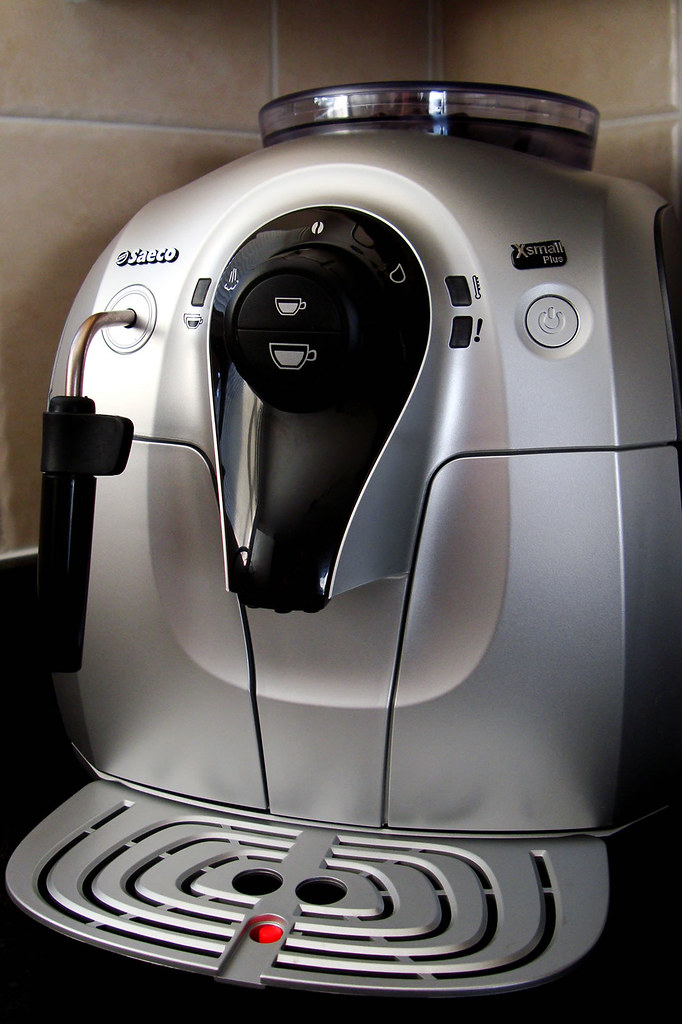
Photo credit: “Saeco Xsmall Plus” by warrenski, licensed BY-SA (https://creativecommons.org/licenses/by-sa/2.0/). Source: https://www.flickr.com/photos/50811886@N00/4043761964