Air Purifier: Key Takeaways
- A true HEPA air purifier captures 99.97% of 0.3-micron particles, while HEPA-type filters capture only 85-95%.
- Match the air purifier’s Smoke CADR to two-thirds of the room’s square footage for effective cleaning.
- Prefer the air purifier’s recommended room size based on 4.8-5 air changes per hour over the maximum coverage claim.
- Check for CARB certification on any ionizing air purifier to avoid ozone health risks.
Air purifier shopping involves more label ambiguity than most home appliance categories, and the gap between what a label technically claims and what it actually delivers can mean the difference between meaningfully cleaner air and a device that’s functionally decorative. Two specific things separate a genuinely effective air purifier from a disappointing one: understanding what “HEPA” actually means versus its marketing lookalikes, and correctly matching a unit’s real capacity to an actual room size rather than trusting a box’s “maximum coverage” claim.
Table of Contents
True HEPA vs. the Marketing Lookalikes
This is the single most important label distinction in the entire category. A True HEPA filter meets a specific, standardized requirement: capturing 99.97% of particles down to 0.3 microns in size, covering most bacteria, mold spores, pollen, pet dander, and fine dust. “HEPA-like,” “HEPA-type,” or “HEPA-style” labels describe something meaningfully different: filters that have not passed the standardized certification test at all, and that typically capture only 85% to 95% of particles.
That sounds close to True HEPA’s 99.97% on paper, but the actual difference is dramatic: a filter capturing 85% to 95% of particles lets through 15 to 150 times more particles than a genuine True HEPA filter, a gap large enough to meaningfully change real-world air quality outcomes, not just a rounding difference in a spec sheet.
CADR: The Rating That Predicts Actual Performance
CADR, Clean Air Delivery Rate, is a standardized measurement developed by the Association of Home Appliance Manufacturers specifically to indicate how effectively a purifier removes three common airborne pollutants: smoke, dust, and pollen. As a sizing rule of thumb, a purifier’s Smoke CADR rating should be at least two-thirds of a room’s square footage; a 300-square-foot room needs a CADR rating of roughly 200 to actually clean that space effectively, not just technically operate in it.
The “Maximum Coverage” Trap on the Box
Here’s the specific marketing gap worth watching for directly: manufacturers frequently list a “Maximum Coverage” room size on packaging based on only a single air change per hour, a bare minimum standard that doesn’t deliver a meaningful health benefit. The number that actually matters is the “Recommended Room Size” figure, typically based on 4.8 to 5 air changes per hour, a meaningfully more thorough cleaning cycle.
Buying based on the larger, more prominently displayed “maximum coverage” number rather than the smaller “recommended” figure is the single most common sizing mistake buyers make, resulting in a purifier that runs constantly without ever actually cleaning the room’s air fast enough to matter.
Air Changes Per Hour, in Plain Terms
For allergy or asthma relief specifically, look for a unit capable of cycling a room’s total air volume 4 to 8 times per hour, sometimes described as ACH (air changes per hour) in more detailed spec sheets. That number, not the room square footage alone, is the real predictor of whether a purifier meaningfully reduces allergens and irritants in practice, since a technically “rated for this room size” purifier running at only 1 or 2 air changes per hour delivers a much weaker practical result than one hitting 4 to 5 changes in the same space.
Why Some Ionizers Carry a Real Health Risk
This is a genuinely serious safety issue worth understanding, not just a performance nitpick: some ionizing and ozone-generating air purifier technologies produce ozone as a byproduct, and ozone exposure carries real, documented health risks. Ozone can worsen asthma symptoms and may even contribute to asthma developing in the first place, and elevated or repeated exposure has been linked to permanent lung damage and increased mortality risk among people already in poor health.
Ozone generators marketed as air purifiers are not only genuinely ineffective at cleaning indoor air, they pose that direct health risk on top of not doing their advertised job.
California’s Air Resources Board (CARB) has required certification for indoor air cleaning devices since 2008 specifically to limit ozone emissions to below 0.05 parts per million, a real regulatory response to this documented hazard; checking a purifier for CARB certification is a legitimate, verifiable safety check regardless of which state a buyer lives in, not just a California-specific concern.
What Handles Odors and VOCs, Since HEPA Alone Doesn’t
A separate, important limitation worth knowing: HEPA filtration, True or otherwise, only addresses particles, not gases, odors, or volatile organic compounds. A purifier relying purely on HEPA filtration does nothing for cooking smells, off-gassing furniture, or chemical odors, regardless of how good its particle-capture rate is. Activated carbon filtration is the specific technology that addresses gases, odors, and VOCs without producing the harmful ozone byproduct ionizers can generate, and a purifier combining True HEPA for particles with an activated carbon stage for gases and odors covers a meaningfully broader range of indoor air quality issues than either technology alone.
Filter Replacement Is an Ongoing Cost, Not a One-Time Purchase
An air purifier’s purchase price is only part of its real total cost, and filters are genuinely consumable rather than a one-time component. HEPA filters generally need replacement every 6 to 12 months, with the shorter end of that range applying to units run continuously in a home with pets or higher pollution levels. Annual filter costs for a typical portable purifier run roughly $50 to $200 depending on the specific model, and factoring in electricity for round-the-clock operation, total annual cost of ownership lands somewhere around $120 to $250 a year.
Skipping or delaying filter replacement doesn’t just reduce performance gradually; a badly overdue filter can turn a purifier into a device that consumes power while actively recirculating the same trapped particles back into the room, functionally worse than not running it at all. That ongoing cost is worth factoring into a purchase decision directly, since a cheaper purifier with expensive or hard-to-find proprietary replacement filters can end up costing more over a few years than a pricier unit with cheaper, more widely available filters.
A Practical Buying Checklist
A few concrete steps worth following given the label ambiguity described above:
- Confirm “True HEPA” is stated explicitly, treating “HEPA-like,” “HEPA-type,” or “HEPA-style” labeling as a genuine downgrade rather than a minor wording difference.
- Calculate the room’s actual square footage and match it against the Smoke CADR rating, using the two-thirds rule of thumb rather than trusting a box’s headline coverage claim.
- Look specifically for the “Recommended Room Size” figure over “Maximum Coverage,” since the gap between the two reflects a real difference in how thoroughly the unit actually cleans a space.
- Check for CARB certification or explicit ozone-emission data if considering any ionizing or “electronic” air cleaning technology, given the documented health risks tied to ozone-generating designs.
- Add activated carbon filtration to the checklist specifically if odors, cooking smells, or VOCs are a concern, since True HEPA alone, however well-rated, doesn’t address that category of indoor air issue at all.
Sources: Aggregated 2026 air purifier buying guide reporting from HouseFresh and The Home Picker, cross-checked against the California Air Resources Board’s own ozone emission certification standards and data.
Bottom Line
Select an air purifier with a true HEPA filter and a Smoke CADR at least two-thirds of your room’s square footage. Then verify CARB certification and ensure the recommended room size matches your space for effective cleaning.
Related Reading
- A Good First 3D Printer Costs $200. The Wrong Printer Type for Your Space Costs You a Ventilated Room You Don’t Have.
- A ‘Solar Generator’ Isn’t a Generator. Here’s What You’re Actually Buying, and Why the Battery Chemistry Matters More Than the Price.
- Two USB-C Cables Can Look Identical and Differ by 250x in Speed. Here’s How to Actually Tell Them Apart.
Further reading: EPA: air cleaners and air filters in the home.
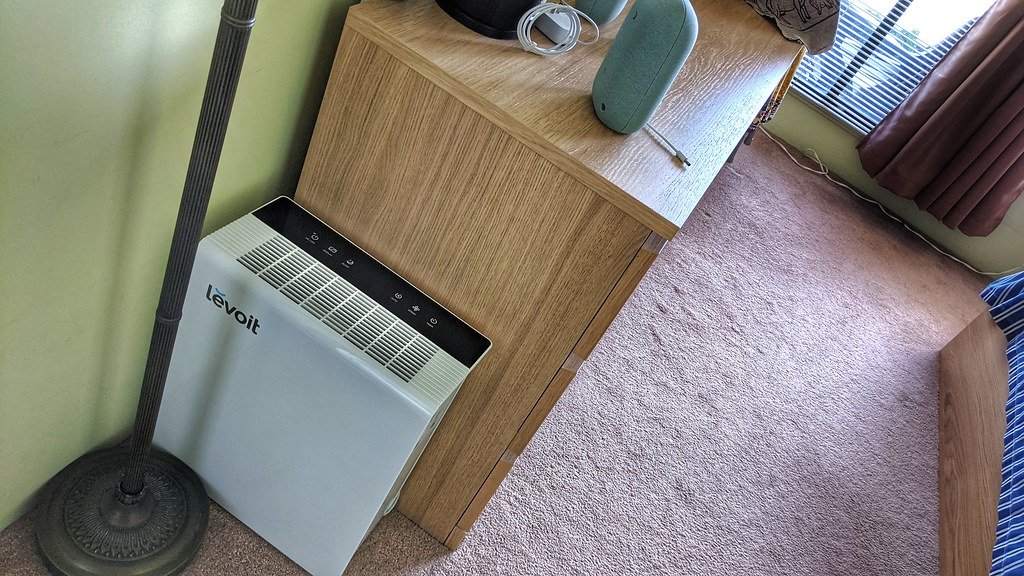
Photo credit: “Levoit LV-PUR131S Air Purifier” by Dennis S. Hurd, licensed CC BY 2.0 (https://creativecommons.org/licenses/by/2.0/). Source: https://www.flickr.com/photos/43296902@N00/51331948430