
OBD2 Scanner: Key Takeaways
- A free OBD2 scanner reading at major auto parts stores provides the same trouble codes as a paid diagnostic.
- Owning a personal OBD2 scanner enables immediate home checks, repair verification, and proactive live data monitoring.
- Higher-priced OBD2 scanner models differentiate through faster data refresh, deeper live data, and superior companion app databases.
- Generic OBD2 scanner coverage is limited to emissions codes, so ABS or airbag lights require enhanced manufacturer-specific tools.
A check engine light triggers a specific, well-documented reflex in most drivers: head straight to a dealership or mechanic and pay for a diagnostic scan. That reflex costs $100 to $150 for information that’s available completely free at several major auto parts chains, or for about $40 with a personal tool that pays for itself the very first time it’s used.
Table of Contents
The Free Option Most Drivers Don’t Know About
AutoZone, O’Reilly Auto Parts, Advance Auto Parts, and NAPA all offer free check engine light diagnosis at their retail locations, reading the same trouble codes a paid dealership scan would provide, no appointment or purchase required. This isn’t a lesser or incomplete version of a diagnostic scan; it’s the identical OBD2 code reading a mechanic’s shop performs, just offered as a free customer service by auto parts retailers rather than billed as a paid service the way a dealership or independent mechanic typically does.
What a Paid Diagnostic Costs
For comparison, a standard car diagnostic test through a mechanic or dealership typically runs $50 to $100, with some dealership visits specifically charging around $120 to $150 for what amounts to a 30-to-45-minute visit to plug in essentially the same kind of scanner tool available at any auto parts store counter, or as a consumer purchase, for a fraction of that price.
That gap, a dealership charging $150 for a task a $40 personal tool completes in about 2 minutes, is the specific inefficiency worth understanding before defaulting straight to a paid diagnostic appointment.
Why Owning a Scanner Still Makes Sense Beyond the Free Option
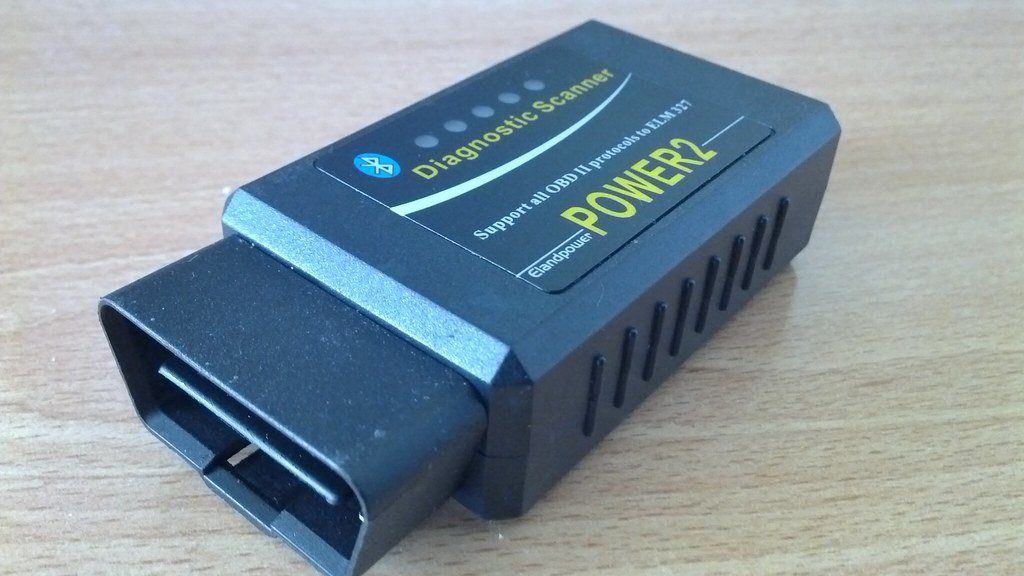
The free in-store reading covers the basic code lookup, but owning a personal scanner adds real, ongoing value beyond that single free reading. A personal OBD2 scanner means checking a check engine light immediately at home rather than driving to a store, monitoring a code after a repair to confirm it’s actually cleared and stays cleared, and catching developing issues before the light even comes on by checking live sensor data proactively.
For anyone who owns a car for years rather than trading it in frequently, that repeated, on-demand access adds up to real value beyond what a single free store visit provides.
What Separates a $40 Scanner From a $140 One
Current well-regarded options span a real range: the ANCEL BD200 at $33.99 delivers genuine all-mode OBD2 code coverage at the budget end. The BlueDriver Bluetooth Pro, priced at $94.95, has held its position as the most consistently recommended consumer-grade tool for roughly a decade, pairing over Bluetooth with a free companion app. The OBDLink MX+ at $139.95 refreshes live sensor data roughly five times faster than competitors, a real advantage for actively monitoring a developing issue in real time rather than just pulling a single stored code.
The core mechanism is similar across these price points, but data refresh speed, live-data depth, and companion app quality are the real differentiators worth comparing rather than treating all Bluetooth OBD2 dongles as interchangeable.
The App Database Is What Actually Makes a Reading Useful
A raw trouble code by itself is often nearly meaningless to anyone without automotive training: a code like P0300 simply says “random misfire detected” without explaining what’s actually causing it. Better scanner apps solve this by cross-referencing a specific trouble code against a database of millions of verified real-world repairs, filtered by the exact year, make, model, and engine of the vehicle being scanned.
That turns a cryptic five-character code into something genuinely actionable: not just “random misfire detected,” but the several most common repairs that have historically cleared that specific code on that specific vehicle configuration, ranked by how frequently each one worked.
That difference, a bare code versus a data-backed likely diagnosis, is a large part of what separates a genuinely useful scanner from one that just displays the same code a free store reading already provides.
Generic Codes Don’t Cover Everything
A genuinely important limitation worth knowing before assuming any scanner reads any warning light: federal law requires every OBD2 scanner to read generic emissions-related codes on any 1996-or-newer US vehicle, but that generic coverage is specifically limited to emissions systems. An ABS warning light, an airbag system issue, or many other non-emissions warning lights require an enhanced scan tool with manufacturer-specific code coverage for that particular brand, not the basic generic reader that handles a standard check engine light.
Most modern vehicles actually use both code types simultaneously, meaning a basic scanner covers a meaningful share of common issues but genuinely can’t read everything a vehicle’s computer might be reporting, a real reason some drivers eventually upgrade from a basic generic reader to a model with broader enhanced-code support for their specific vehicle brand.
Why Clearing a Code Can Cause a State Inspection to Fail
Here’s a genuinely counterintuitive risk worth knowing before using a personal scanner to clear a code right before a state emissions inspection: most state inspections now check a vehicle’s OBD2 system directly rather than using an old-style tailpipe probe, with the inspector plugging into the same diagnostic port a personal scanner uses to check for stored codes and confirm that the vehicle’s readiness monitors, a set of internal self-tests verifying various emissions systems work correctly, have all completed.
Clearing a trouble code also resets those readiness monitors back to “not ready,” and each monitor needs a specific set of driving conditions met before it re-completes its self-check. A vehicle driven straight from a code-clearing to an inspection station, without enough intervening drive time for the readiness monitors to re-complete, can fail an inspection specifically because too many monitors show as “not ready,” even if the original issue was genuinely fixed.
Understanding this sequencing, clear the code, then drive normally for a meaningful stretch before an inspection rather than immediately after, avoids a real, avoidable failure that has nothing to do with whether the actual repair worked.
The Subscription Trap Worth Checking Before Buying
A real, easy-to-miss cost worth checking before purchasing any scanner: many OBD2 tools require ongoing annual update fees to keep their code database or vehicle compatibility current, ranging from around $100 to, in some professional-grade cases, several thousand dollars a year. Some consumer-focused tools, BlueDriver among them, explicitly market having no subscription requirement and no paywalled features requiring an upsell, a real point of differentiation worth confirming directly for any specific model being considered rather than assuming a one-time purchase price is the tool’s complete cost.
A Practical Approach
A few concrete steps worth following given the actual cost landscape here:
- Start with a free reading at AutoZone, O’Reilly, Advance Auto Parts, or NAPA the first time a check engine light appears, since it costs nothing and provides the same base code information a paid diagnostic would.
- Consider a personal scanner specifically if repeated use is likely, owning the vehicle long-term, doing DIY maintenance, or wanting to monitor a repair’s effectiveness afterward, rather than treating a single free reading as insufficient by default.
- Check for hidden subscription costs before buying any scanner, confirming whether a specific model’s advertised price is genuinely all-inclusive or requires a recurring fee to maintain full functionality over time.
- Weigh data refresh speed and app quality over raw price alone if actively diagnosing a developing issue is the goal, since a slower-refreshing budget scanner can miss the kind of real-time sensor behavior that matters for catching an intermittent problem.
Sources: Aggregated 2026 OBD2 scanner and car diagnostic cost reporting from MotorBiscuit, Innova, and Tom’s Guide, cross-checked across multiple sources.
Bottom Line
Begin with a free code reading at AutoZone, O’Reilly, Advance Auto Parts, or NAPA to get the same base information a dealership provides. If you expect repeated checks, purchase a personal OBD2 scanner for immediate home diagnostics and repair monitoring.
Related Reading
- California Just Launched a Free Tool That Deletes Your Data From 543 Brokers at Once. Here’s Who Else Needs to Do This the Hard Way.
- The Real Cost of Smart Home Subscriptions — and What to Buy Instead
- You’re Probably Paying $30 to $50 More a Month Than You Need To for the Exact Same Cell Towers.
Further reading: On-board diagnostics (Wikipedia).
Photo credit: “New car toy” by gaspartorriero, licensed CC BY-SA 2.0 (https://creativecommons.org/licenses/by-sa/2.0/). Source: https://www.flickr.com/photos/89271343@N00/13084073884