The standard advice on open-back headsets has stayed the same for years: you get a wider, more natural soundstage, and you give up low-end bass to get it. That tradeoff is baked into most buying guides as a near-permanent fact about how open-back design works, not a temporary limitation waiting for an engineering fix. HyperX’s upcoming Cloud Alpha Air, launching in September 2026 at $150, is a real, specific test of whether that assumption still holds.
Why Open-Back Headsets Lose Bass in the First Place
The soundstage advantage and the bass weakness come from the same design choice. Open-back headphones use vented, unsealed earcups that let sound move and vibrate more freely instead of bouncing back at your ears the way a sealed, closed-back cup does. That venting is exactly what creates the wider, airier soundstage open-back headsets are known for. It’s also what lets low-frequency bass escape through the same vents instead of staying contained where you’d feel it, which is the direct physical reason open-back designs have historically sounded thinner in the low end than closed-back headsets built with the same drivers.
This isn’t a minor implementation detail that one manufacturer happened to get wrong. It’s a structural consequence of the open design itself, which is why “open-back means less bass” has functioned as settled buying advice rather than a solvable bug.
What HyperX Is Claiming to Have Changed
The Cloud Alpha Air pairs 40mm dynamic drivers with what HyperX calls a Bass Tube, a component specifically engineered to preserve low-end thump that would otherwise escape through an open-back design’s venting. That’s a direct, targeted attempt at the exact physical mechanism described above, not a generic marketing claim about “improved bass” that could mean anything.
Early hands-on impressions describe “a really satisfying and controlled deep rumble,” which is a genuinely different description than open-back headsets typically get. The same coverage is honest about the limits of that early impression, though: it’s unclear whether the bass response genuinely provides a meaningful competitive advantage over similarly priced closed-back or open-back rivals, as opposed to simply being noticeably better than open-back headsets have traditionally managed. Solving open-back’s specific bass weakness and outperforming the broader competitive field at $150 are two different claims, and only the first one has real hands-on support so far.
The Rest of the Spec Sheet, for Context
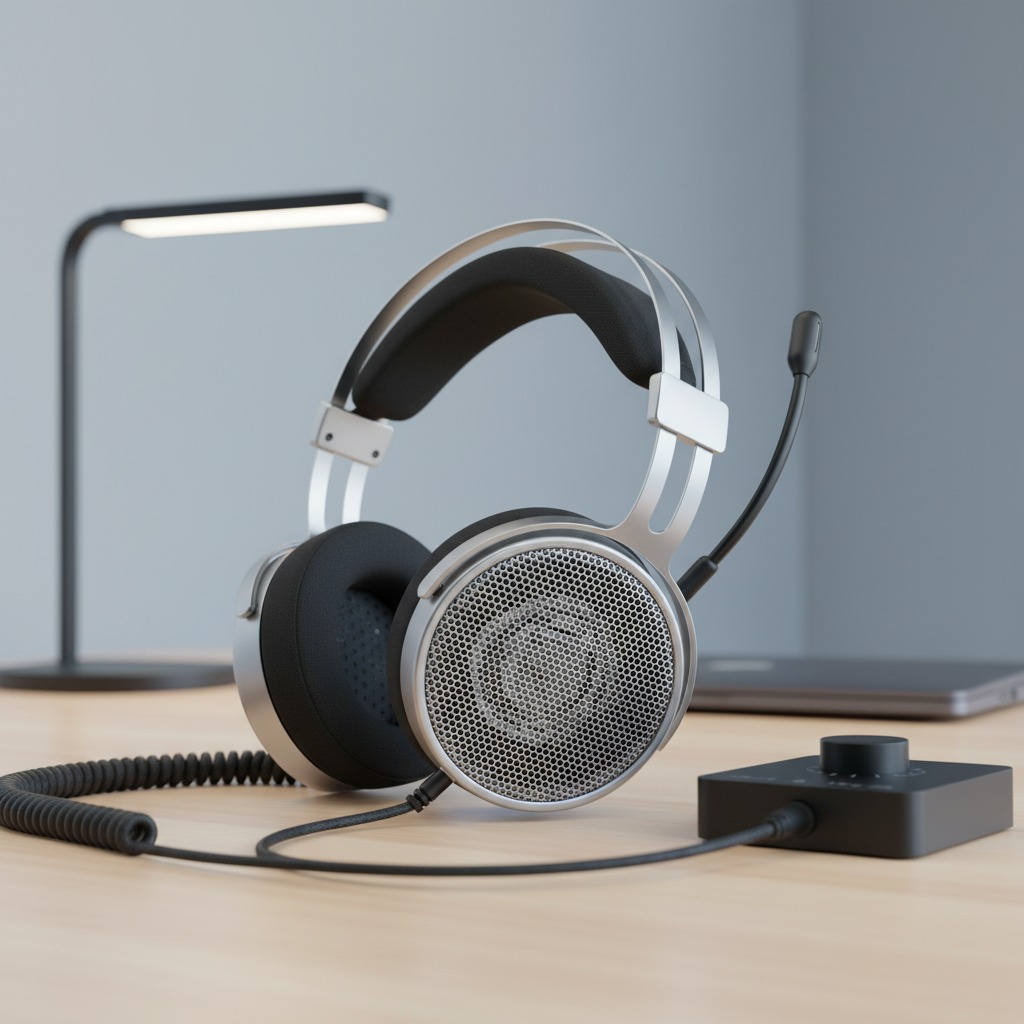
Outside the bass story, the Cloud Alpha Air is a fairly conventional mid-range gaming headset: a metallic grille over the drivers, Ultrasuede-covered foam earcups, a metal headband, a volume wheel, and a mute button for the detachable mic. It ships wired-only at launch, with a 3.5mm cable, a separate PC extension cable splitting audio and mic into two jacks, a USB adapter with both USB-A and USB-C connectors, and a drawstring carrying bag. No wireless version exists yet.
One spec worth flagging for anyone using the plain 3.5mm connection specifically: the drivers run at a relatively low 34-ohm impedance, and early testing found overall volume “a tiny bit subdued” over 3.5mm compared to using the USB adapter. That’s a real, specific caveat rather than a general knock against the headset, and it’s worth checking your own setup against before assuming the 3.5mm cable will get you full volume out of the box.
The Competition at This Price Point
Framing the Cloud Alpha Air only against “open-back headsets in general” undersells what $150 buys in the current headset market. At that price, the realistic alternative isn’t a stripped-down budget option; it’s a genuinely competitive field of closed-back headsets from established gaming-audio brands, most of which have years of refined bass tuning behind them precisely because closed-back design doesn’t have to fight its own venting to deliver low end. That’s the real bar the Bass Tube has to clear, not just “better than a typical open-back headset,” but “worth choosing over a mature closed-back competitor at the same price for someone who specifically wants both soundstage and bass.”
That’s a genuinely harder test than the headline claim implies, and it’s exactly why the early “unclear if this beats similarly priced rivals” caveat matters more than it might first appear. Solving open-back’s structural bass weakness is real engineering progress regardless of how the head-to-head shakes out; whether it’s enough to win a direct comparison against the best closed-back options at $150 is a separate, harder question that early hands-on impressions genuinely can’t answer yet.
Does This Change the Buying Advice
The traditional open-vs-closed buying framework still holds for the reasons it always has: closed-back remains the better call for competitive shooters where isolation and consistent spatial cues matter, for shared spaces where sound leaking both directions is a real problem, and for anyone prioritizing budget, since closed-back options are far more plentiful at every price point. None of that changes based on one headset’s bass tube.
What does change, at least provisionally, is the specific reason people have historically ruled out open-back entirely: “I want an open soundstage but I’m not giving up bass” used to be a contradiction the market couldn’t resolve. If the Cloud Alpha Air’s early bass impressions hold up under wider testing once it actually ships in September, that specific objection stops being an automatic dealbreaker, even if the other tradeoffs, isolation, mic performance in shared spaces, remain exactly as real as before.
The Build Choices Say Something Too
A few of the Cloud Alpha Air’s non-audio design choices are worth reading as intentional rather than incidental. A metal headband on a $150 headset is a durability decision that costs more to manufacture than an all-plastic alternative, typically included specifically because gaming headsets in this bracket are expected to survive years of regular use, not months. Ultrasuede earcup covers are a similar signal: they’re chosen over cheaper synthetic leather or basic foam specifically for long-session comfort and better heat management, which matters more on an open-back design already being pitched partly on long-session listening.
The detachable mic with a dedicated mute button and volume wheel is standard, expected hardware at this price tier rather than a differentiator, but its absence would have been a real red flag; calling it out here is less about praising HyperX for including it and more about confirming the headset isn’t cutting corners on the basics to fund the Bass Tube engineering. A headset that nails a genuinely hard audio problem while skimping on mic quality or comfort would still be a worse buy overall than one that gets the fundamentals right first.
What to Watch For Before Buying
This is a pre-release product with early hands-on impressions, not a settled verdict, and treating it as more than that would be premature. The honest position right now: HyperX has built something that specifically targets open-back’s known weak point with a real engineering approach, not just a marketing label, and the first impressions are genuinely positive on that specific point. Whether it holds up against a full range of similarly priced rivals, and whether “controlled deep rumble” from an open-back design actually satisfies listeners who’d otherwise buy closed-back specifically for bass, are both still open questions worth checking full reviews for once the Cloud Alpha Air actually ships rather than assuming from the pre-launch coverage alone.
*Source: Engadget — “HyperX’s first open-back gaming headset brings the bass”*