
“Up to 30dB of noise reduction” shows up on nearly every ANC earbud product page, and it’s technically true in the way marketing numbers usually are: measured against a controlled test signal, in a lab, with a perfect seal in your ear. Real-world noise isn’t a controlled test signal, and the gap between the marketing number and what you’ll actually notice on a plane or in an open office comes down to a physical fact most product pages don’t explain: active noise cancellation is genuinely excellent at some kinds of sound and genuinely bad at others, regardless of price.
What ANC Is Good At
Active noise cancellation works by having a microphone listen to incoming sound, generating an inverted sound wave, and playing it back to cancel the original out. That process works best on steady, low-frequency, predictable noise, the category that includes jet engine drone, train rumble, bus diesel noise, air conditioning hum, refrigerator noise, and coffee-shop ventilation. Roughly speaking, engine drone sits around 30-500 Hz and HVAC hum around 60-500 Hz, both squarely in ANC’s effective range. If your noise problem is a droning, constant background hum, ANC genuinely earns its reputation here, and this is true across price tiers, not just on flagship earbuds.
What ANC Is Genuinely Bad At, and Why
Here’s the part the marketing rarely leads with: speech is fast, variable, and sits in a frequency range, roughly 500 Hz to 4 kHz, where cancellation is fundamentally harder to do well. That’s not a defect in any particular product; it’s a physical limitation of predicting and inverting a signal that changes shape constantly rather than holding steady. Sudden sharp sounds, a door slamming, a dog barking, something clattering, are similarly resistant, since ANC needs a moment to detect and respond to a sound, and a sudden transient is over before the system can meaningfully cancel it.
High frequencies are a different problem entirely: keyboard clicks and sibilant “s” sounds in speech are the job of passive isolation, the physical seal of the ear tip blocking sound mechanically, not ANC’s electronic cancellation. No amount of processing power fixes a high-frequency noise problem that was never ANC’s job to solve in the first place. Wind noise is its own special case and often gets worse with ANC on, not better: air moving across an external microphone registers as real sound to the system, and cheaper implementations can end up amplifying that airflow into a roar rather than filtering it out.
Why Cheap ANC Fails, Specifically
It’s worth being precise about what separates a well-tuned budget pair from a poorly-tuned one, since “you get what you pay for” undersells what’s going wrong. The most common failure isn’t cancellation strength; it’s fit. Break the seal between the ear tip and your ear canal and you lose on two fronts simultaneously: high frequencies leak in directly since there’s no physical barrier anymore, and the cancellation algorithm itself gets confused by a noise signal it wasn’t designed to process. A loose-fitting flagship pair will underperform a well-sealed budget pair on real-world noise, seal matters more than the brand name on the box.
Beyond fit, budget implementations tend to show their limits in specific, identifiable ways: audible hiss during quiet passages, a pressurized or “sucked-in” ear feeling, and occasional pumping artifacts as the system adjusts, all traceable to less processing headroom and less firmware tuning time than a flagship product gets. Wind handling is another clear tell: better models detect airflow and throttle cancellation in response, while cheaper ones tend to just amplify whatever the microphone picks up. Adaptive and transparency modes show the same gap: flagship earbuds run continuous, scene-aware processing that adjusts to your environment in real time, while budget models more often implement the same feature as a simple on/off toggle with no real adaptation happening underneath.
The Real Price Comparison
A few current models illustrate where the gap shows up and where it doesn’t. Sony’s WF-1000XM6 sits at $298, Samsung’s Galaxy Buds 4 Pro at $249, Soundcore’s Liberty 5 Pro at $169, and Skullcandy’s Method 360 at $90, a genuinely wide spread. The honest verdict across that range: a well-tuned $60 pair will meaningfully reduce plane and train noise, the steady low-frequency category ANC handles well regardless of price. Where the gap opens up is in voice rejection, wind handling, and adaptive subtlety, the harder problems that require more processing power and more tuning time to solve well, and that’s specifically where the $250-300 tier earns its premium over a budget pair.
Matching ANC to What You’re Trying to Block
Since ANC’s strengths and weaknesses are consistent regardless of price, the more useful shopping question is usually “what noise am I trying to solve,” not “which pair has the biggest dB number.” A few common scenarios, matched to what the physics above predicts:
- Commuting on a train or bus. Steady, low-frequency rumble, squarely in ANC’s strong zone. A budget-to-midrange pair with a good seal will handle this well.
- Flying. Cabin and engine noise is the same steady, low-frequency category. This is arguably the single best-case scenario for ANC at any price point, which is part of why it’s the example used in nearly every product demo.
- An open-plan office. Mostly a voice-rejection problem, the hardest category for ANC to solve regardless of price. A flagship pair with continuous adaptive processing will meaningfully outperform a budget pair here, though even the best ANC won’t fully eliminate nearby conversation.
- Walking or running outdoors. A wind-handling problem more than a pure noise-cancellation one. Budget models are the most likely to amplify wind into a roar; if this is your primary use case, it’s worth specifically checking wind-handling performance in reviews rather than assuming a high dB rating covers it.
Framing the purchase around the specific noise you’re dealing with, rather than a single blended star rating, is a more reliable way to predict how happy you’ll be with a given pair than comparing marketing claims across models.
The One Upgrade That Costs Nothing
Given how much of ANC’s real-world performance comes down to seal quality rather than raw cancellation power, the single most effective thing you can do at any price point is make sure you’re using the ear tip size that actually seals your ear canal, not just the one that came pre-installed. Most earbuds ship with several tip sizes in the box beyond the one installed at the factory, and many people never try the alternatives. Working through each included size and paying attention to which one produces a noticeably tighter seal and stronger bass response is a bigger real-world improvement than anything separating one mid-range model from another.
What This Means When You’re Shopping
None of this means the expensive models aren’t worth it; if voice rejection in a noisy office or handling gusty wind on a walk is specifically what you need, the $250-300 tier is solving a genuinely harder problem than the budget tier attempts to. But if your actual use case is a commute, a flight, or a noisy HVAC system at a desk, that’s squarely in the category ANC handles well across price points, and a well-fitted budget pair will get you most of the way to what a flagship pair delivers, for a fraction of the cost. The product page’s “up to 30dB” claim isn’t lying, exactly; it’s just describing a scenario, steady low-frequency noise with a perfect seal, that matters a lot less to your actual daily use than the marketing implies.
*Source: The Gadgeteer — “ANC Earbuds 2026: What Active Noise Cancellation Actually Blocks”*
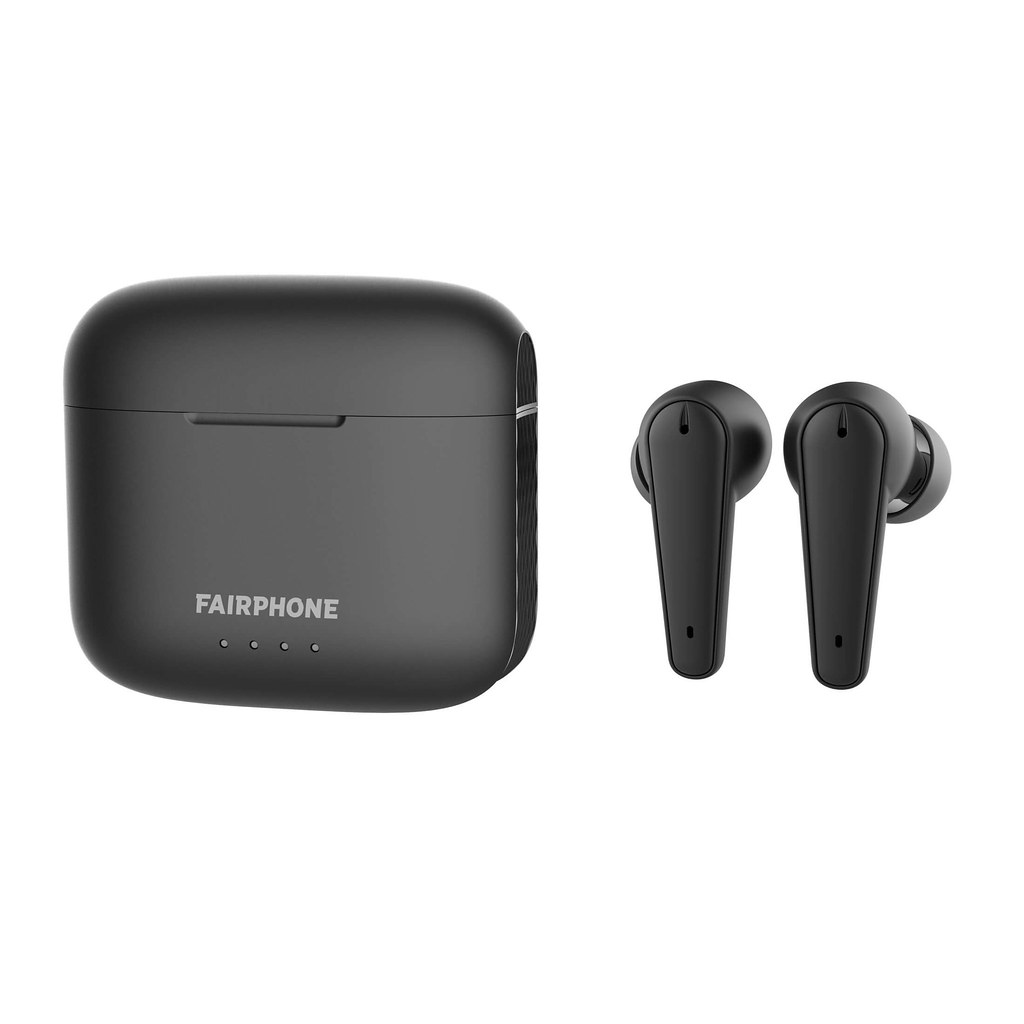
Photo credit: “Fairphone+True+Wireless+Earbuds+with+Charging+Case” by Fairphone, licensed BY-SA (https://creativecommons.org/licenses/by-sa/2.0/). Source: https://www.flickr.com/photos/60295192@N08/51548822927