Qi2 Wireless Charging: Key Takeaways
- Qi2 wireless charging adds magnetic alignment that snaps phones into precise coil position, solving misalignment that can cut charging output by up to 50 percent.
- Qi2 wireless charging supports up to 15 watts originally and 25 watts with Qi2.2, but those speeds only activate when phone-side magnets engage the Magnetic Power Profile.
- Many Android flagships like Samsung’s Galaxy S26 lack built-in magnets for Qi2 wireless charging, requiring a separate magnetic case to access alignment and speed benefits.
- Qi2 chargers remain backward compatible with standard Qi phones, functioning as regular wireless chargers without magnetic snap-in or faster speeds when phone magnets are absent.
Qi2 wireless charging solved the two biggest annoyances of the original Qi standard, slow speeds and imprecise coil alignment, but a genuinely important detail gets lost in most product marketing: whether a specific phone has the magnets needed to actually use Qi2’s headline feature built in, or requires an extra accessory to get there at all.
Table of Contents
What Qi2 Changed
The Wireless Power Consortium launched Qi2 in early 2023, building directly on the original Qi standard by adding a Magnetic Power Profile, a specification modeled directly on Apple’s MagSafe technology, which Apple itself contributed to the Wireless Power Consortium specifically to make magnetic alignment a universal, cross-brand standard rather than an Apple-exclusive feature.
That magnetic alignment solves a real, longstanding frustration with wireless charging: a coil that’s even slightly misaligned with a charging pad loses significant charging speed and efficiency, and Qi2’s magnets snap a phone into the correct position automatically rather than relying on the user to eyeball the alignment.
The Real Speed Numbers
Qi2’s original specification supports up to 15W charging, already double the 7.5W ceiling most original Qi chargers topped out at for non-Apple-branded devices. Qi2.2, formalized by the Wireless Power Consortium in 2025, pushes that further to 25W, a 67% increase over the original Qi2 spec and more than triple the base Qi standard’s typical speed.
Those numbers only apply when a phone actually has the magnets needed to engage Qi2’s Magnetic Power Profile in the first place, which is where the real complication in this category begins.
Why Alignment Affects Charging Speed and Heat
It’s worth understanding the real mechanism behind why Qi2’s magnetic alignment matters beyond simple convenience, since the efficiency impact of poor alignment is larger than most people assume. Wireless charging in general runs at roughly 75% to 85% efficiency, meaningfully lower than a wired connection’s 90% to 95%, with the difference lost as heat. Misalignment compounds that inefficiency further: according to Wireless Power Consortium testing, misalignment between a phone’s coil and a charging pad’s coil can drop charging output by as much as 50%, and even a coil misalignment as small as 1 millimeter can force a charger to increase its output power just to maintain the requested charging current, generating additional heat and energy loss in the process.
Qi2’s magnets solve this at the source by automatically snapping the phone’s coil into precise alignment with the charger’s coil every time, rather than relying on a user to eyeball correct placement, reportedly cutting heat generation by roughly 30% compared to non-magnetically-aligned charging. That’s the concrete, physical reason Qi2’s magnetic snap-in feature is a genuine functional improvement, not just a convenience gimmick borrowed from MagSafe’s marketing.
The Detail Most Buyers Miss: Not Every “Qi2” Phone Has Magnets
This is the genuinely important nuance worth understanding before buying a Qi2 charger expecting the magnetic snap-in experience: a phone being Qi2-compatible doesn’t automatically mean it has built-in magnets. Most iPhone models from the iPhone 12 onward include the magnetic ring natively, a direct carryover from Apple’s original MagSafe hardware. On Android, the picture is far more inconsistent. Google’s Pixel 10 series ships with genuine built-in Qi2 magnets, meaning a Qi2-spec case or charger delivers the full magnetic alignment experience without any adapter.
The Motorola Edge 70 Max, released internationally though not in the US, and the HMD Skyline are among the small number of other Android phones with true built-in Qi2 magnets as of 2026. Samsung’s flagship Galaxy S26 series, notably, does not include built-in Qi2 magnets at all; instead, it supports Qi2’s Magnetic Power Profile only through a separate, compatible magnetic case, an accessory purchase required to unlock the exact feature the phone’s own Qi2 branding implies it already has.
Why This Matters for What You Buy
A Qi2 charger works with essentially any phone supporting standard Qi charging, since Qi2 chargers are backward compatible with the original Qi standard. But without the phone-side magnets, whether built-in or added via a case, a Qi2 charger delivers neither the magnetic snap-in convenience nor the faster charging speeds; it simply functions as a standard, non-magnetic Qi charger at the older, slower charging rate.
That’s a real, practical gap between what a Qi2-labeled charger’s box promises and what a specific phone can actually deliver, and it’s specifically the reason checking a phone’s actual magnet situation, built-in, case-dependent, or absent entirely, matters more than checking whether a charger itself carries the Qi2 label.
What This Means for the Broader Accessory Ecosystem
Because Qi2’s Magnetic Power Profile was modeled directly on Apple’s MagSafe, a meaningful side effect is real cross-compatibility between the two ecosystems that didn’t exist before. A MagSafe-designed accessory, a car mount, a wallet attachment, a charging stand, generally works magnetically with a Qi2-compliant phone even if that phone isn’t an iPhone, since both are built around the same underlying magnetic ring specification.
That’s a genuine practical benefit for the Android phones with true built-in Qi2 magnets described above: the accessory market built up over years around MagSafe becomes usable rather than remaining an iPhone-exclusive ecosystem, at least for accessories that rely purely on the magnetic connection rather than any Apple-specific software integration.
For a phone in the case-dependent category, like Samsung’s current flagships, that cross-compatibility only extends as far as the specific magnetic case being used, since the phone itself has no native magnetic ring for a MagSafe accessory to snap onto directly.
A Practical Buying Checklist
A few concrete steps worth taking before buying a Qi2 charger:
- Check whether your specific phone has built-in Qi2 magnets rather than assuming any phone marketed as “Qi2 compatible” has them, since Samsung’s own flagship lineup is a clear, current example of a phone requiring an added case rather than shipping with magnets built in.
- Budget for a magnetic case as a real, separate cost if your phone falls into the case-dependent category, since that accessory is what actually unlocks the alignment and speed benefits a Qi2 charger is capable of delivering.
- Confirm which Qi2 generation a charger supports, 15W original Qi2 or the newer 25W Qi2.2 spec, since the two carry meaningfully different real-world charging speeds despite both carrying the same base “Qi2” branding.
- Don’t discount a Qi2 charger even without phone-side magnets, since it remains fully backward compatible with a standard Qi-only phone, just without the magnetic and speed advantages that are Qi2’s actual differentiators over the older standard.
The Bottom Line
Qi2’s underlying technology is a genuine, measurable improvement over the original Qi standard, not just a marketing refresh, backed by real efficiency and heat data behind the magnetic alignment feature. But the “Qi2” label on a phone’s spec sheet doesn’t answer the one question that actually determines whether that improvement reaches a given buyer: whether the phone’s magnets are built in, available only through a separate case purchase, or absent entirely.
Checking that specific detail for a specific phone, rather than assuming Qi2 compatibility means uniform functionality across every device carrying the label, is the one step that actually determines whether a Qi2 charger purchase delivers its full advertised benefit or functions as an ordinary, non-magnetic charger at a lower price point’s worth of features.
Sources: Aggregated 2026 Qi2 wireless charging reporting from Android Authority and 9to5Google, cross-checked against the Wireless Power Consortium’s own Qi2 specification documentation.
Bottom Line
Qi2 wireless charging delivers real efficiency gains through magnetic alignment, but the phone’s magnet implementation determines whether you actually get them. Check your specific model for built-in magnets or case requirements before buying a charger.
Related Reading
- Wi-Fi 7 Routers Cost Up to 80% More Than Wi-Fi 6E. Here’s Who Actually Needs One.
- Most Soundbars Advertising Dolby Atmos Don’t Have a Single Speaker Pointed Up. Here’s How to Tell the Real Ones Apart.
- The Cheapest Tablet Isn’t the One With the Lowest Price. It’s the One That Still Gets Updates in Four Years.
Further reading: Wireless Power Consortium: Qi, Qi2 (Wikipedia).
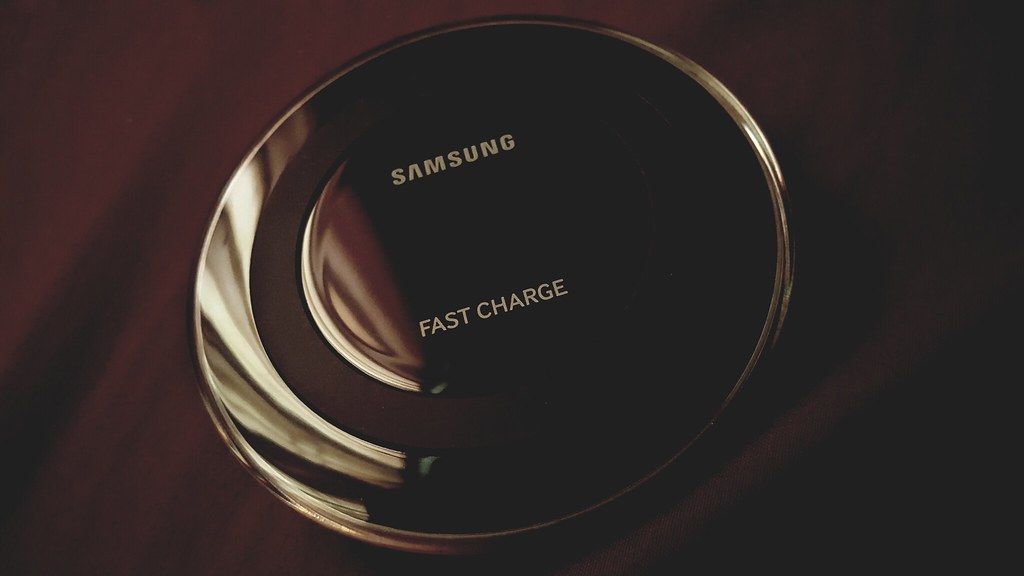
Photo credit: Samsung Wireless Charger Pad (Fast Charge) by Honou, licensed BY (https://creativecommons.org/licenses/by/2.0/). Source: https://live.staticflickr.com/704/22063888805_f404d3c592_b.jpg