
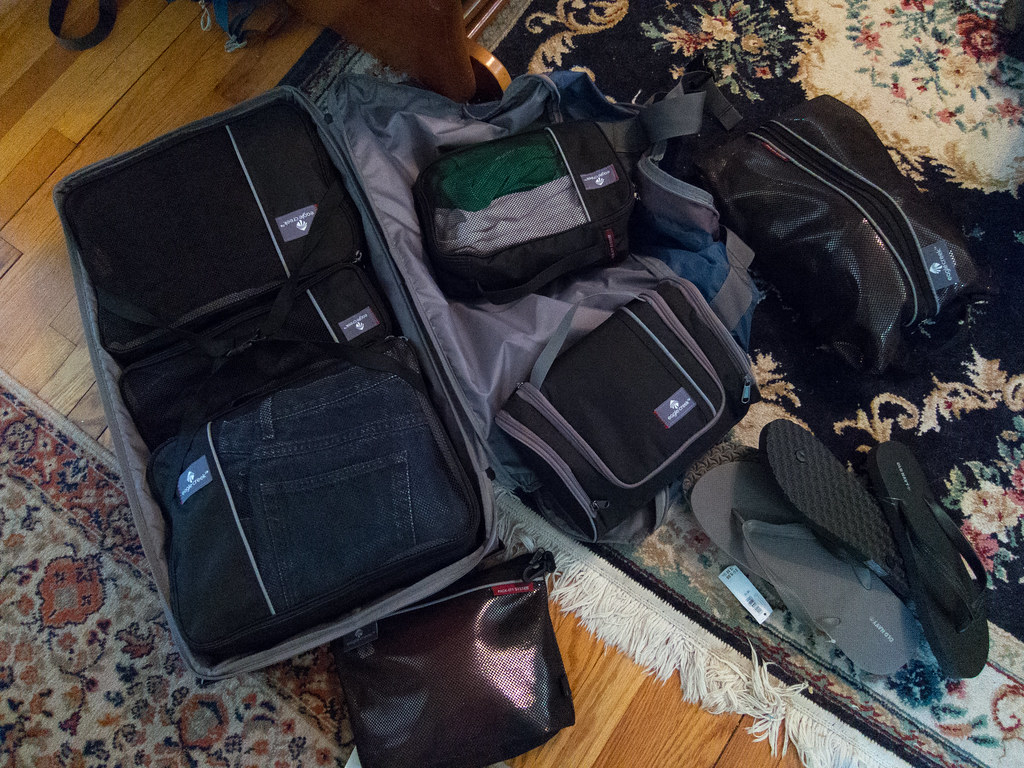
A common misconception about packing cubes is that they magically shrink how much space clothes take up in a suitcase, which explains a lot of the disappointment some travelers report after trying them. Standard packing cubes are genuinely useful, but for organization, not compression, and understanding that distinction determines which type actually solves a specific packing problem.
Table of Contents
Standard Cubes: Organization, Not Space Savings
A standard packing cube is essentially a soft-sided fabric box with a zipper, used to group related items, all shirts in one cube, underwear and socks in another, keeping a suitcase from becoming one loose jumble everything shifts around in during travel. This genuinely makes finding things faster and keeps a suitcase tidier throughout a trip, but a shirt folded into a cube takes up essentially the same volume as the same shirt folded directly into the suitcase; the cube doesn’t compress it.
Compression Cubes Actually Reduce Volume
A genuinely different category, compression packing cubes, use a second zipper or a rolling closure that physically presses trapped air out of the clothing inside after the main zipper is closed, meaningfully reducing the actual volume the clothes occupy. This is the specific product that delivers on the “pack more in the same suitcase” promise, and it’s worth checking explicitly whether a product being considered has this second compression mechanism, since many cubes marketed generically as “packing cubes” are the standard organizational type without it.
Vacuum-Seal Travel Bags: More Compression, Less Convenience
A separate category, vacuum-seal travel bags, uses a hand pump or a vacuum cleaner attachment to remove essentially all air from around packed clothes, achieving more dramatic volume reduction than compression cubes’ mechanical squeeze. The trade-off is real inconvenience: these need an actual pump or vacuum to use, aren’t as fast to pack or unpack as a cube with a zipper, and don’t organize items the way a cube does since everything inside one bag is compressed into a single flattened block.
This format suits maximizing volume for a specific need, like packing bulky winter clothing into a carry-on, more than everyday travel organization.
Material and Durability Differences Worth Checking
Packing cube quality varies meaningfully in zipper durability and fabric construction, both of which matter more than they might seem for an item that gets stuffed, compressed, and pulled in and out of a suitcase repeatedly across many trips. Mesh-paneled cubes let a traveler see contents without opening every cube, a genuine convenience at airport security or when searching for one specific item, at a small durability trade-off compared to fully solid fabric panels.
Set Sizing: Buying a Range, Not Uniform Cubes
Most packing cube sets include a few different sizes rather than identical cubes, which matters because a suitcase packs most efficiently with a mix of cube sizes tucked around each other, similar to how mismatched storage containers fit together more efficiently than uniform ones. A set with a genuine range of sizes, rather than several identical cubes, generally packs a suitcase’s actual available space more completely.
A Practical Buying Approach
- Buy standard cubes primarily for organization and packing speed, and don’t expect them to meaningfully increase carry-on capacity.
- Buy compression cubes specifically when fitting more into a fixed suitcase size is the actual goal, checking explicitly for the second compression zipper or rolling mechanism.
- Consider vacuum-seal bags only for bulky, infrequent packing needs like winter clothing, given the real convenience trade-off for everyday use.
- Choose a set with a genuine mix of sizes rather than uniform cubes, for the most efficient use of suitcase space.
The Honest Trade-Off
Packing cubes are a real, worthwhile travel organization tool, but only compression-specific cubes or vacuum-seal bags actually reduce the volume clothes take up in a suitcase. Buying standard cubes expecting a compression benefit they don’t provide is the most common source of disappointment with the category, and it’s a distinction worth checking on the specific product before buying, not assuming from the general “packing cube” label alone.
Based on general product knowledge and manufacturer specifications; not hands-on tested.
Related Reading
- TSA PreCheck and Global Entry Solve Different Problems. Most People Only Need One.
- Sous Vide Isn’t About Fancy Cooking. It’s About Never Overcooking Anything Again.
- You Don’t Need a New Desk to Stop Sitting All Day
Further reading: Packing cube (Wikipedia).
Photo credit: “Packing cubes” by waitscm, licensed BY (https://creativecommons.org/licenses/by/2.0/). Source: https://www.flickr.com/photos/78341140@N00/14273818111