
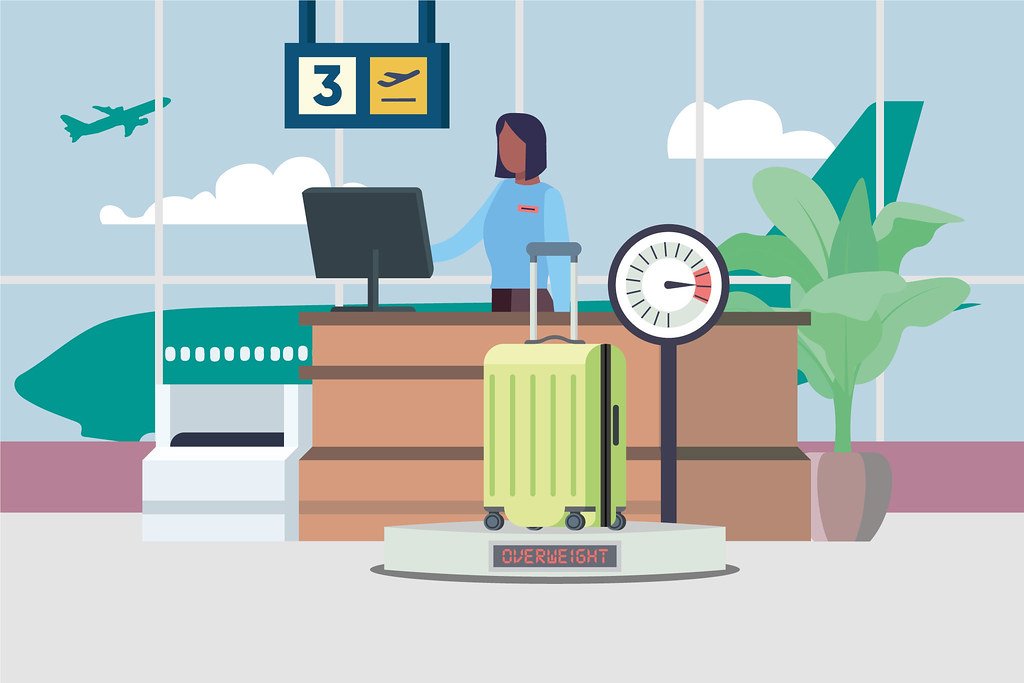
Airline overweight baggage fees are charged at check-in, after a traveler has already arrived at the airport with no realistic way to lighten a bag other than awkwardly repacking items into a carry-on or a pocket in the terminal. A digital luggage scale costs a small fraction of a single overweight fee and lets a traveler check and adjust bag weight calmly at home, which makes it one of the higher return-on-investment items in a travel gear list despite its low price and simple function.
Table of Contents
How Cheap Digital Luggage Scales Actually Work
A handheld digital luggage scale uses a strap or hook attached to a suitcase handle, then a small digital display shows the weight as the bag is lifted briefly off the ground by the scale’s handle. The mechanism is simple and has genuinely improved in consistency at the budget end of the market, though accuracy still varies somewhat between individual units and brands, which is worth accounting for with a small safety margin rather than trusting a reading down to the exact pound at the airline’s cutoff.
Building In a Safety Margin Is the Practical Fix for Accuracy Variance
Rather than packing a bag to precisely the airline’s weight limit based on a home scale reading, leaving a small buffer, commonly a pound or two under the actual limit, accounts for normal variance between a budget scale’s reading and an airport’s professional scale. This single habit prevents the most common way a home scale check still results in an unexpected overweight fee: trusting an exact reading with zero margin for measurement variance between two different devices.
Checking Calibration Occasionally
Most digital luggage scales can be spot-checked against a known weight, such as a bag of a specific weight confirmed on a bathroom scale, to catch a unit that’s drifted out of calibration over time or after being dropped. This takes a few minutes and is worth doing periodically for a scale used regularly, rather than assuming accuracy indefinitely once purchased.
Capacity and Display Features Worth Checking
Most consumer luggage scales handle a wide enough weight range to cover any checked bag limit set by major airlines, so raw capacity is rarely the differentiator between models. More relevant differences include a hold function that locks in the reading after the bag is lowered (useful since reading a display while actively holding a suitcase aloft is awkward), a backlit display for checking bags in a dim closet or hallway, and unit switching between pounds and kilograms for international travel where the destination or airline uses a different measurement standard.
Airline Fee Variance Makes This More Valuable, Not Less
Overweight baggage fees vary significantly between airlines and even between fare classes on the same airline, and fees frequently increase at the airport counter compared to pre-paying for a known overweight bag online in advance when an airline allows that option. Checking bag weight at home doesn’t just avoid a fee entirely; it also allows for choosing the cheaper option, in some cases pre-paying online for an overweight bag category at a lower rate than the at-airport fee, or repacking to avoid the fee altogether, both of which require knowing the actual weight before arriving at the airport.
A Practical Buying Approach
- Don’t expect precision to the exact pound; build in a small safety margin below the airline’s stated weight limit when packing.
- Spot-check calibration periodically against a known weight, particularly after any drops or after infrequent use.
- Choose a scale with a hold function and backlit display for practical everyday use, since these small features matter more day-to-day than raw weight capacity.
- Weigh bags with enough time before departure to actually redistribute or remove items if the reading comes in close to the limit.
The Honest Trade-Off
A digital luggage scale is a low-cost, low-effort way to avoid a disproportionately expensive airport fee, and the modest accuracy variance in budget models is easily managed with a small packing margin rather than being a real reason to skip buying one. For the price of a single overweight bag fee, a scale pays for itself on the very first trip it prevents that exact situation.
Related Reading
- Packing Cubes Don’t Save Space. They Just Make the Space You Have Usable.
- TSA PreCheck and Global Entry Solve Different Problems. Most People Only Need One.
- Sous Vide Isn’t About Fancy Cooking. It’s About Never Overcooking Anything Again.
Sources: NerdWallet: American Airlines bag fees and how to avoid them.
Photo credit: “Luggage That’s Too Heavy at the Airport” by Familydestinationsguide.com Images, licensed CC BY 2.0 (https://creativecommons.org/licenses/by/2.0/). Source: https://www.flickr.com/photos/195041916@N08/51903153961