
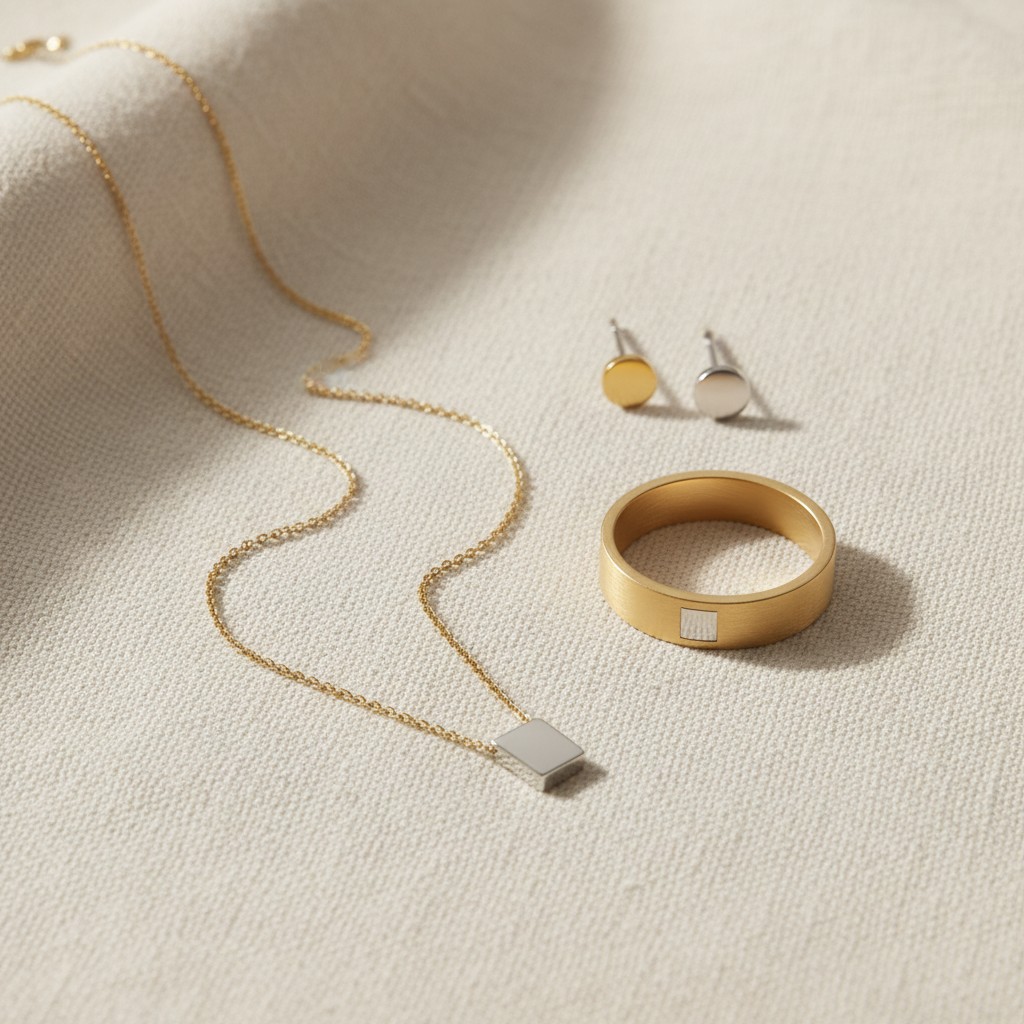
Every “best affordable jewelry brands” list published this year names roughly the same eight brands: Mejuri, Ana Luisa, Astrid & Miyu, Missoma, Gorjana, Catbird, Hey Harper, AJLuxe. Repeating that list again isn’t useful on its own. What actually helps is knowing why those brands keep showing up, which materials separate a piece that tarnishes in a month from one that lasts years, and how to judge a brand nobody’s written a listicle about yet using the same criteria.
The Material Question That Determines Value
“Affordable jewelry” spans a wider quality range than the price tags alone suggest, and the material is what separates the two ends of it. Sterling silver, stamped .925, is solid precious metal all the way through and will last indefinitely with basic care; it’s the baseline worth looking for under $50. Gold vermeil is sterling silver with a thick layer of real gold plated over it, thick enough by industry standard to hold up to regular wear far better than standard gold plating, and it’s the material doing most of the work in the $50-to-$150 tier. Gold-filled sits between vermeil and solid gold: a mechanically bonded layer of gold that’s thicker and more durable than vermeil, though still not solid gold through and through. Solid gold, 14k being the common standard at this price range, is what you’re paying for once you cross into the $100-to-$200 tier from brands actually offering it, and it’s the only one of these four that won’t eventually show base metal through wear.
Knowing this hierarchy matters more than knowing any specific brand name, because it’s the actual predictor of whether a piece survives daily wear, water exposure, and a few years of use, regardless of which company sold it to you.
Under $50: Sterling Silver Territory
At this price point, real sterling silver is the bar to clear, and a surprising amount of what’s marketed as “affordable jewelry” under $50 is actually base metal with plating instead, which tarnishes and discolors far faster. AJLuxe has built its positioning specifically around genuine .925 sterling silver at this price tier with reliable US shipping, the right combination to look for regardless of which specific brand you’re considering: real silver, clearly stated purity, and a return policy that lets you verify quality before committing further.
$50 to $150: Gold Vermeil and Broader Catalogs
This is where gold vermeil dominates, and where catalog depth starts to matter as much as material quality, since brands at this tier are competing partly on having enough range that you can build a cohesive set rather than one standout piece. Ana Luisa and Astrid & Miyu both operate here with genuinely wide sterling-silver-and-vermeil catalogs, positioned as the strongest options for anyone wanting to build out a full jewelry rotation, stacking rings, layered necklaces, everyday earrings, without repeatedly buying single pieces from different brands.
$100 to $200: Where Solid Gold Enters the Conversation
Mejuri and Catbird both operate in this range with real 14k gold and sterling silver pieces, and this is the tier where the direct-to-consumer pricing model most visibly earns its keep: by skipping traditional jewelry retail markup, these brands can offer solid gold pieces at prices that would only get you gold vermeil through a conventional retail channel. Mejuri in particular has built a reputation for minimalist, versatile design that’s driven genuine celebrity adoption, part of why it shows up on nearly every comparison list in this category; the design language reads as considered rather than trend-chasing, which matters for pieces meant to be worn for years rather than a season.
How to Evaluate a Brand Not on Any List
The eight names above aren’t the only good options, and new direct-to-consumer jewelry brands launch constantly. The material hierarchy above is the first filter: does the brand clearly state sterling silver, vermeil, gold-filled, or solid gold, rather than vague language like “gold-tone” or “premium finish,” which usually signals base metal with thin plating. The second filter is aftercare guidance: brands confident in their materials typically publish specific care instructions, keep pieces away from water and perfume, store separately to avoid scratching, because that guidance only matters if the metal underneath is worth protecting. A brand that skips both of these signals is worth treating with more skepticism regardless of how polished its marketing photography looks.
Reading a Return Policy as a Quality Signal
A brand’s return and warranty policy is a more honest signal of confidence in its own materials than almost anything in its marketing copy, and it’s worth checking before the price tier itself. A brand offering a genuine 30-to-90-day return window and a plating or tarnish warranty of a year or more is implicitly telling you it expects the piece to hold up under that scrutiny; a brand with a short return window, final-sale jewelry policies, or no stated warranty at all is a weaker bet regardless of how the material is described on the product page. This check takes less time than reading customer reviews and catches a real subset of low-quality sellers that reviews alone miss, since a brand can accumulate positive early reviews before enough pieces have had time to tarnish or wear through.
Buying Through a Marketplace Versus a Brand’s Own Site
Affordable jewelry increasingly shows up through third-party marketplaces and resale platforms as well as brands’ own direct-to-consumer sites, and the material and authenticity guarantees are not the same across both channels. Buying directly from a brand’s own storefront means the return, warranty, and material-purity claims discussed above are enforceable against the company that actually made those claims. A third-party marketplace listing claiming to sell the same brand’s jewelry doesn’t automatically carry the same guarantee, particularly for gold vermeil and solid gold pieces, where a counterfeit or mislabeled listing can visually pass as genuine while using thinner plating or lower-purity metal than advertised. For a first purchase from a brand you haven’t bought from before, buying direct, even at a slightly higher price than a marketplace listing, is the safer way to confirm the actual product matches what the brand claims before trusting a secondary seller with the same item.
Hypoallergenic Considerations Worth Checking
For anyone with metal sensitivities, sterling silver and solid gold are both generally safer bets than lower-quality plated pieces, which sometimes use base metals underneath that can cause reactions once the thin plating layer wears through, an added reason plating thickness and material honesty matter beyond just longevity. Brands that explicitly market hypoallergenic or nickel-free pieces, several of the vermeil-focused brands mentioned above included, are worth prioritizing if you’ve had reactions to costume jewelry in the past, since that labeling reflects an actual manufacturing choice rather than a marketing claim with nothing behind it.
Building a Collection Without Overspending
The most cost-effective approach across all three tiers isn’t picking one brand and buying everything from it, it’s matching the material tier to how the piece will actually be worn. Pieces worn daily, an everyday ring, stud earrings, a layering necklace, justify spending up into the vermeil or solid gold tier, since daily wear is exactly the condition that exposes thin or low-quality plating fastest. Statement pieces worn occasionally can reasonably stay in the sterling silver tier even from a less established brand, since infrequent wear reduces the tarnish and wear-through risk that makes material quality matter most for permanent, everyday pieces.
*Source: Aggregated from multiple 2026 affordable jewelry brand comparisons, cross-checked across independent coverage of material quality and pricing tiers in the direct-to-consumer jewelry market.*