
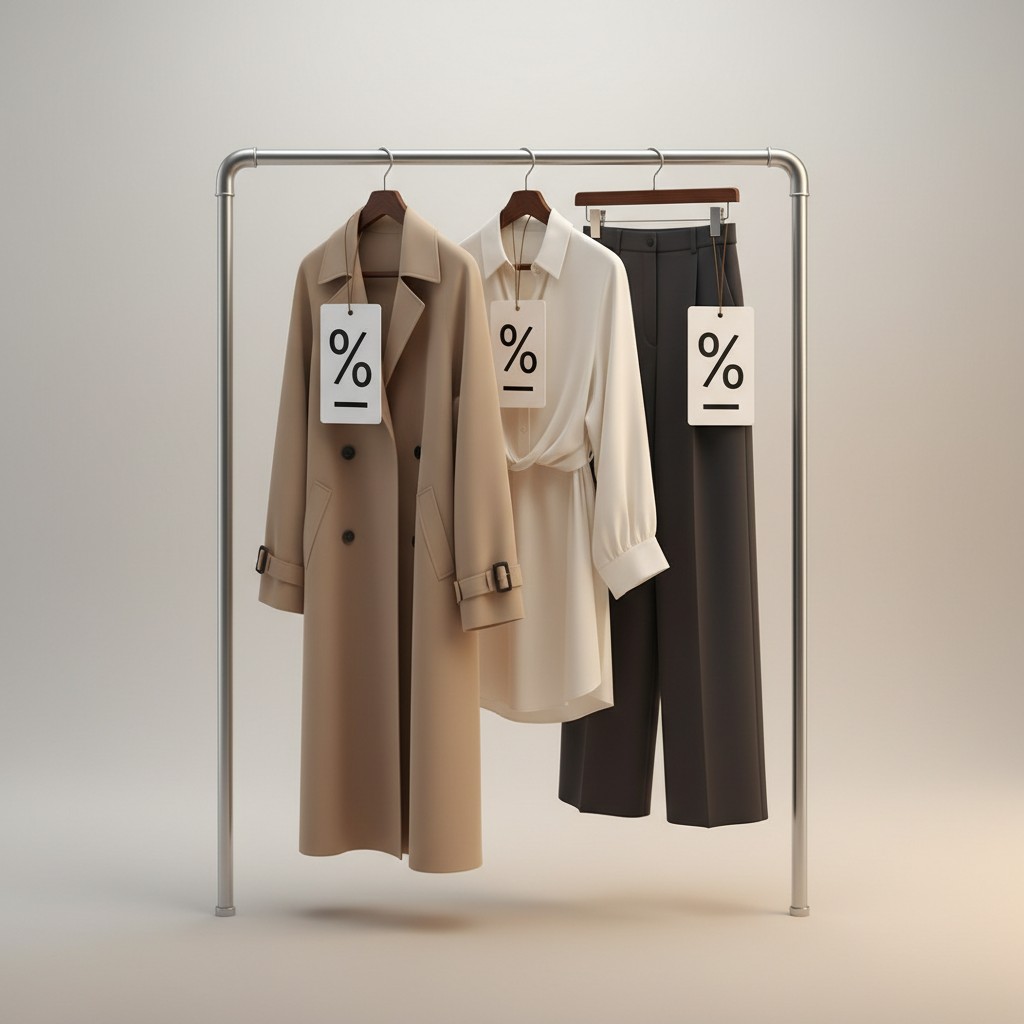
Seasonal Clothing Sales: Key Takeaways
- Seasonal clothing sales often use inflated reference prices, so the advertised discount may not reflect a true price drop.
- Outlet items in seasonal clothing sales are frequently made for the outlet channel, making “compare at” tags misleading.
- Checking price history before buying during seasonal clothing sales reveals whether a discount is genuine.
- Free-shipping thresholds in large sales can push unnecessary additions that cost more than the shipping fee.
Nordstrom’s current Fall Savings Event is advertising over 14,000 markdowns, up to 25% off select fashion and 15% off beauty, on sweaters, boots, and jeans heading into cold weather. That’s a genuinely large sale by volume. It’s also, by itself, not enough information to know whether any specific item in it is a good deal, because “25% off” only means something once you know what the price was being measured against, and that starting number is exactly where seasonal sales most often stop being straightforward.
Table of Contents
The Original Price Isn’t Always the Real Price
The most common way a discount gets inflated has nothing to do with the sale price itself: it’s the reference price above it. Some retailers, and this is especially documented at liquidation and clearance-style events, raise the listed price in the days or weeks before a sale begins, then advertise the markdown against that newly inflated number rather than what the item sold for before the sale even started.
A jacket that regularly retailed at $80 can show up in a sale bumped to a $100 “original” price, discounted 25% down to $75, a number that reads as a deal but is higher than the jacket’s real recent price. This isn’t universal, and plenty of retailers run their sales honestly, but the pattern is common enough that the percentage-off number by itself isn’t proof of anything.
“Compare At” Pricing and Outlet-Exclusive Lines Are a Different Trick Entirely
A separate, longer-running version of the same reference-price problem shows up specifically at outlet and factory stores, and it’s worth knowing apart from the seasonal-sale markup pattern above because the mechanism is different. Retail analysts estimate 80 to 85 percent of goods sold at outlet stores were manufactured specifically for the outlet channel, not overstock or last season’s regular-line product moved there at a discount.
Gap Factory is a documented, named example: its design team creates a separate line of styles sold only at Factory locations, built with less expensive materials, simpler construction, and lower-cost components, rather than selling Gap’s actual mainline overstock. A “compare at” price tag next to one of these items is comparing it against a mainline product it was never part of, which several state consumer-protection offices, California’s among them, have flagged as a pricing practice worth understanding before treating the percentage saved as real.
None of this means outlet shopping is a bad idea; it means the comparison an outlet’s own price tag invites isn’t the comparison genuinely taking place.
Checking Price History Before Trusting the Percentage
The fix is straightforward when it’s available: check what an item cost before the sale started, not what the sale page claims it cost. Price-history tools like Keepa and CamelCamelCamel do this natively for Amazon listings, tracking an item’s real price over time so an inflated “was” price becomes obvious at a glance. Traditional apparel retailers rarely offer an equivalent built-in tracker, which means the practical version of the same check is a browser history search, a saved screenshot from a prior visit, or a quick look at a price-tracking browser extension if the retailer’s site supports one.
It’s an extra step a straightforward percentage-off badge is specifically designed to make feel unnecessary, which is exactly why it’s worth doing on anything above impulse-buy territory.
A Percentage Off One Store Isn’t the Same as a Good Price
The other comparison worth making has nothing to do with the sale itself: whether a competing retailer already sells the same or a comparable item for less, sale or no sale. A 25%-off wool sweater at one retailer can still cost more than the same sweater’s regular price somewhere else, and a big, well-promoted sale event creates exactly the kind of urgency that makes shoppers compare a discounted price only against that same store’s own regular price, never against the wider market.
A quick search for the specific item, or a close equivalent, across two or three other retailers before checking out takes a few minutes and is the check most likely to reveal that a “deal” wasn’t actually the best price available that day.
The Free-Shipping Threshold Is Doing Exactly What It’s Designed to Do
A specific, well-documented pattern worth watching for during any large sale: a free-shipping minimum that sits just above the cost of the one item actually being shopped for. That gap is intentional, not incidental, and it reliably pushes shoppers to add a second item they weren’t planning to buy, “to get free shipping,” in a way that usually costs more in total than simply paying the shipping fee on the original single item would have.
The corrected version of that math: if reaching a free-shipping threshold means spending $15-20 more on something not actually wanted, and shipping itself would have cost $6-8, paying for shipping and skipping the added item is the cheaper outcome almost every time, even though it doesn’t feel that way at checkout.
Big Discounts on Certain Categories Are Often Explained by Quality, Not Generosity
Not every deep discount reflects a retailer being generous. Clearance and liquidation-style events in particular are a common venue for moving lower-quality, outdated, or slightly defective stock, categories where a steep markdown is covering for something about the product itself rather than passing savings along.
That doesn’t mean every steeply discounted item is compromised, plenty of genuine overstock and end-of-season inventory gets marked down for entirely ordinary reasons, but a discount that looks unusually large relative to everything else in the same sale is worth a closer look at reviews or return policy specifically for that item, rather than assumed to be simply the best deal in the sale because it has the biggest number attached.
Stacking a Coupon on Top of a Sale Doesn’t Always Stack the Way It Looks
A promo code applied on top of an already-discounted sale price feels like a second layer of savings, and sometimes it genuinely is, but a meaningful share of retailer promo codes are scoped to exclude sale items entirely, or apply to the pre-discount price in a way that nets out close to the sale price alone.
Reading the fine print on a stacked code, specifically whether it says “excludes sale items” or “cannot be combined with other offers,” before assuming a coupon field at checkout is adding real additional savings on top of a markdown, avoids the specific letdown of a code that appears to apply, shows a discount in the cart summary, and still totals out barely different from the sale price by itself once shipping and tax settle.
When a stacked discount is genuine, it’s usually worth confirming by checking the final total against the item’s individually verified pre-sale price, the same price-history step covered above, rather than trusting the percentage math displayed at checkout.
A Practical Checklist for Any Seasonal Sale
Before checking out during a large seasonal sale, whether it’s Nordstrom’s current Fall Savings Event or any comparable retailer’s next one: check the item’s price history if a tool supports it, or at minimum recall or search for what it cost on a recent prior visit. Compare the sale price against two or three competing retailers rather than assuming the sale price is automatically the market’s best price. Do the actual math on any free-shipping threshold before adding an extra item to reach it.
And treat an unusually large discount, relative to the rest of the same sale, as a prompt to check reviews and return policy for that specific item rather than a signal to buy faster. None of these checks take more than a few minutes combined, and together they’re a more reliable measure of whether a sale is worth shopping than the percentage-off badge on its own ever is.
Bottom Line
Before purchasing in seasonal clothing sales, verify the item’s recent price history and compare it with at least two other retailers. Then calculate whether meeting a free-shipping minimum adds unwanted cost versus paying shipping on the single item.
Further reading: Original reporting: whowhatwear.com.