
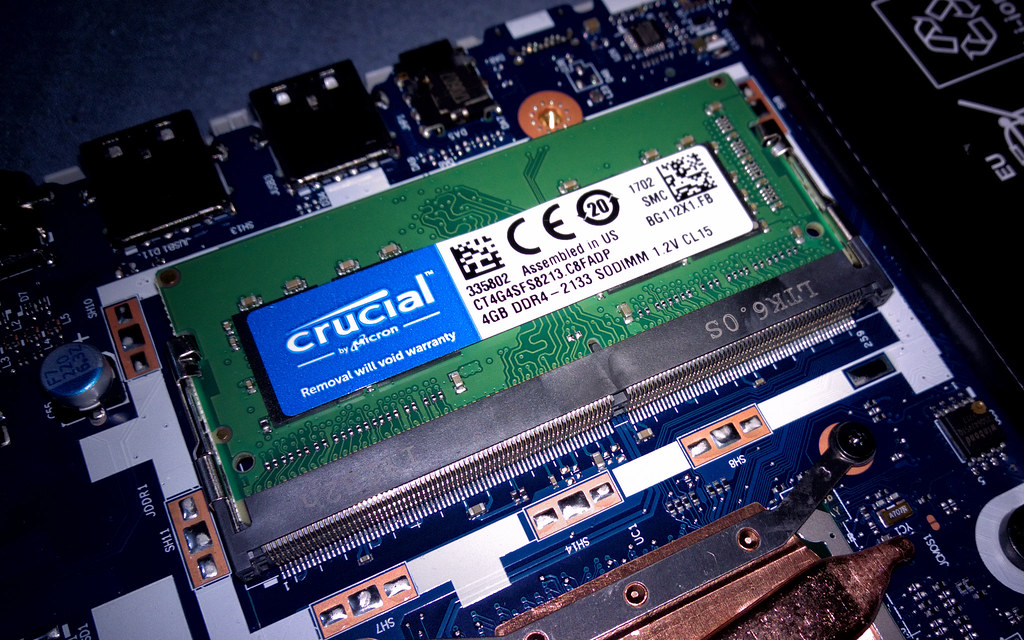
Most of the coverage of rising tech prices this year has focused on tariffs, but a separate, arguably bigger cost driver has been building in the background with far less attention: memory chip prices. Gartner projects combined DRAM and SSD costs will surge roughly 130% by the end of 2026 compared to 2025 levels, a jump expected to push average PC prices up 17% and smartphone prices up 13%. That’s not a distant forecast; contract prices for consumer DRAM already climbed 89% in the second quarter of 2026 alone, and the effects are already showing up in laptop, console, and handheld pricing across the board.
Why Memory Got This Expensive, This Fast
The root cause isn’t a tariff or a single company’s decision; it’s demand from AI datacenters colliding with a supply base that can’t scale fast enough. A single AI server requires roughly 8 to 10 times the DRAM of a traditional server and more than three times the NAND flash storage, and that demand is being layered onto a chip supply chain that was already tight. Making it worse, when Samsung began mass production of HBM4, the high-bandwidth memory used in AI accelerators, it pulled wafer capacity away from commodity DDR5 production, the exact chips laptops and consumer PCs depend on, right as manufacturers were trying to secure stock for the rest of the year.
The supply side simply isn’t growing fast enough to absorb both pressures at once. DRAM bit-supply is expected to grow around 16% year-over-year in 2026, and NAND around 17%, both far short of what would be needed to offset a 130% cost surge. Three companies, Samsung, SK Hynix, and Micron, control more than 95% of the DRAM market, which means there’s little competitive pressure pushing prices back down while demand stays this lopsided.
The Actual Numbers, Not Just the Percentage
Abstract percentages are easy to skim past, so it’s worth seeing what this looks like in real component prices. A 16Gb DDR5 chip that cost around $6.84 on the spot market in September 2025 was going for roughly $27.20 by December, a 298% jump in three months. A 32GB DDR5-6000 kit that sold for under $90 in early 2025 was running around $529 by early 2026, close to a 4x increase. Even older DDR4 kits weren’t spared: a 32GB DDR4 kit that cost $60-90 in October 2025 was $150-180 by January 2026.
That pricing pressure isn’t staying contained to raw memory chips either. It’s already shown up in finished devices: Sony raised PS5 Digital pricing from $499.99 to $599.99 and PS5 Pro from $699.99 to $899.99 in April 2026, Microsoft raised Xbox Series S 512GB from $399.99 to $499.99 in August, Nintendo raised Switch 2 from $449.99 to $499.99 in September, and Valve’s Steam Deck OLED jumped 44-46% across its storage tiers. None of these products are exotic AI hardware; they’re consumer devices with conventional memory and storage inside them, caught in the same supply squeeze.
Why This Isn’t Expected to Ease Soon
The timeline here matters more than the current price level, because it changes whether waiting makes sense. Intel has signaled relief isn’t likely before 2028. Gartner’s own storage-cost forecasting extends the crunch into 2027. Microsoft has said its own storage and memory costs have already risen more than 2.5x and expects roughly another doubling by fall 2027. None of these are worst-case predictions from a single alarmist source; they’re consistent, independently sourced projections from companies with direct visibility into their own supply contracts, converging on the same multi-year timeline rather than a short-term blip that resolves by next quarter.
That consistency is the real reason this is worth acting on rather than waiting out. A price spike tied to a temporary shortage is worth riding out. A price spike that Intel, Gartner, and Microsoft all separately expect to persist for two-plus years is a different kind of decision.
A Concrete Example of What This Looks Like in a Real Deal
Back-to-school laptop sales this year offer a useful, concrete illustration of the pattern rather than an abstract one. Dell’s 14 Laptop was listed at $699.99, a $530 discount, with 16GB of RAM and a 1TB SSD included, explicitly marketed as a deal worth grabbing before memory price hikes fully hit the rest of the lineup. Deals like that are a real signal worth reading correctly: a configuration with genuinely adequate memory and storage, priced before a manufacturer has had to fully pass along the current chip costs, is a meaningfully different opportunity than the same nominal discount on a stripped-down configuration you’d need to upgrade later at this year’s component prices.
Checking Before You Buy
A few concrete things worth confirming on the spec sheet before treating a laptop deal as genuinely good, given where memory costs are headed:
- RAM: 16GB minimum, and treat anything below that as a device you’ll likely want to replace within a couple of years rather than upgrade, since many modern laptops solder RAM directly to the motherboard and can’t be upgraded at all.
- Storage: 512GB SSD minimum. A 256GB drive fills quickly with lecture recordings, project files, game installs, or a typical photo library, and adding storage later, either through an internal swap or an external drive, costs more now than it did even a year ago.
- Processor age. A processor released within the last two years is a reasonable baseline regardless of the memory situation, since an underpowered chip isn’t fixed by having more RAM around it.
- Whether the RAM is soldered or upgradeable. This matters more this year than in a typical year: a laptop with user-upgradeable RAM gives you the option to add capacity later if the initial configuration turns out to be tight, while a soldered configuration locks in whatever you buy today as the ceiling for the device’s useful life.
None of these are exotic checks, but they matter more this year specifically because the cost of getting the initial configuration wrong, buying too little RAM or storage and needing to compensate later, is higher than it’s been in years, given how far upgrade-later component costs have already climbed.
What This Means If You’re Shopping for a Laptop Right Now
The practical upshot for anyone shopping soon: memory and storage capacity are the components most directly exposed to this price surge, which makes them the specs worth locking in sooner rather than planning to upgrade later. A laptop bought today with 8GB of RAM and a 256GB SSD, planning to add memory or swap storage in a year once you need it, is a much worse bet in this specific market than it would have been two years ago, since the exact components you’d need to add later are the ones getting more expensive the fastest.
A few concrete numbers worth using as a baseline before buying: aim for at least 16GB of RAM and 512GB of SSD storage if the budget allows it, since a 256GB drive fills quickly with normal use and upgrading it after the fact now costs meaningfully more than it did even a year ago. If a deal on a well-specced laptop shows up, that’s a real reason to treat it as more time-sensitive than a typical sale, given where component costs are heading rather than where they’ve been.
What Doesn’t Change
None of this means every laptop purchase needs to happen today out of panic. Processors, displays, and other non-memory components aren’t caught in the same supply crunch, and a laptop that’s genuinely underpowered or the wrong fit for your needs is still a bad buy regardless of memory pricing. The shift here is specifically about capacity: RAM and storage are the two specs where “buy more now, it’s cheaper than upgrading later” has gone from a nice-to-have suggestion to a genuinely load-bearing piece of buying advice, given a shortage multiple independent sources expect to run into 2027 or later.
*Sources: Gartner’s memory cost and PC/smartphone price forecasts, DRAM/NAND supply and pricing data, and console/device price change figures aggregated from current industry reporting, cross-checked across multiple 2026 sources.*
Photo credit: “Long Time No See” by Diego3336, licensed BY (https://creativecommons.org/licenses/by/2.0/). Source: https://www.flickr.com/photos/31018257@N00/39147521871