Acr Tracking: Key Takeaways
- Texas settlements require Samsung and LG to obtain express consent for ACR tracking from Texas consumers, but protections do not extend nationally.
- Sony, Hisense, and TCL remain defendants without settlement terms, so their ACR tracking practices have not been legally forced to change.
- Manual opt-out settings exist for each brand’s ACR tracking feature, though some diagnostic data collection may continue separately.
- The 2017 Vizio precedent shows ACR tracking consent requirements can be enforced, yet industry-wide default-on practices persisted until recently.
Most smart TVs sold today run a feature called Automatic Content Recognition, ACR for short, that identifies what’s on screen, whether it’s live TV, a streaming app, or something plugged into an HDMI port, and reports that viewing activity back to the manufacturer for advertising and analytics purposes. It’s been standard in the industry for years, largely enabled by default, and largely unknown to the people whose TVs are running it.
In 2026, that arrangement became the subject of real legal action, and two major manufacturers have already had to change how it works, at least for one state’s residents.
The Lawsuit, in Plain Terms
Texas Attorney General Ken Paxton sued five major smart TV manufacturers, Samsung, LG, Sony, Hisense, and TCL, alleging their ACR systems collected viewing data from Texas consumers without them being fully informed or giving meaningful consent. The core allegation across all five cases was the same: TVs were watching what people watched and sending that data out, often as a default setting a buyer never explicitly agreed to, buried in a privacy policy few people read in full before setting up a new television.
What Samsung Agreed To
On February 26, 2026, Samsung became the first of the five to settle, agreeing to stop collecting or processing ACR viewing data from Texas consumers without their express consent, and to rewrite its on-device privacy disclosures and consent screens to be clear and conspicuous rather than buried in dense legal text. No monetary penalty was disclosed as part of the agreement; the settlement’s substance is entirely about how consent gets obtained and disclosed going forward.
What LG Agreed To, and Why It Went Further
LG settled on May 11, 2026, roughly three months after Samsung, and its agreement includes provisions Samsung’s didn’t. LG’s settlement defines the required consent standard specifically as “affirmative express consent,” meaning consent that is freely given, specific, informed, and unconditional, a higher bar than a general privacy-policy acknowledgment. LG also agreed to a pop-up disclosure that explains what’s being collected and how, published both on the TV itself and on LG’s website, plus a clear, simple opt-out mechanism.
Separately, and notably, LG’s settlement includes a written commitment that Texas viewing data collected from its TVs “has not and will continue to not be transmitted in any form from the U.S. to the People’s Republic of China,” a specific national-security-adjacent provision that wasn’t part of Samsung’s earlier deal.
Sony, Hisense, and TCL Are Still Being Sued
As of the settlements described above, Sony, Hisense, and TCL had not reached agreements with Texas and remained defendants in the ongoing case. That matters for anyone owning one of those brands: there’s no equivalent settlement in place requiring the same consent and disclosure changes, which means whatever ACR behavior those TVs currently ship with hasn’t been legally forced to change, at least not yet, for any consumer regardless of state.
Why This Only Protects Texans, for Now
Both settlements are the direct result of a Texas-specific lawsuit under Texas consumer protection law, and their terms apply to Texas consumers. Samsung and LG haven’t announced they’re extending the same consent standard, disclosure requirements, or opt-out mechanisms nationally as a matter of course, which means a Samsung or LG TV owner outside Texas isn’t automatically covered by either settlement’s protections.
The practical result: everyone outside Texas, and every owner of a Sony, Hisense, or TCL TV regardless of state, is currently relying on the same manual opt-out process that’s existed all along, not a manufacturer-driven fix.
How to Turn ACR Off Yourself, by Brand
Since the legal remedy doesn’t reach most owners yet, the manual settings path is worth doing directly rather than waiting on a broader settlement or regulation:
- Samsung: Settings, then Support, then Terms & Privacy, then Privacy Choices (or on newer menus, Settings, All Settings, General & Privacy, Terms & Privacy). Turn off Viewing Information Services.
- LG: Look for LG’s ACR feature, branded as “Live Plus,” in the privacy or general settings menu, and disable it there.
- Vizio: The equivalent setting is labeled “Viewing Data” in the privacy settings menu.
- Sony: Sony’s ACR system is branded “Samba Interactive TV,” found under privacy settings.
- TCL and Roku TVs: Look for “Smart TV Experience” in the privacy settings and disable it.
Disabling the branded ACR feature stops most viewing-based tracking and ad personalization tied to on-screen content recognition, though some diagnostic and usage data collection unrelated to ACR specifically may still continue separately.
This Isn’t the First Time a Manufacturer Got Caught
The Texas cases have real precedent: Vizio settled with the FTC and the State of New Jersey back in 2017 for $2.2 million over nearly identical conduct. Vizio had installed ACR software on 11 million TVs starting in 2014, turned on by default, that tracked viewing habits second-by-second and collected more than 100 billion data points per day. Vizio didn’t stop at raw viewing data either; it appended demographic details, sex, age, income, marital status, household size, education level, home ownership, and household value, to what it sold to third parties for cross-device ad targeting.
The 2017 settlement required Vizio to obtain affirmative express consent going forward, the same core standard Texas’s 2026 settlements with Samsung and LG are built around. That nearly decade-long gap between one enforcement action and the next two suggests the underlying practice never meaningfully went away industry-wide, it just moved manufacturer to manufacturer and jurisdiction to jurisdiction until the next regulator caught up.
Why Manufacturers Built This In the First Place
It’s worth understanding the business logic rather than treating this purely as an isolated privacy overreach. Smart TVs are frequently sold at thin hardware margins, sometimes near cost, with the ongoing plan to recover that margin, and generate additional profit, through advertising and data-driven revenue over the TV’s lifespan. ACR is a direct enabler of that model: knowing exactly what a household watches, down to specific shows, ads, and even other devices plugged into the TV via HDMI, is valuable targeting data for advertisers, which is a large part of why the feature has proliferated so broadly and defaulted to on rather than off.
What to Check Before Your Next TV Purchase
A few concrete things worth doing at purchase time rather than only after a TV is already set up at home:
- Ask specifically whether the model uses ACR and what it’s branded as, since manufacturers use different names for functionally the same tracking feature, and a straightforward answer at purchase time is a reasonable ask of any electronics retailer or salesperson.
- Check the settings menu during initial setup, before completing the onboarding flow, since the ACR opt-in or opt-out screen is often presented as part of first-time setup and easy to click through without reading.
- Revisit the setting after any major software update, since a firmware update has, in some documented cases across the industry, reset privacy settings back to a default-on state without warning.
- If a manufacturer’s consent and disclosure practices matter to a purchase decision, the Texas settlements are a reasonable, publicly documented reference point for evaluating whether a given brand has been forced into better practices or is still operating under the older, less transparent model.
Where This Likely Goes Next
Two settlements out of five defendants, both requiring real, specific changes to consent and disclosure, is a meaningful outcome for a case that started as a single state’s consumer protection lawsuit. Whether Sony, Hisense, and TCL settle on similar terms, or whether other states bring comparable cases, remains an open question, but the Texas settlements have already established a concrete template, explicit opt-in consent plus clear disclosure, that other regulators now have a working example to point to.
Until that spreads further, the settings-menu fix above remains the only reliable protection for the large majority of smart TV owners not covered by either agreement.
*Sources: Texas Attorney General’s official press releases on the Samsung (February 26, 2026) and LG (May 11, 2026) settlements, cross-checked against The Record’s and Malwarebytes’ 2026 reporting on the underlying lawsuit and ACR opt-out steps.*
Bottom Line
Texas settlements only cover ACR tracking consent for Samsung and LG owners in Texas, leaving most consumers reliant on manual opt-outs. Check your TV’s privacy settings during setup and after updates to disable branded ACR features like Viewing Information Services or Live Plus.
Related Reading
- Your Next Monitor Might Show You Ads. Here’s How to Make Sure It Doesn’t.
- A Flaw in One Baby Monitor Platform Exposed Over a Million Cameras. Here’s the Everyday Mistake Behind Most Baby Monitor Hacks.
- Google Reversed Course on Cookies. If You Use Chrome, You’re Still Being Tracked by Default.
Further reading: Automatic content recognition (Wikipedia).
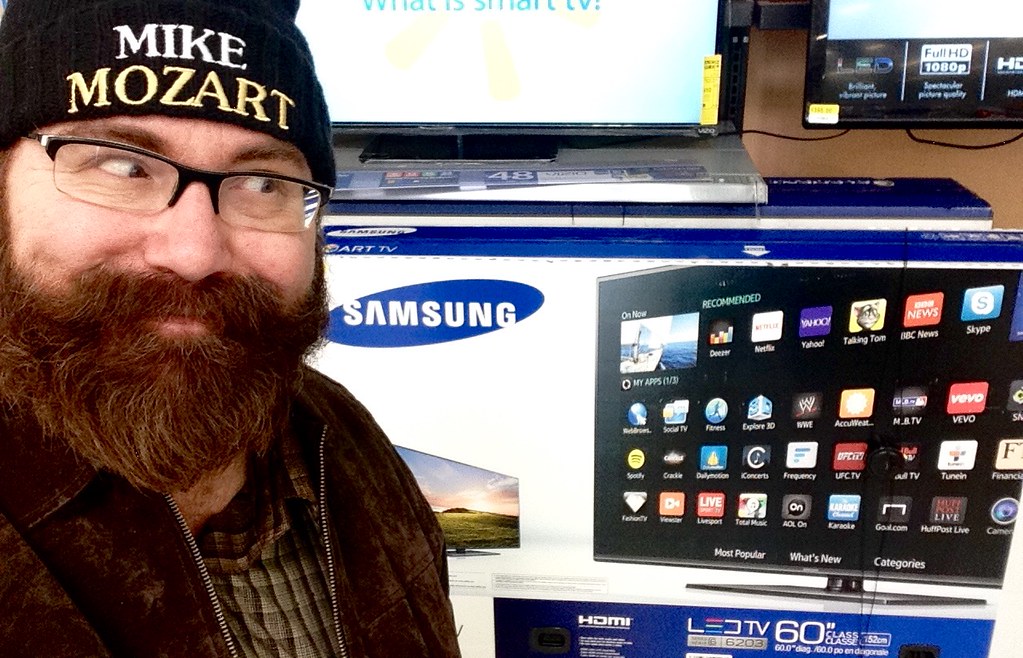
Photo credit: “Samsung LED Smart TV” by JeepersMedia, licensed BY (https://creativecommons.org/licenses/by/2.0/). Source: https://www.flickr.com/photos/39160147@N03/16434497911